
AI adoption is accelerating – but at what cost? BCSDH launches its Digital & AI Working Group
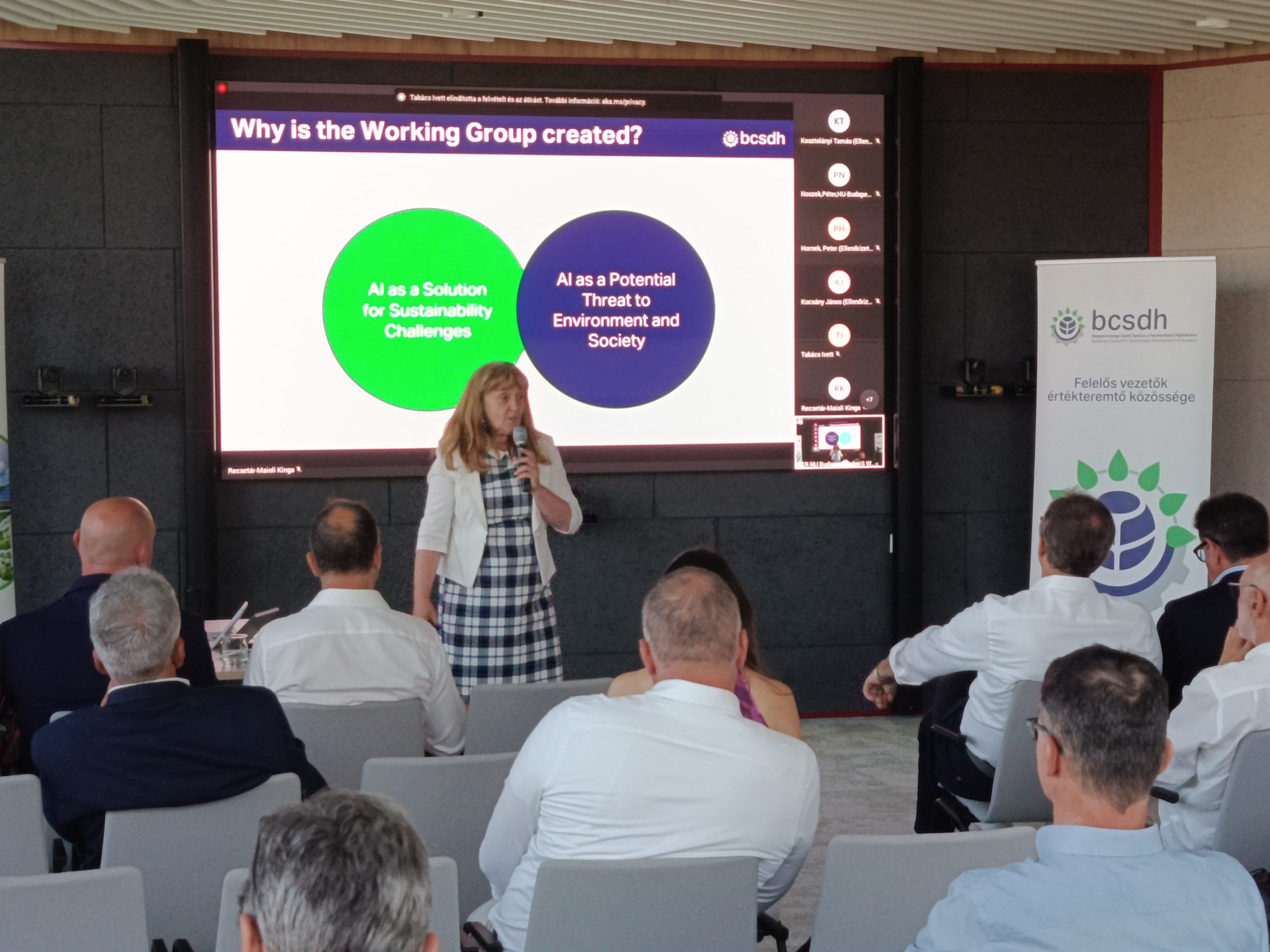
Artificial intelligence is rapidly becoming part of everyday business. It promises powerful solutions to sustainability challenges while also creating new sustainability risks. AI can help optimize energy use, predict climate risks and improve supply chain transparency, yet the growing demand of data centres for energy and water, together with AI’s profound impact on the future of work, raises important concerns. As a result, the relationship between sustainability and artificial intelligence is no longer merely a technological issue—it has become a strategic leadership challenge. Recognising this, the Business Council for Sustainable Development in Hungary (BCSDH) has launched its Digital & AI Working Group.
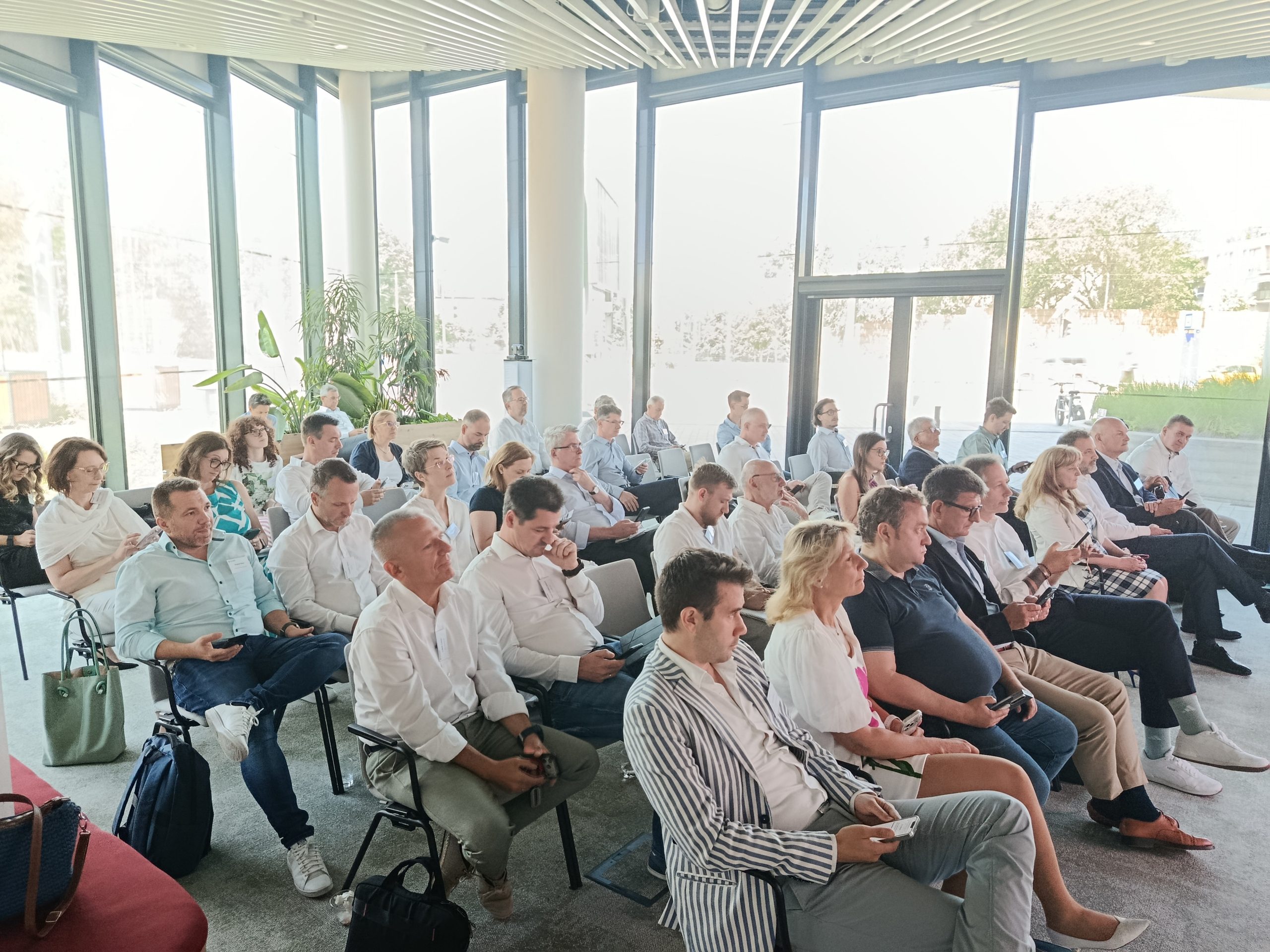
The Working Group held its inaugural meeting on 23 June, hosted by E.ON Hungária Zrt., bringing together nearly 55 business leaders and experts. Its mission is to provide a forum for sharing experiences, dilemmas and best practices related to the corporate use of artificial intelligence, while promoting its responsible, value-creating and sustainable adoption.
Participants were welcomed by Zsolt Jamniczky, Deputy CEO of E.ON Hungária Zrt., who emphasized that in an era of rapid technological progress and the energy transition, the responsible application of digital solutions is becoming increasingly important for businesses.
 |
 |
 |
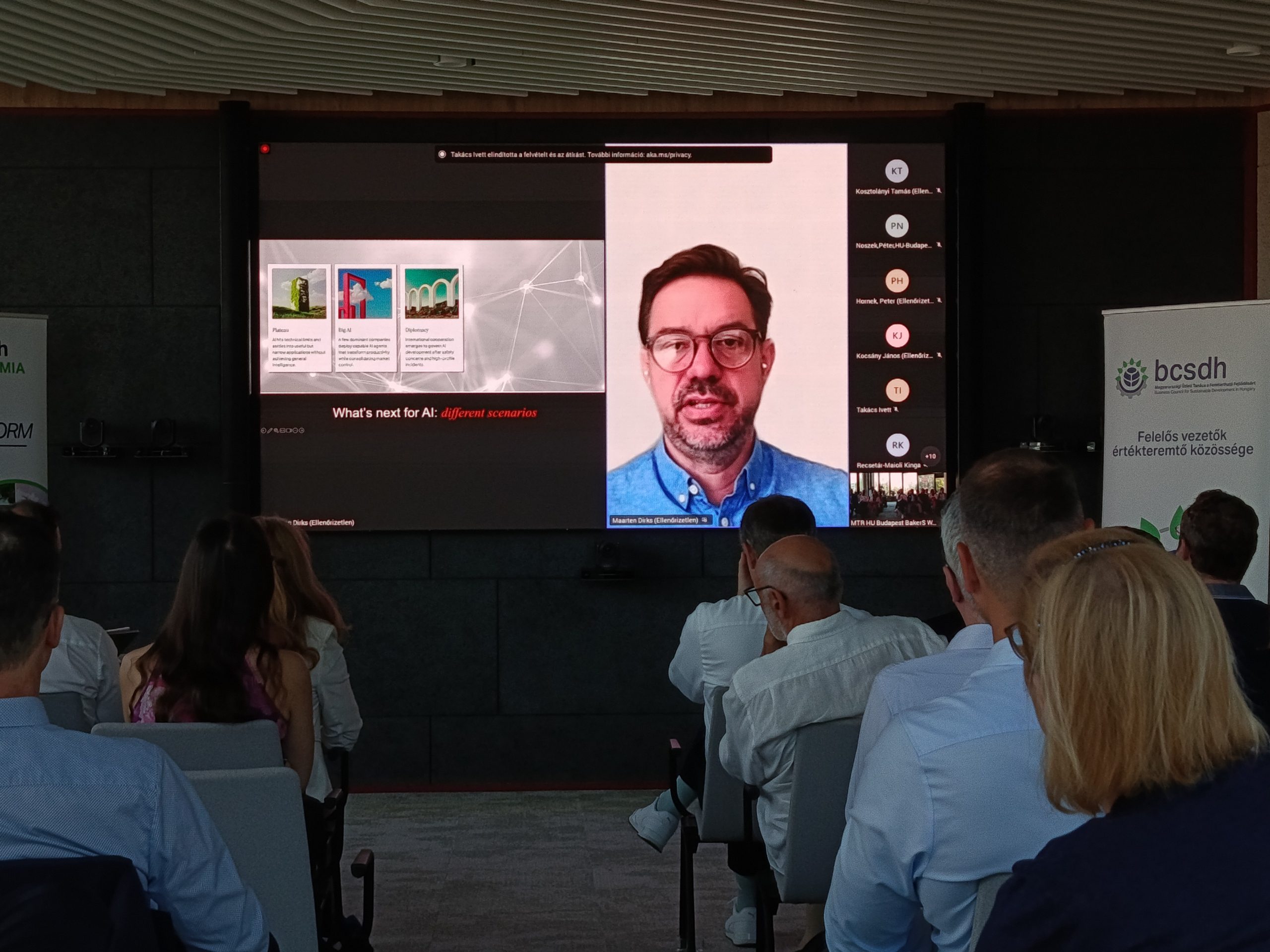
The professional programme opened with a keynote by Maarten Dirks, Director of Digital Learning at the World Business Council for Sustainable Development (WBCSD). He presented the key global trends shaping sustainability, highlighting that artificial intelligence represents both a major opportunity and a significant risk for companies. AI can support climate risk forecasting, energy optimization and greater supply chain transparency, but its increasing energy and water consumption, along with its broader societal impacts, require a responsible approach to implementation.
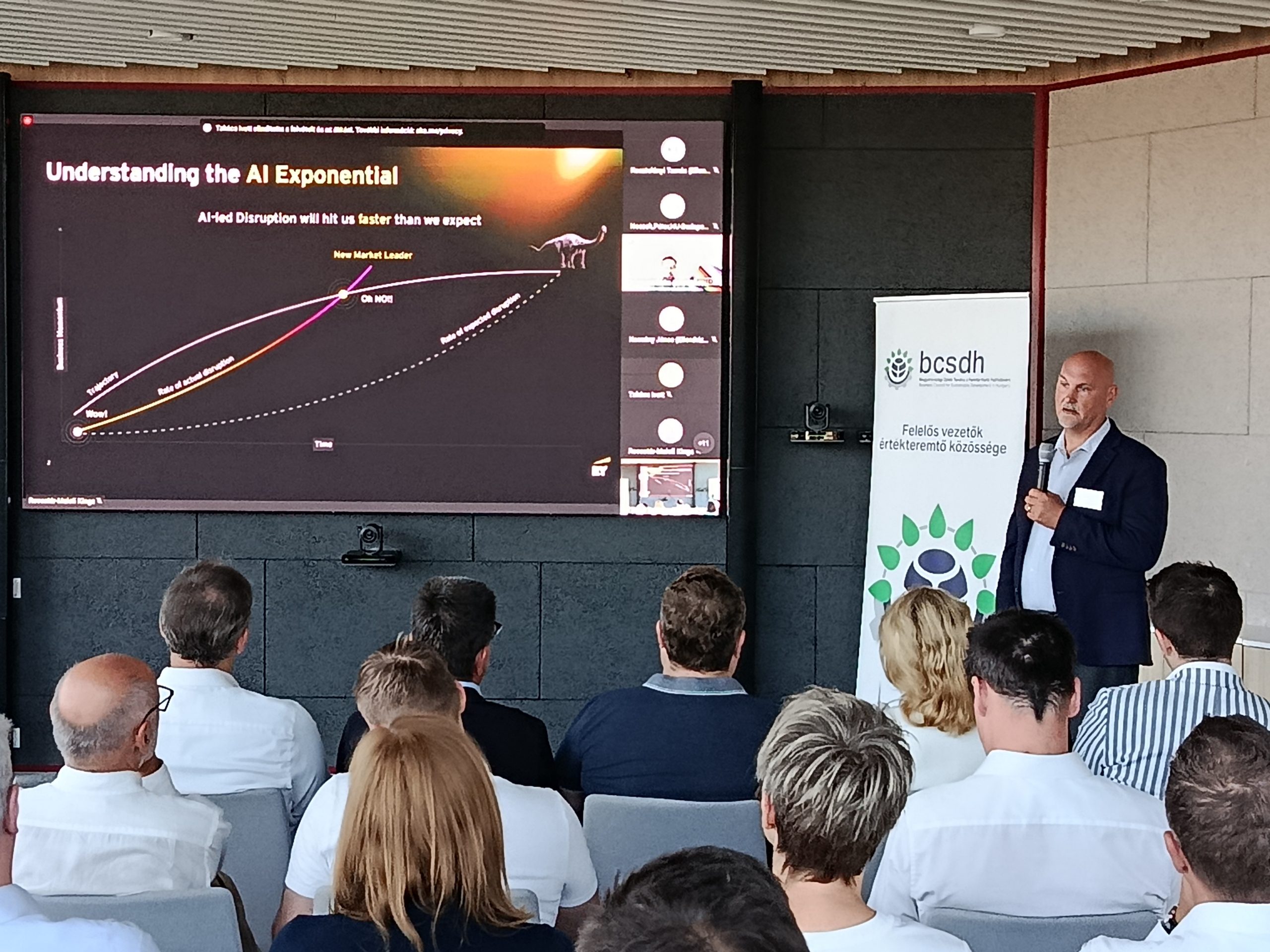
This was followed by a presentation from J.R. Van Order, Partner at EY, who explored the global trends and business challenges at the intersection of AI and sustainability. He pointed out that AI is advancing at an exponential pace and that agent-based solutions are likely to transform business operations faster than many organizations anticipate. Through numerous examples, he demonstrated how AI can contribute to achieving sustainability goals, managing climate risks, improving ESG reporting and reducing the risk of greenwashing. At the same time, he stressed that successful implementation continues to depend on high-quality data, robust data architecture and clearly defined business objectives.
 |
 |
 |
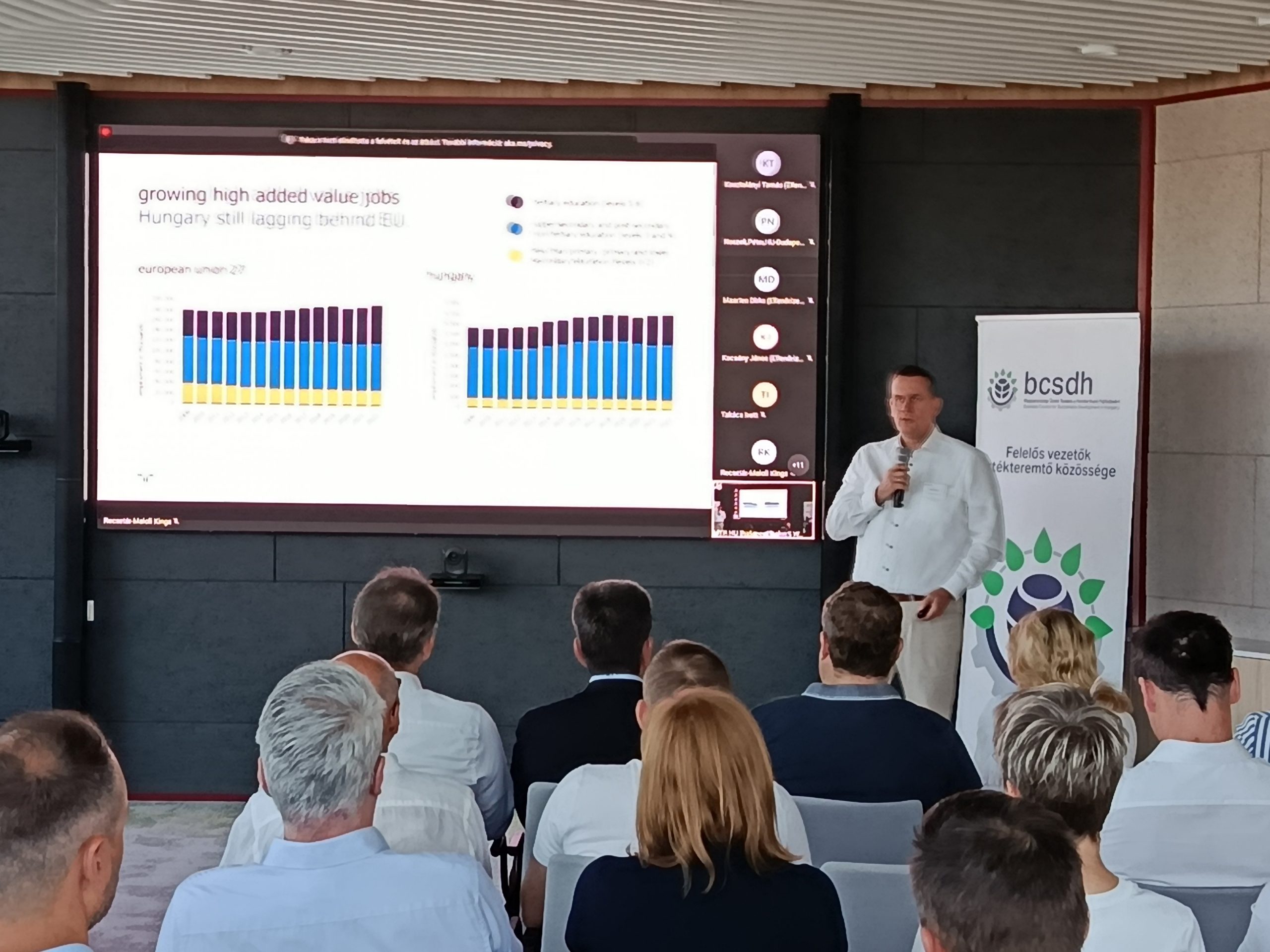
The impact of AI on the world of work was presented by Sándor Baja, Managing Director of Randstad Hungary, based on the company’s latest Hungarian market research. The findings show that Hungarian companies are becoming increasingly open to AI adoption: 37% of surveyed organizations are already actively supporting and expanding its use, while a further 35% are open to applying AI in selected business areas. Companies primarily plan to use AI in administrative processes, marketing, HR, customer service and finance, while more than half of respondents expect significant changes in the labour market as AI adoption accelerates.
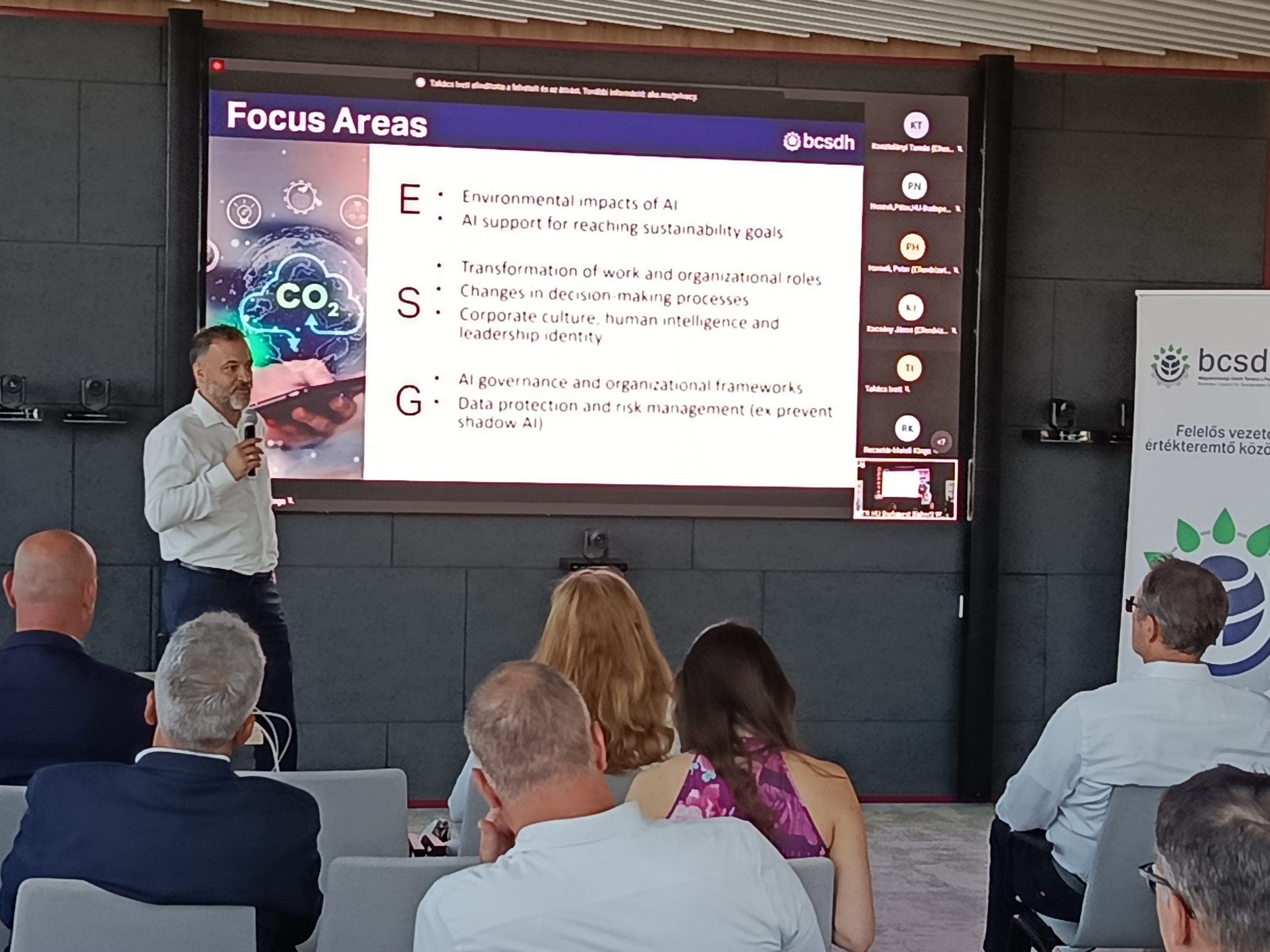
Following the keynote presentations, Irén Márta, Managing Director of BCSDH, and Ákos Lukács, Professional Lead of the Working Group and Partner at EY, introduced the objectives, operating framework and planned initiatives of the Digital & AI Working Group.
Participants then continued the discussion in small-group workshops, sharing their own experiences, challenges and future plans. One clear conclusion emerged: most companies have already moved beyond the initial experimentation phase and are now focusing on integrating AI into their organizations. Three major challenges were identified:
- data protection, information security and the growing use of “shadow AI”;
- financial planning uncertainties resulting from rapidly evolving AI business models and pricing structures;
- the continuously changing regulatory and liability landscape.
Several companies shared experiences with AI ambassador programmes, internal training initiatives, dedicated AI core teams, chatbots and agent-based solutions. At the same time, discussions highlighted that technology alone is not enough. Long-term success depends on organizational culture, developing new capabilities and ensuring the responsible use of AI across the business.
Perhaps the strongest shared message of the event was that most companies are no longer asking whether they should use artificial intelligence, but how they can integrate it into their operations in a secure, economically viable and sustainable way.
The next meeting of the BCSDH Digital & AI Working Group will take place on 27 October 2026 (09:00–11:00) and will be hosted by Generali Biztosító Zrt.


