A new school year, a new routine: Nestlé and SPAR campaign encourages healthier everyday habits

After the summer break, getting back into the familiar rhythm of everyday life is not always easy for children or adults. Holidays often disrupt our usual routines, and we tend to be more relaxed about what and when we eat. September, however, offers an opportunity to establish a new “timetable” even for those who are no longer heading back to school: the start of a new school year is a good opportunity for families to rethink their daily routines and reintroduce or incorporate regular exercise and more conscious eating habits.
According to a representative survey1 conducted jointly by Nestlé and SPAR, 57 percent of Hungarians exercise regularly. For many, regular physical activity is simply part of their everyday wellbeing, mental refreshment or maintaining good health. Summer holidays and hot weather can easily disrupt the routines established during the rest of the year, however, and regular exercise can consequently take a back seat. Fortunately, there are forms of exercise that are easier to incorporate back into our daily routines. Running is one example: 65 percent of respondents find it appealing precisely because it is easy to fit into everyday life.
The more relaxed days of summer can also disrupt our eating habits, even though the survey shows that there is still plenty of room for greater awareness when it comes to nutrition. According to the research, just 5 percent of 18-65-year-olds follow a genuinely conscious diet; 10 percent do not eat any vegetables on an average day, while 14 percent do not eat fruit either. Although most people have vegetables or fruit on their plate once or twice a day, snacking, sugary and fatty foods, as well as irregular eating habits, remain common pitfalls.
When it comes to making a fresh start in September, wherever we begin, we are heading in the right direction. Physical activity and conscious nutrition are closely linked, so taking the first steps in one area can also provide momentum in the other. It is worth getting started even if we do not feel entirely confident about how best to make changes – we are not alone. The research shows that people who exercise regularly are more likely to believe that the two go hand in hand, yet even among this group, one in three feel they still have more to learn about healthy eating. Based on the responses, only half of Hungarians feel well informed about how to support exercise with appropriate nutrition, while 37 percent feel specifically uncertain.
Running can be a simple way to make a fresh start
The data also show that for many people, an important consideration is whether their chosen form of exercise can easily be incorporated into everyday life. It is therefore no surprise that, alongside walking, cycling and home workouts, running is also one of the most popular sports, particularly among
18-39-year-olds. Running is especially popular among those who exercise at least three times a week: almost one third of them run, and a similar proportion have taken part in at least one running event during their lifetime.
If someone wants to reintroduce exercise into their daily routine after the summer, there is no need to set a major goal straight away when taking up running or jogging. Gradually increasing the level of exertion can provide a good foundation for a longer distance later on, while a well-structured training plan can help them progress step by step. What is more, there is no need to set aside hours every day: even shorter periods of exercise incorporated into the routine on a regular basis can be a good starting point. According to the WHO recommendation, adults should aim for 150–300 minutes of moderate-intensity physical activity or 75–150 minutes of vigorous-intensity activity per week, building up to this level gradually. Exercising together can also help turn those first steps into a genuine habit over time: according to the research, 39 percent of respondents consider friends and community to be one of the most important motivating forces behind taking part in sport.
Once exercise is back in the routine, healthy eating can follow more easily
If regular exercise can be reintroduced into everyday life after the summer, this can also provide momentum for rethinking eating habits. The new routine could include planning meals in advance, cooking together, or making more conscious choices about foods that support physical activity. We can also draw on expert advice, covering everything from a balanced diet and adequate fluid intake to nutrition that supports recovery.
“When returning to regular exercise after the summer, it is worth building up physical activity step by step, while also making sure that nutrition keeps pace with increased activity levels. An adequate intake of nutrients is important for sports performance and recovery, as well as for making a new lifestyle sustainable in the long term. The start of the school year can be a good opportunity for families to gradually reorganise their daily routines: with a few conscious decisions – such as making exercise a regular part of the week, planning meals or cooking together – they can do a great deal to create healthier everyday habits,” said Lili Fülöp, dietitian at Nestlé. She added that, just as in sport, the goal with nutrition is not perfection, but developing simple habits that can realistically be maintained in everyday life and support a more active lifestyle over the long term.
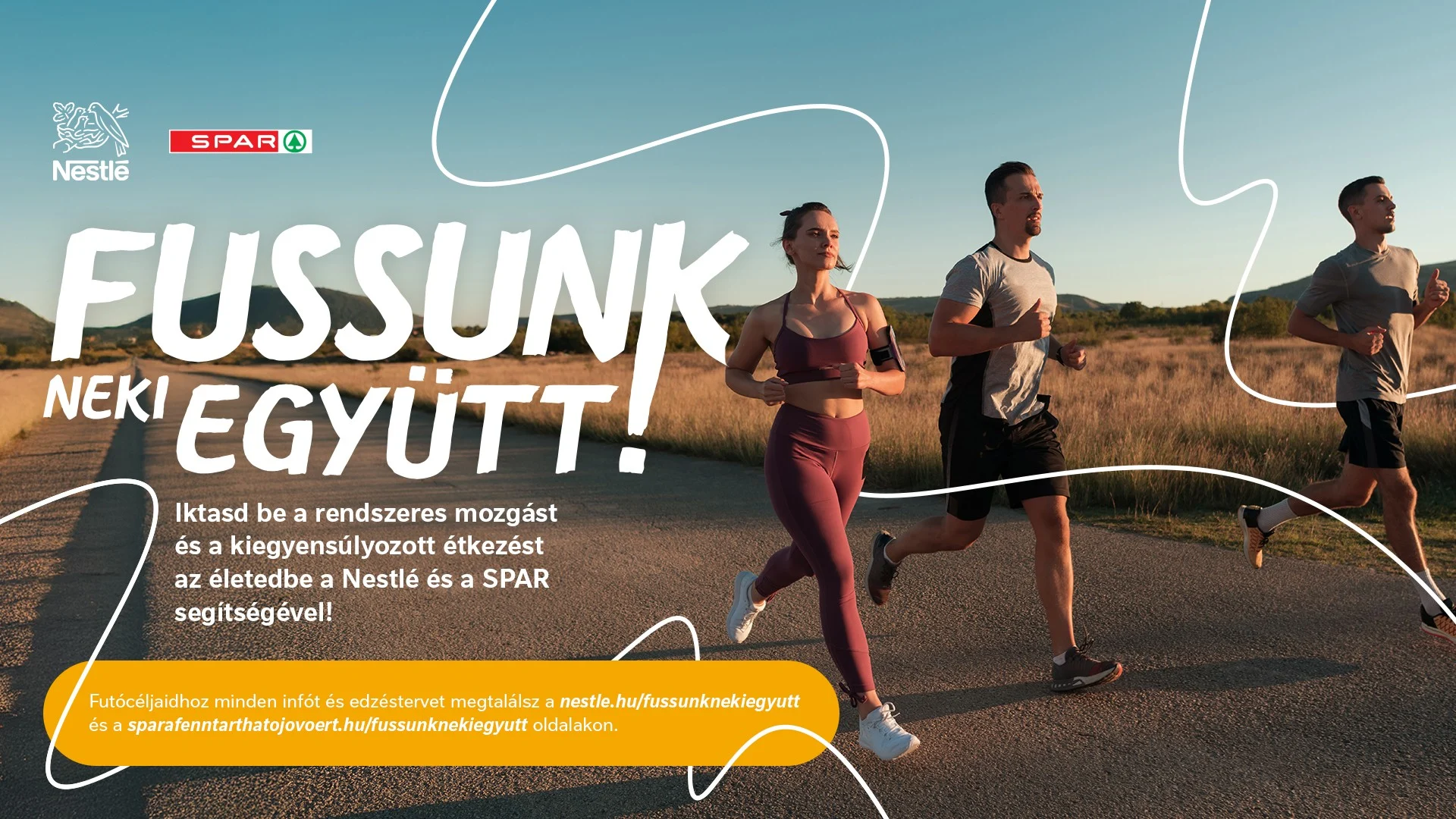
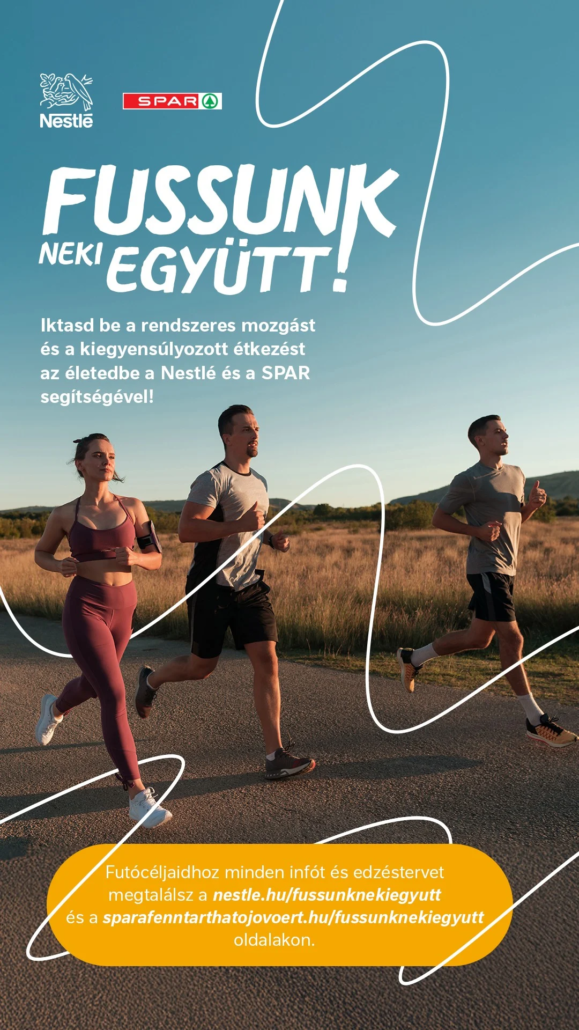
Once the decision has been made, it is time to return to regular exercise – and Nestlé and SPAR’s “Let’s Run Together!” programme provides practical support for doing so. The campaign publication offers suitable goals for both beginners and more experienced runners:5 km and 10 km training plans, conditioning workouts, warm-up and stretching advice, as well as expert tips on balanced nutrition and hydration, all designed to support preparation. The campaign also offers a sense of community: participants can collect kilometres in a Strava club until the day of the 41st SPAR Budapest Marathon® Festival. The aim is to collectively “run around” Hungary. Until the October marathon start, the organisers hope participants will complete the almost 2,246-kilometre distance as many times as possible.
The joint Nestlé and SPAR publication and the STRAVA club are available at the following links: https://www.nestle.hu/fussunknekiegyutt https://www.sparafenntarthatojovoert.hu/fussunknekiegyutt