Masterplast extends its green program to glass wool products

Masterplast will further expand its circular economy system from November 2025.
The Hungarocell Green Program will now cover not only the collection and recycling of its own polystyrene-based thermal insulation materials, but also the glass wool products sold by Masterplast Hungária Kft. The aim of the initiative is for the company to be the first in the domestic construction industry to implement responsible manufacturing thinking and a culture of recycling in the field of mineral wool insulation.
As part of the new program, Masterplast Hungária Kft. collects thermal insulation material from the use, cutting, or demolition of the glass wool products it sells and then recycles it at its glass wool factory in Szerencs. The processed raw material is used to make “Loose Wool” blow-in insulation, which is ideal for energy-efficient thermal insulation of attics and roof spaces. The Hungarocell Green Program collection points, the Eco-Points, also function as collection logistics stations in this case, and the collection method will be similar to that used in the Hungarocell Green Program with collection bags.
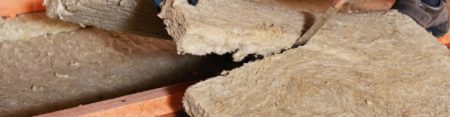
With this development, Masterplast is once again playing a pioneering role in sustainable building material production: no other manufacturer in the country currently has a similar circular reuse system that also covers glass wool, thus reinforcing the company’s commitment to innovation and green practices.
“The expansion of the Hungarocell Green Program is another step in Masterplast’s sustainability strategy. Our goal is to achieve complete material recycling in as many product groups as possible and to reduce the amount of construction waste. The recycling of glass wool is an important milestone in this process,” said Tibor Dávid, Chairman and CEO of Masterplast Nyrt.
The Hungarocell Green Program was launched in 2020, and in its first year, it managed to collect and recycle over 1,000 cubic meters of polystyrene waste. The program has since achieved nationwide coverage, and the annual recycling volume exceeds 10,000 cubic meters. The current expansion further strengthens the program’s objective: to make sustainable, environmentally friendly construction practices available to consumers in the domestic market.


