
Sustainable Building Management
Improving the sustainability performance of a building does not end with design and construction: there are also numerous opportunities to operate buildings more efficiently and consciously throughout their operational life. A comprehensive assessment of an existing building’s technical characteristics, operational practices and environmental performance can help identify opportunities for improvement, whether in terms of energy or water consumption, occupant comfort, waste management, ecology or resilience. The BREEAM In-Use certification scheme provides a comprehensive framework for this, supporting not only the achievement of certification but also more efficient and sustainable building management in the long term.
It is Never Too Late to Think About Sustainability
In our previous articles, we explored how sustainability principles can be integrated from the early design stages of district-scale developments, new-build projects and buildings undergoing refurbishment through BREEAM certification.
However, we often encounter situations where the developer starts considering sustainability too late. For a building that is about to enter construction or is already under construction, it may then be too late – or only possible at significant additional cost – to integrate the sustainability principles required to achieve a building certification.
There is, however, still an opportunity to assess and improve the sustainability performance of the building. The owner or developer can choose to take a closer look at the physical characteristics or operational practices of an existing building and pursue BREEAM In-Use certification.
It Is Not Just the Building’s Technical Parameters That Matter
Fortunately, it is becoming increasingly common for tenants to seek sustainable buildings with recognised certifications. What can this mean in practice?
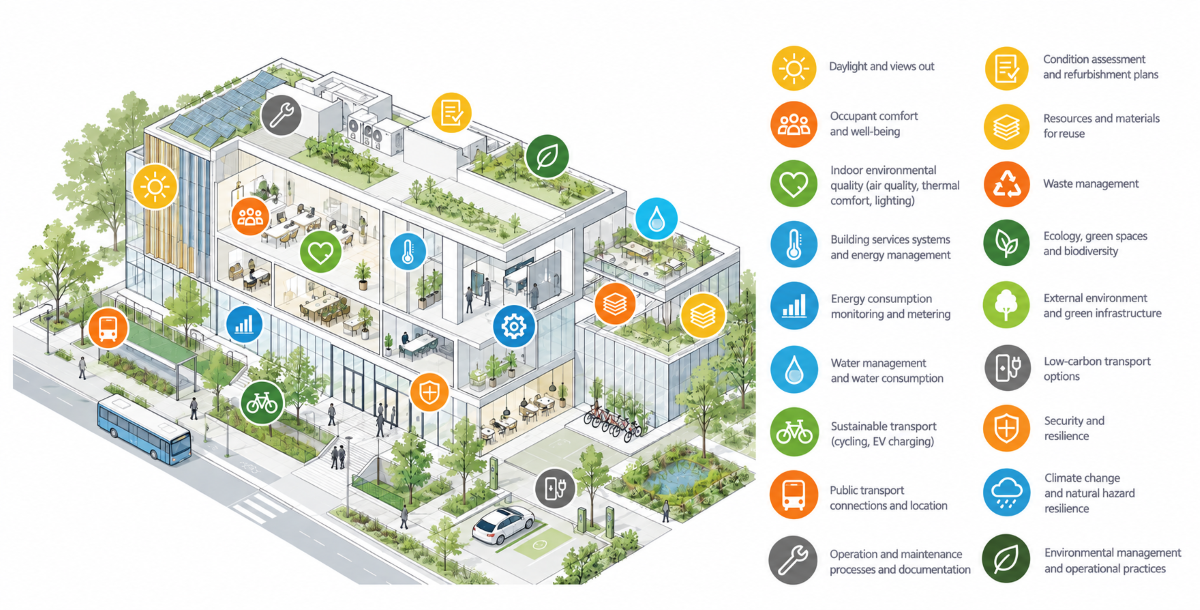
For a building undergoing BREEAM In-Use assessment, factors affecting the health and wellbeing of occupants are assessed, such as daylight and view out, indoor air quality, adequate lighting and thermal comfort.
The building’s mechanical and building services systems are also subject to detailed assessment. The type and quality of these systems, as well as how the building’s energy consumption is managed and monitored, can make a significant contribution to the overall score. This can also provide useful guidance for future refurbishment, helping to identify more efficient and modern solutions that could improve the building’s energy performance.
The building’s location is also assessed. Good public transport connections, walkable access to local amenities and sustainable transport options are advantageous. The latter may include, for example, electric vehicle charging facilities and suitable bicycle storage.
In addition to energy management, water management is also an important assessment criterion. The Water category assesses the efficient management of water consumption, water-saving measures, and the measurement and monitoring of water use.
Preparing a condition survey helps to identify the physical condition of the building and provides a basis for planning necessary periodic maintenance as well as short- and long-term refurbishment plans. It is also possible to identify resources and materials within the building that can be reused. This can be particularly useful, for example, when a new tenant moves into the building, as reuse can reduce the demand for raw materials and the amount of waste generated.
The assessment of the building’s physical characteristics also includes its resilience to climate change, natural disasters and other physical risks. In addition, the safety and security of building occupants are also assessed.
Sustainability in Building Management Practice
In addition to technical parameters, the practices applied in building management can also be assessed. Having documented operational and maintenance processes, manuals, policies, analyses and monitoring results can all contribute to achieving a higher score and rating level. This is particularly important for an operational building, as good technical characteristics alone do not necessarily guarantee efficient and sustainable operation.
Clients are often concerned that meeting the certification requirements means producing a large amount of unnecessary documentation. In reality, these documents are intended to support the long-term efficient, conscious and user-friendly operation of the building.
It is also worth highlighting the role of ecology. With the involvement of an ecologist, external areas can often be enhanced in a cost-effective way to make a meaningful contribution to local biodiversity. From an occupant perspective, well-designed and maintained green spaces can also provide an attractive environment, creating a pleasant urban oasis.
 |
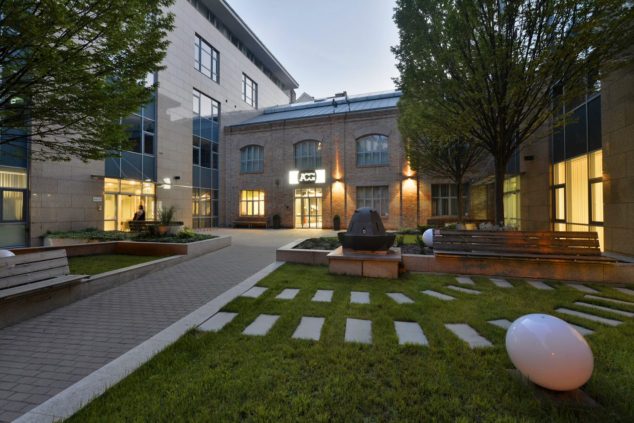 |
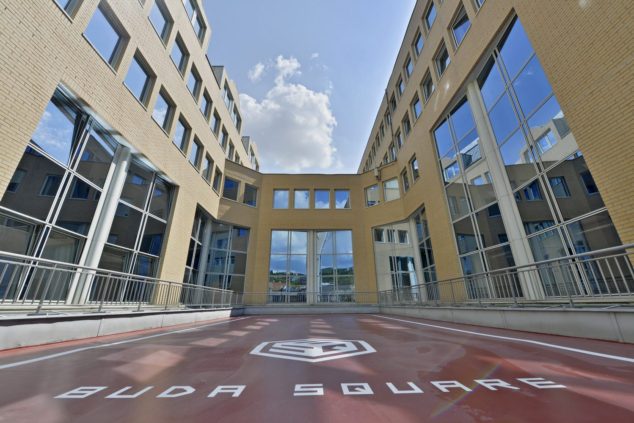
Adventum / Buda Square & Margit Palace office buildings, BREEAM In-Use assessment
Beyond Certification: A Framework for Continuous Improvement
Operating a building requires simultaneous management of numerous different areas – from energy management and maintenance to waste management and occupant comfort. BREEAM In-Use provides a consistent framework for assessing these areas and helps identify opportunities for further improvement.
This demonstrates that building certification can be pursued without major capital investment, provided there is sufficient commitment to improving the building’s sustainability performance. The assessment of a building’s environmental performance does not end with the design and construction phases: there are many opportunities to improve sustainability throughout the operational phase as well.
The BREEAM In-Use scheme is therefore not merely a means of obtaining certification, but can also serve as a framework for improvement and informed decision-making. It can contribute to a building’s market positioning, competitiveness and long-term value, while supporting improvements in operational efficiency.
Author:
Enikő Kluha, Head of Sustainability / Realiscon
BREEAM Assessor & AP
Létesítmény energetikai mérnök

