• Facebook
  • LinkedIn
  • Mail
  • Magyar Magyar Hungarian hu
  • English English English en
BCSDH
  • About us
    • Mission
      • Vision 2050
      • Management Guidelines
    • Organization
    • Partners
  • Our members
    • Membership
    • List of our members
    • Become a member
  • News
    • Our news
    • Member news
  • Our activities
    • 1. oszlop
      • Time to transform 2030
      • Race to Zero
      • Circular Economy Platform
      • ESG
      • Working groups
    • Future Leaders Program
      • Scholarship
    • For a Sustainable Future Award
    • International projects
      • ERASMUS+ DEDYCATING
      • ISSUE
      • Circular Regions
    • Archive
      • Action 2020
  • Events
    • Events calendar
    • Gallery
  • Resources
    • Business solutions
  • Circular Economy Hotspot 2026
  • Menu Menu
  • About us
    • Mission
      • Vision 2050
      • Management Guidelines
    • Organization
    • Partners
  • Our members
    • Membership
    • List of our members
    • Become a member
  • News
    • Our news
    • Member news
  • For a Sustainable Future Award
  • Our activities
    • Time to transform 2030
    • Race to Zero
    • Circular Economy Platform
    • ESG
    • Working groups
    • Future Leaders Program
      • Scholarship
    • International projects
      • ISSUE
      • Circular Regions
    • Archive
      • Action 2020
  • Resources
    • Business solutions
  • Events
    • Events calendar
    • Gallery
  • Circular Economy Hotspot 2026
You are here: Home1 / News2 / Regisztráció – „A jövő vezetői” Alumni program tavaszi esemény3 / 2025

Human connection has never been more important – We announced the 2026 Scholarship recipient of ‘Future Leaders’ Program

News

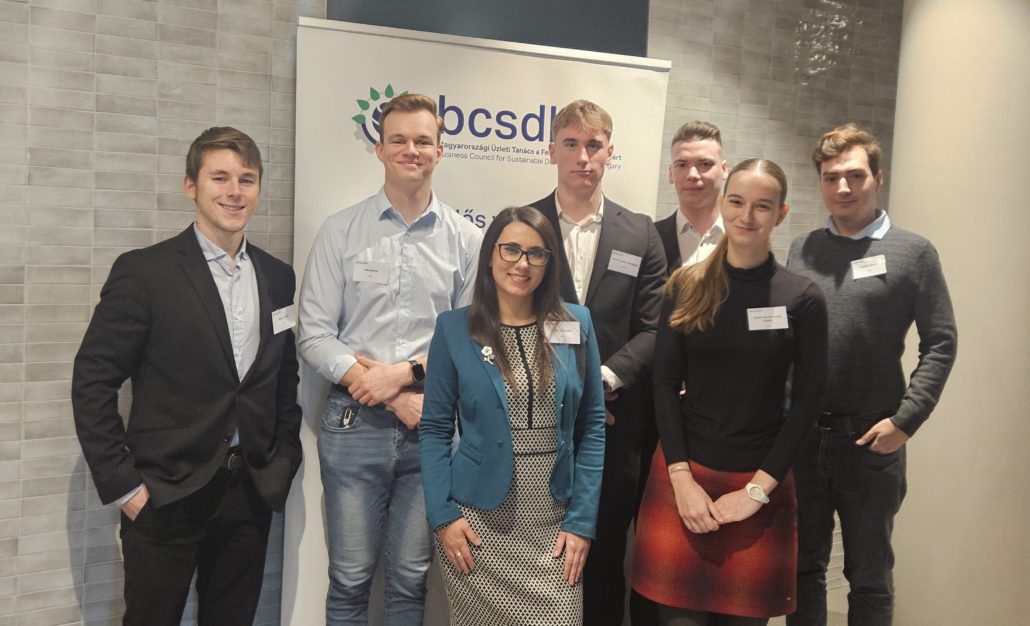
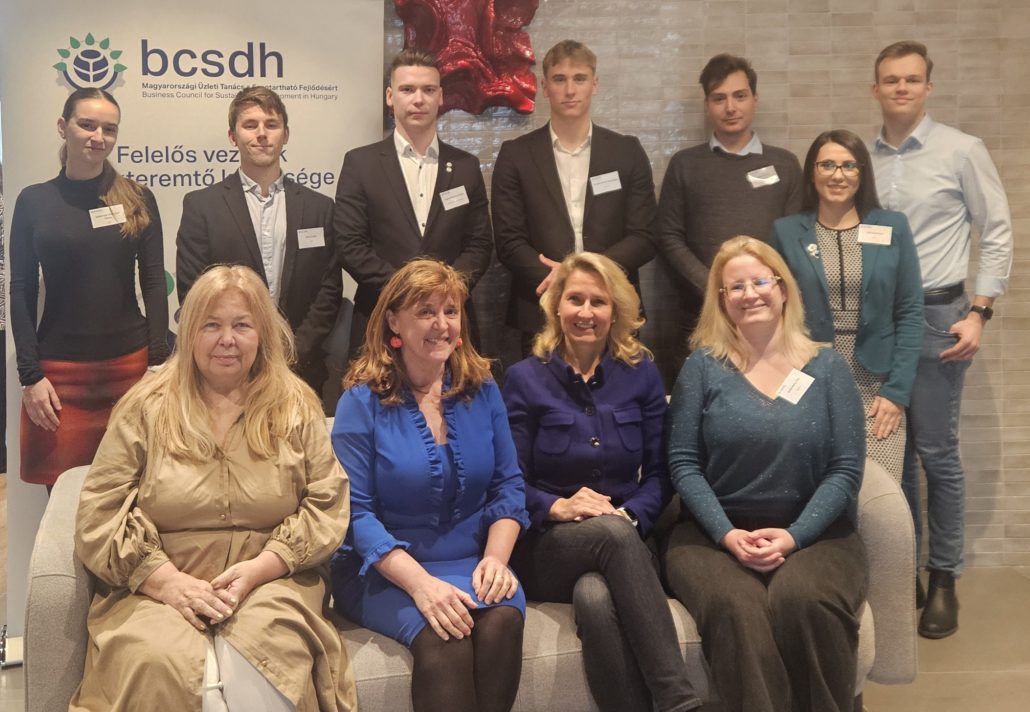
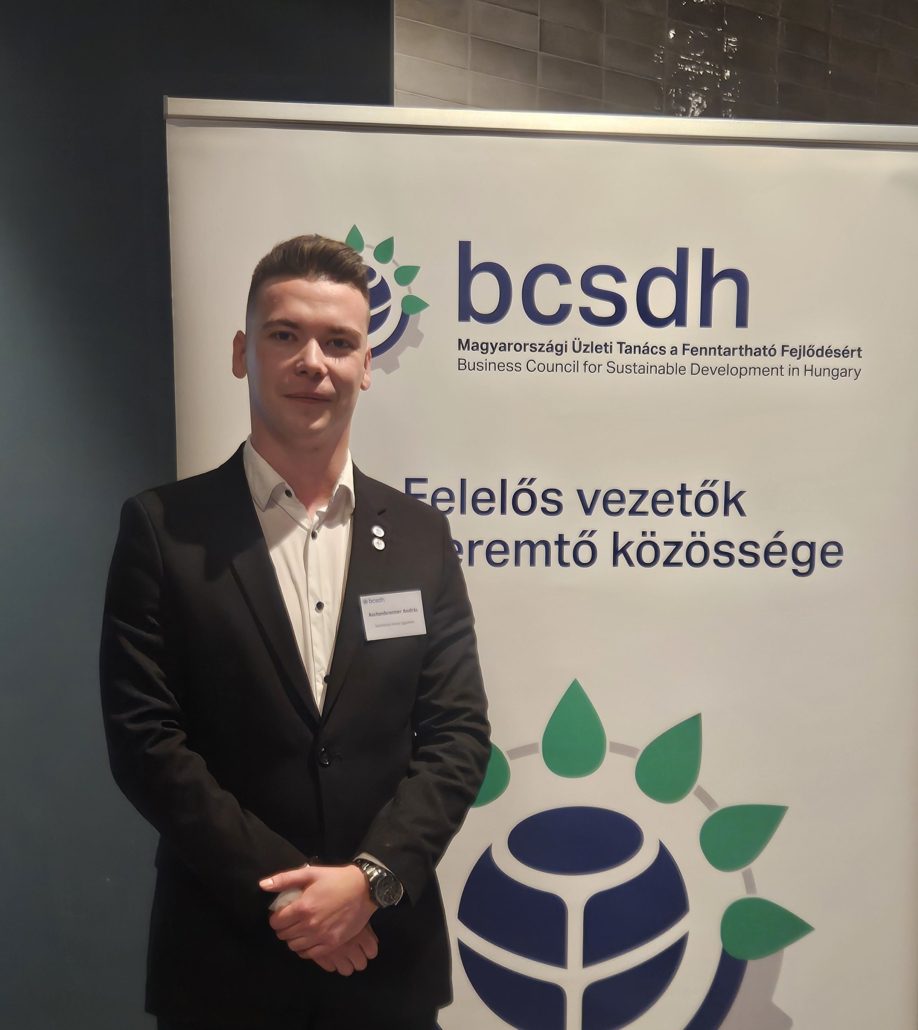
András Aschenbrenner, a student of Széchenyi István University, has been awarded the 2026 scholarship of the BCSDH “Future Leaders” Program. The final took place on 28 November 2025 at E.ON Hungária Zrt., where a professional jury selected the winner from seven finalist applications.

Hungary’s unique “Future Leaders” Program equips participants with comprehensive and up-to-date knowledge, proven business solutions and a diverse professional network, enabling them to become change leaders and to achieve meaningful, strategic-level impact in their field of operation, at company level and in their personal lives through a new way of thinking.

Since 2015, the program has, each year, included the participation of university and college students thanks to the support of sponsors, creating opportunities for them to acquire in-depth knowledge of sustainability, global and national trends, and corporate practices already during their studies.

In the final, András Aschenbrenner (Széchenyi István University), András Csorbai (Budapest University of Technology and Economics), Péter Rácz (Budapest University of Economics and Business), Csaba Rózsa (Budapest University of Economics and Business), Emma Szabó-van der Voort (Eötvös Loránd University), Gabriella Tóth (Budapest University of Technology and Economics), and Bendegúz Sándor Vécsei (Hungarian University of Agriculture and Life Sciences) presented their work. During the application process, the students presented their well-developed proposals aimed at making their universities more sustainable.

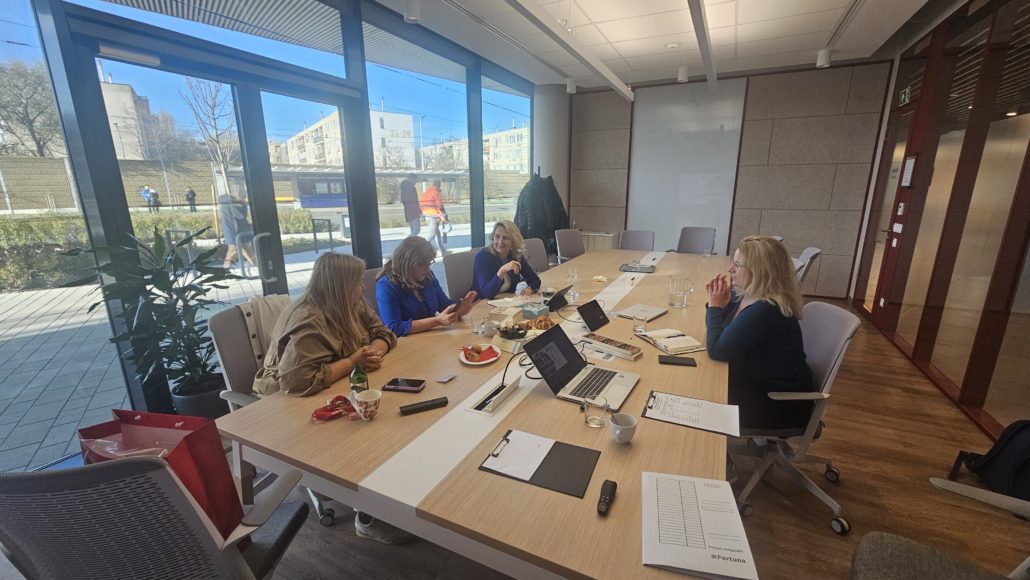
This year’s professional jury included Zsuzsanna Károlyi, Head of Brand and Marketing at E.ON, Tímea Pesti, CEO of Ayvens, and, on behalf of BCSDH, Irén Márta, Director, and Zita Szederkényi, Program Manager.

We thank the jury for their valuable professional work and congratulate all participants on their high-quality submissions!


Highlighted Sponsor Scolarship Program in 2025:

10.12.2025
https://bcsdh.hu/wp-content/uploads/2025/12/20251128_111903.jpg 1578 2283 Balasfalvi-Lukacsi Mariann https://bcsdh.hu/wp-content/uploads/2021/12/bcsdh-logo.png Balasfalvi-Lukacsi Mariann2025-12-10 11:15:582025-12-10 11:17:35Human connection has never been more important – We announced the 2026 Scholarship recipient of ‘Future Leaders’ Program

Climate change up close – joint reflection with the Climate Fresk game at the November event of the Alumni of ‘Future Leaders’

News

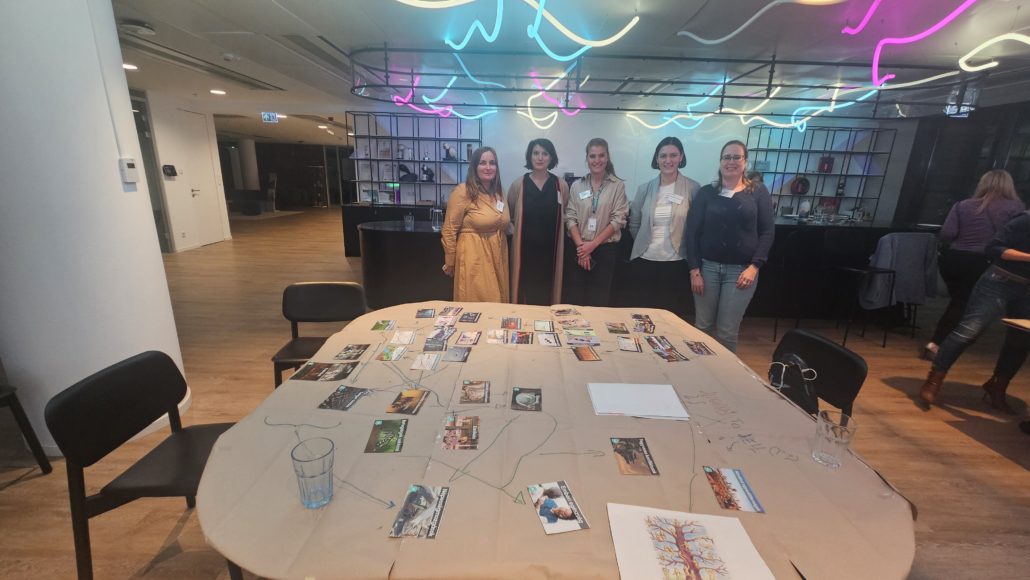
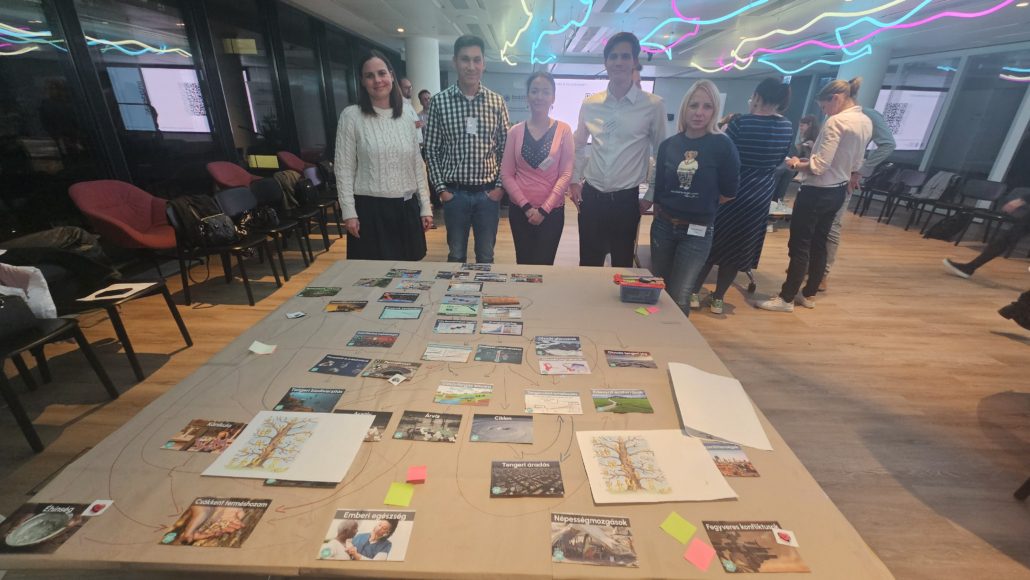
Why are the ice caps melting? What is permafrost? What are carbon sinks? What is the “triangle of inertia”? How does climate change affect our everyday lives, the economy, and our workplaces – and what can we do ourselves to slow down the process? Participants explored these questions at the interactive Climate Fresk event, attended by members of previous cohorts of the Alumni of ‘Future Leaders’  and recent graduates of this year’s cohort.

The event was opened by our host, Anna Hőgyész, Sustainability Manager at Nestlé Hungária Kft. This was followed by welcome remarks from Máté Bori, Head of the ‘Future Leaders” Alumni and Operations and Integration Director at Ayvens, and Irén Márta, Managing Director of BCSDH.

Climate Fresk – the Hungarian adaptation of the internationally recognised French Climate Fresk workshop – is based on the reports of the IPCC (Intergovernmental Panel on Climate Change) and aims to help participants jointly explore the interconnections of climate change. The program was led by Dr. Barbara Wassen, Ambassador-at-Large for Climate Affairs and Climate Diplomacy at the Ministry of Energy, who also participated as a table facilitator. At the other tables, László Karafa, Mining and Sustainability Manager at Saint-Gobain, and members of the BCSDH professional team – Zsófia Galambosné Dudás and Andrea Nagy, Professional Project Managers, as well as Irén Márta, Managing Director – supported the discussions and inspired participants to explore cause-and-effect relationships and think together.

At the closing of the program, participants shared the concrete steps they plan to take in their professional and personal lives – such as more conscious energy use, more sustainable dietary choices, and promoting awareness-raising initiatives in the workplace.

We believe that the Climate Fresk experience was not only an inspiring learning opportunity, but also an experience that participants will be able to successfully apply both in their professional work and in their private lives.

The full photo gallery is available by clicking here.

08.12.2025
https://bcsdh.hu/wp-content/uploads/2025/11/20251104_171400-1-scaled.jpg 1441 2560 Balasfalvi-Lukacsi Mariann https://bcsdh.hu/wp-content/uploads/2021/12/bcsdh-logo.png Balasfalvi-Lukacsi Mariann2025-12-08 23:33:242025-12-08 23:33:24Climate change up close – joint reflection with the Climate Fresk game at the November event of the Alumni of ‘Future Leaders’

ALTEO continues to help those living in energy poverty this year

Member News

In accordance with tradition, ALTEO is allocating its Christmas entertainment budget for business partners to support charitable organisations rather than on gifts.

As one of Hungary’s leading energy companies, ALTEO not only plays a leading role in energy innovation and the circular economy but is also actively committed to social responsibility. This year, support will be given to civil organisations once again that help families and communities struggling with energy poverty, either through energy efficiency upgrades or by alleviating winter heating difficulties.

But what exactly constitutes energy poverty, how many Hungarian households are affected, and how can an energy company provide real help in this area?

Beatrix Szabó, Director of Sustainability and EHS at ALTEO, discussed this in an interview with Greendex.

Civil Impact Nonprofit Kft. is once again the partner in organising the tender this year, helping to ensure that support reaches those who need it most in the most effective way.

07.12.2025
https://bcsdh.hu/wp-content/uploads/2025/09/ALTEO_450.jpg 450 450 Gyurgyik Anna https://bcsdh.hu/wp-content/uploads/2021/12/bcsdh-logo.png Gyurgyik Anna2025-12-07 10:44:172025-12-07 10:44:17ALTEO continues to help those living in energy poverty this year

The amount of e-waste is growing rapidly. What developments can be used to address this problem?

Member News

Anita Simon, ALTEO’s Deputy CEO for Sustainability and Circular Economy, was a guest on Millásreggeli on the occasion of E-waste Day, where she talked about how, in the age of digitalisation and electrification, the amount of e-waste is growing at an unprecedented rate, which is the reason why it is crucial to tackle this problem. Due to electromobility, we can expect an increased amount of battery waste in the future, along with the growth of solar panel waste as a result of the increasing electricity consumption and the spread of renewables.

According to Anita Simon, the number of new electronic devices in the EU has almost doubled in the last ten years, while the rate of collection has lagged behind. Hungary generates around 100 kilotonnes of e-waste per year, 14% of which is handled by ALTEO Circular. The company’s goal is to significantly increase this ratio in the coming years and thus return as many valuable materials as possible to the cycle.


You can listen to the entire conversation on the Millásreggeli website from 28:14.

07.12.2025
https://bcsdh.hu/wp-content/uploads/2025/09/ALTEO_450.jpg 450 450 Gyurgyik Anna https://bcsdh.hu/wp-content/uploads/2021/12/bcsdh-logo.png Gyurgyik Anna2025-12-07 10:41:172025-12-07 10:41:17The amount of e-waste is growing rapidly. What developments can be used to address this problem?

E.ON’s 3rd Annual Champions of Earth: Turning Concern for the Future Into Action

Member News

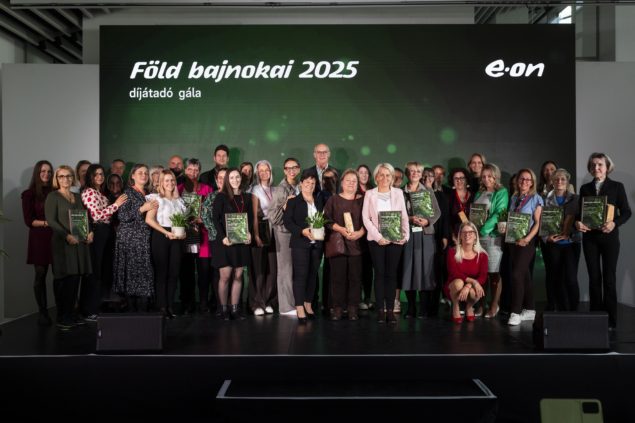
Since its launch in 2023, E.ON’s Champions of Earth competition has engaged one in ten kindergartens and schools in Hungary. While that reach is a significant, the programme’s greatest value lies in how it reshapes kids’ ability to think about environmental problems. With E.ON’s support, feelings of uncertainty about the future are being transformed into action through inventive, student-led sustainability projects.


The numbers tell a convincing story. Each year, the contest, which recently held its annual awards ceremony, has grown into a nationwide movement since it was first announced. In fact, this year’s competition received around 350 entries. Of those, 13 projects have been selected each to receive a maximum of HUF 2.5 million in funding. Since 2023, the judging committee has reviewed a total of 1,200 entries, with 42 educational institutions, from kindergartens to primary and secondary schools, having been collectively awarded HUF 75 million.


Entries are evaluated by renowned experts and public figures working to shape environmental awareness. The jury panel includes climate researcher and IPCC Vice-Chair Dr Diána Ürge-Vorsatz, journalist and climate communications expert Réka Nagy, Managing Director of Planet Fanatics’ Network, Katalin Szomolányi, actress Lia Pokorny, who has authored a collection of sustainable recipes, and jury chair Guntram Würzberg, President and CEO of E.ON Hungária Group.

Their task is not easy, as the number of imaginative, detailed and feasible projects always exceeds the number of available awards. Many experienced participants return to the competition year after year, and the teachers get to gain more experience during the professional knowledge-sharing days. Because the contest encourages projects that involve the active participation of parents and local communities, its impact on environmental awareness is even greater.


07.12.2025
https://bcsdh.hu/wp-content/uploads/2022/07/E.ON_RGB_Red.png 595 842 Gyurgyik Anna https://bcsdh.hu/wp-content/uploads/2021/12/bcsdh-logo.png Gyurgyik Anna2025-12-07 10:33:332025-12-07 10:33:33E.ON’s 3rd Annual Champions of Earth: Turning Concern for the Future Into Action

ESG: the new “cyber-defence”

Member News

Is ESG becoming a defining driver of business growth?

In recent years, cybersecurity quietly rose to the top of executive agendas. The same shift is now happening with ESG. What was once a compliance matter has become a strategic necessity: transparency, accountability, and credible sustainability performance are now the essential foundations of trust.

According to Grant Thornton’s experience, companies that proactively manage ESG not only survive in an uncertain economic and business environment — they evolve, adapt, and gain advantage. The impact mechanism of ESG is complex; it simultaneously influences client service, internal operations, and brand reputation.

Why has ESG become a key domain?

Major crises of the past — the 2008 financial crisis, the COVID period, and ongoing geopolitical tensions — have drawn a clear pattern. Companies that build an integrated ESG strategy consistently outperform in three areas:

  • risk management
  • value creation
  • resilience during crises

Sustainability has now become as strategic as information security once was. Those who act early gain an edge; those who don’t risk falling behind.

The ESG train is already accelerating, and it’s worth getting a ticket in time. Although occasional voices of “rollback” can be heard, international trends and the regulatory environment point firmly in one direction: the role of ESG will continue to grow.

The true depth of the sustainability transition

A recent Harvard Business Review analysis shows that while many companies made ambitious sustainability commitments, delivering on them requires far deeper transformation than most expect.

The drivers of this change are already underway:

  • Global frameworks: Paris Climate Agreement
  • Regional programmes: EU Green Deal
  • New regulations: CSRD, CSDDD, PPWR

This environment not only encourages sustainability transformation — it accelerates it across sectors and value chains.

Thinking in systems — not in projects

Sustainability is not just another CSR initiative; it is an integrated part of business operations. It creates real business value when:

  • ESG data flows through a unified system
  • business units pursue aligned objectives
  • ESG considerations become part of performance management

Instead of isolated initiatives, companies must think in long-term, measurable, interconnected systems.

Is AI the new catalyst for ESG data analysis?

Artificial intelligence is opening a new era in ESG. The following tools are already emerging or rapidly spreading:

  • predictive risk analytics for supply chains and environmental risks
  • automated, regulation-aligned reporting
  • real-time, audit-ready ESG dashboards
  • intelligent data aggregation from financial, HR, supplier, IoT and social data

With AI, experts can shift from manual data entry to meaningful analysis and strategic decision-making.

A turning point has arrived for Hungarian companies

In Hungary, ESG is not primarily a regulatory compliance question — the regulatory environment has actually become more flexible. Sustainability is part of business resilience and competitiveness: energy efficiency, water management, waste reduction, employee turnover, transparent internal processes, and regulatory clarity (and many more) are the challenges that must be addressed. Those who start building systemically and early not only comply but gain a market advantage.

Companies that act now will achieve:

  • stronger corporate culture
  • more resilient operations
  • greater market trust
  • sustainable growth
07.12.2025
https://bcsdh.hu/wp-content/uploads/2025/03/gt_logo.webp 475 1730 Gyurgyik Anna https://bcsdh.hu/wp-content/uploads/2021/12/bcsdh-logo.png Gyurgyik Anna2025-12-07 10:15:532025-12-07 10:15:53ESG: the new “cyber-defence”

ESG: A 5-Step Method to Build the Business Case for Sustainability Investments

Member News

Justifying sustainability investments is a challenge for many ESG professionals. In this short article, we aim to offer a simple, 5-step method to address this problem.

Investments in sustainability initiatives create business value that is often not calculated or tracked, which makes it difficult to secure internal support—especially in periods of limited financial resources. For this reason, it is essential from the beginning to assess the internal business justification of the investments needed to implement or maintain sustainable business initiatives. Embedding sustainability-related investments into capital allocation and decision-making processes can increase both the volume and the speed of these investments.

The method presented below builds on the assumption that embedding sustainability into business strategy leads to improvements through a number of intermediary factors:

These developments

  • increase revenue,
  • improve profitability, and
  • raise corporate valuation,

which ultimately result in higher business value and greater positive social impact.

Unfortunately, this value is often not calculated due to missing data or because the finance team is not involved in the accounting of sustainability value, and the monetary expression of avoided risks is difficult.

The 5-step approach

First, the specific sustainability objective must be defined for which investment justification is required. In our example, we use greenhouse gas emission reduction as one of the most common objectives.

Second, identify the measures and practices linked to the selected objective to provide a basis for defining the benefits. Continuing with the previous example, list the measures and practices introduced to reduce greenhouse gas emissions, such as switching to renewable energy or implementing energy-efficiency measures. A deeper analysis is often needed to understand the full context. For example, how is the transition to renewable energy planned? Through own generation or a virtual power purchase agreement?

Third, identify the benefits arising from the measures and practices. Use the list of intermediary factors described in the introduction. For example: does switching to renewable energy improve customer loyalty, support the retention of employees increasingly committed to sustainability, or help avoid potential fines? This analysis may require a cross-functional team to ensure all benefits are identified.

Fourth, assess each benefit, quantify them where possible, and set a timeline for their realisation. Transitioning to renewable energy through green electricity purchases is, for example, much faster than installing a geothermal well, with different costs and pay-back periods. At this stage, the involvement of the finance function is valuable—and generally unavoidable—because some of the value recognised through intermediary factors is typically also recognised in traditional accounting.

Finally, calculate the net present value (NPV), i.e., the sum of future cash flows discounted to present value over the investment’s lifetime, applying the relevant time horizon and discount rate for the company and the selected measures. A geothermal well investment, for example, has a much longer time horizon than a VPPA, and your finance department can advise on the appropriate discount rate.

Why does this matter?

This approach can also be used to analyse the financial impact of potential future sustainability investments. It can, for instance, help assess the benefits of acting earlier than required on sustainability regulation, or the financial risks of inaction in areas such as waste management or the introduction of recycled packaging materials.

The true “plus” lies in the use of intermediary values—the assessment of a broader range of benefits—which can reveal financial advantages not captured by traditional financial analysis, thereby enabling a wider range of sustainability investments to gain leadership support.

07.12.2025
https://bcsdh.hu/wp-content/uploads/2025/10/gt_logo.webp 475 1730 Gyurgyik Anna https://bcsdh.hu/wp-content/uploads/2021/12/bcsdh-logo.png Gyurgyik Anna2025-12-07 10:11:462025-12-07 10:11:46ESG: A 5-Step Method to Build the Business Case for Sustainability Investments

The Vast Majority of Companies Have Not Postponed Their Sustainability Efforts – ESG Survey of Hungarian Companies

News

Budapest, 26 November 2025: 95 percent of sustainability-committed companies in Hungary state that being able to operate sustainably is their goal, while ESG activities and reporting are tools that can help make this possible. The number of companies that feel prepared to meet their ESG obligations has increased by 42 percent, according to the latest survey conducted by the Business Council for Sustainable Development in Hungary (BCSDH) with professional support from KPMG.  

According to the survey results, the motivating effect of regulatory compliance has increased significantly in recent times. In 2025, fulfilling legal requirements will already be the main driver of ESG integration, alongside growing emphasis on meeting owners’ expectations and customer and client needs.

“Despite changes in reporting regulations, most companies are not slowing down: more than half of the leading companies have expanded their ESG capacities and are continuing sustainability developments that are already underway. Over the next two years, most companies will continue to develop their ESG activities and reporting according to their planned schedules. Overall, the survey indicates that Hungarian companies are steadily developing more sustainable and transparent operations,” summarized Irén Márta, Managing Director of BCSDH, regarding companies’ future plans.

Most companies plan to expand the scope of their ESG activities over the next two years, and the majority also intend to continue their reporting processes as scheduled. Few large enterprises or SMEs are taking advantage of the opportunity to postpone, and only a minority intend to wait for regulatory decisions before determining their ESG reporting plans.

“The results show that 87 percent of the surveyed companies already feel prepared to meet the requirements of the CSRD and the ESG Act, which represents significant progress compared to 2023. Among the respondents, recognition of the business benefits of ESG has clearly increased. According to 91 percent of companies, ESG ratings provide a competitive advantage, and 87 percent believe that better ESG performance will become an even more decisive business factor by 2027. Small and medium-sized enterprises perceive these advantages even more strongly than large corporations. For respondents, employee engagement and improved management of ESG risks remain key benefits,” highlighted Ágnes Deme, Senior Manager at KPMG.

Companies now have more mature goals and active implementation programs in social and governance areas. This finding is consistent with the previous survey, which also identified these areas as highly important. In the human value domain, 55 percent are in the ‘active implementation’ phase with regard to developing working conditions, equal treatment, and employee well-being. In the environmental domain, companies typically focus on carbon emissions, energy use, and waste management. This is where future development plans are most prevalent: 31 percent of respondents already plan to set biodiversity targets, and more than 25 percent intend to develop objectives related to climate adaptation. This is unsurprising, as 70 percent of companies identify climate change as a threat, while 80 percent of respondents view climate adaptation as a profitable business activity.

In summary, companies are aware of the impact of climate change on their operations and recognize the need for systemic change. Ninety percent agree that the true challenge of the green transition and achieving sustainability goals lies not in technology but in economic viability and mindset change.


About the BCSDH ESG Survey

For the third time, BCSDH has conducted a comprehensive survey among its member companies to assess how ESG aspects are being incorporated into their daily operations and value chains, and to understand their future expectations regarding sustainability. KPMG served as the professional partner for the survey.

Data collection for the survey concluded in October 2025. The results were published on 26 November 2025.
Of the questionnaire sent to BCSDH’s 155 member companies, 77 responses were received from 15 industries, including 23 companies listed in the HVG TOP200.

03.12.2025
https://bcsdh.hu/wp-content/uploads/2025/11/indexkep-esg-felmeres-2025.jpg 1125 2000 eszter.chikankovacs https://bcsdh.hu/wp-content/uploads/2021/12/bcsdh-logo.png eszter.chikankovacs2025-12-03 16:22:272025-12-03 16:22:27The Vast Majority of Companies Have Not Postponed Their Sustainability Efforts – ESG Survey of Hungarian Companies

COP30: Momentum is Unstoppable – Business at the Heart of Accelerated Implementation

News

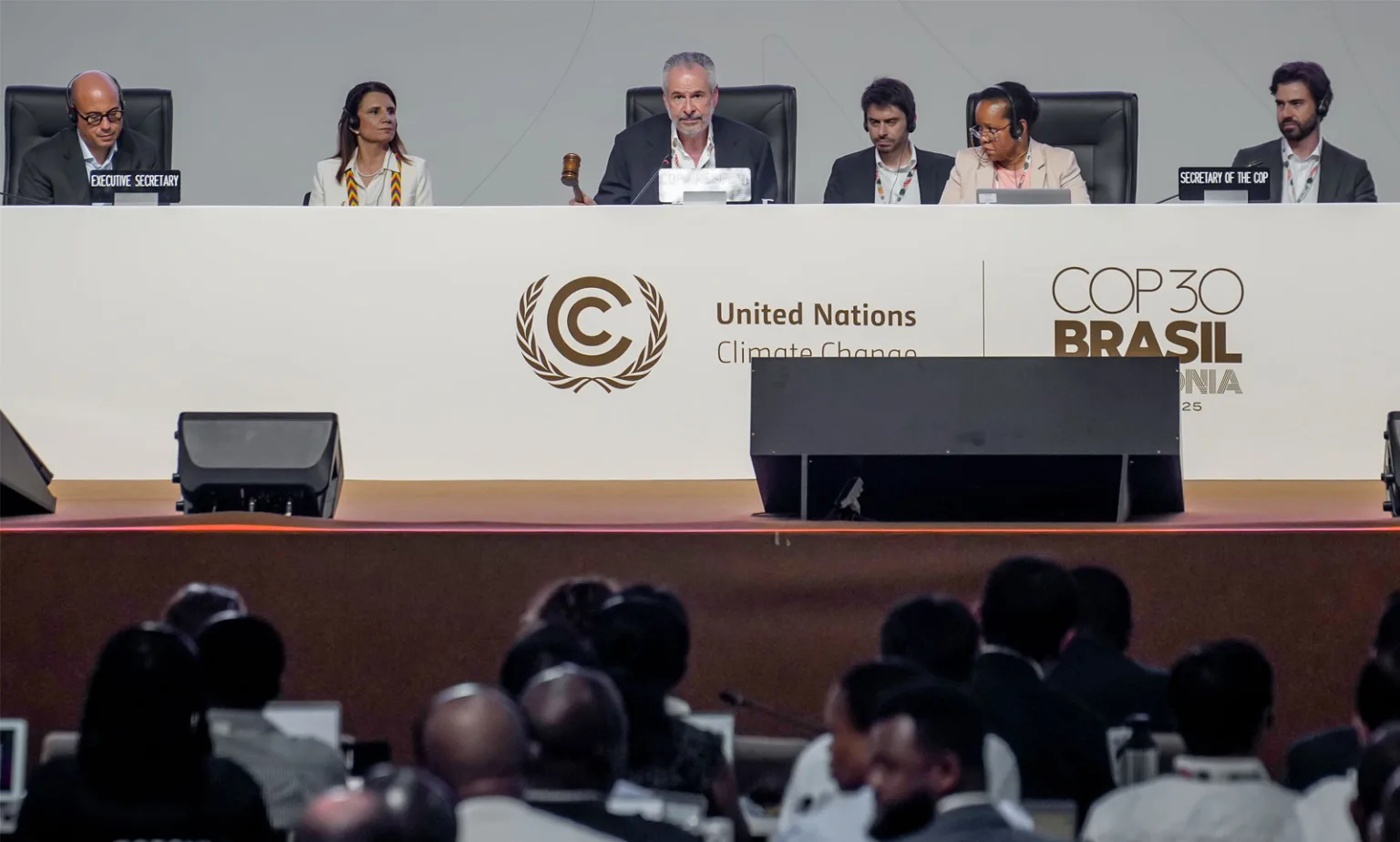
COP30 unfolded in a year marked by geopolitical tension and concerns over a roll back of climate leadership. Yet, although consensus negotiations were constrained, the message from Belém was unequivocal:

“The global transition towards low greenhouse gas emissions and climate-resilient development is irreversible and the trend of the future.”

COP30 was also a moment of restructuring and refocusing. The Paris Agreement was designed around bottom-up delivery based on national priorities, not top-down diktat. Ten years on, in the country where the UNFCCC was born, the full rulebook has been negotiated, and implementation has become the currency of climate action. Progress depends on identifying where interests align and creating momentum through practical collaboration, which is the way that the Paris Agreement was designed – around bottom-up delivery based on national priorities, not a top-down mandate.

This became apparent not just through the elevation and restructuring of the Action Agenda – which mobilizes 480+ initiatives involving 190 countries, tens of thousands of businesses, investors, and cities – as the engine of delivery to unblock barriers and scale solutions. This was also visible in the COP30 outcomes – where no consensus was available, countries agreed to move forward on voluntary initiatives on transitioning away from fossil fuels, deforestation and a Global Implementation Accelerator to close the gap on NDCs.

For business, these developments matter because business has been at the heart of the Action Agenda and this represents a shift towards greater political focus on the enabling conditions for investment. This means both opportunity and responsibility:

  • Identifying where clearer investment signals and frameworks are needed.
  • Contributing to platforms to shape standards and influence policy.
  • Working collaboratively to de-risk investments and technologies.
Businesses need to move from calling for ambition, to identifying the practical actions and implementation barriers that turn climate goals into investable opportunities. And businesses did come out in force. At the pre-COP São Paulo business week, over 1500 business leaders and investors emphasized the need to work across value chains to achieve competitive and resilient outcomes and attract investment and during COP30 businesses from all sectors and continent were engaged.  

The World Business Council for Sustainable Development (WBCSD) detailed summary of COP30 is AVAILABLE HERE.

****

At the Race to Zero working group meeting on November 25, Dr. Barbara Wassen, Ambassador-at-Large for Climate reported firsthand on developments and key decisions. You can read the related news and further information HERE.


02.12.2025
https://bcsdh.hu/wp-content/uploads/2025/12/COP30-Momentum-is-unstoppable.webp 900 1600 Nagy Andrea https://bcsdh.hu/wp-content/uploads/2021/12/bcsdh-logo.png Nagy Andrea2025-12-02 17:56:082025-12-02 17:56:57COP30: Momentum is Unstoppable – Business at the Heart of Accelerated Implementation

From paper to digital: SPAR saves several tonnes of paper with solutions aligned with international trends

Member News

SPAR Hungary is reducing paper usage in its logistics centres by introducing new best practices, while digitalisation in other areas is also delivering significant environmental benefits.

At SPAR Hungary’s logistics hubs in Bicske and Üllő, new measures have been introduced to cut paper consumption. Multi-page labels used for marking loading units are now printed double-sided, reducing paper usage by nearly half a tonne within the first four weeks after implementation. On an annual basis, this is expected to save around 5.5 tonnes of paper – fewer resources wasted, with no loss in efficiency.

“Sustainability is no longer just a principle for SPAR – it has become part of our everyday operations, from logistics right through to store management. We are proud that, thanks to the creative and responsible approach of our colleagues, we can deliver tangible results year after year in reducing paper consumption,” said Márk Maczelka, head of communications at SPAR Hungary.

Sustainability efforts, however, go beyond the warehouses. In recent months, SPAR Hungary has introduced several digitalisation measures that have significantly reduced paper use: paper-based cleaning and refrigeration control logs have been phased out, electronic work orders and service logs have been introduced, and training materials have moved online. Together, these initiatives are reducing the company’s annual paper needs by several dozen tonnes. SPAR is continuing its digital innovations in Hungary, having already rolled out electronic shelf labels in more than ten franchise partner stores, as well as in three company-owned supermarkets – in Budapest, Debrecen and the newly opened store in Szentendre. This paperless solution simultaneously enhances the customer experience, streamlines workflows, and supports sustainable operations. Based on these promising results, SPAR aims to introduce the technology in further stores.

Paper saving is also a global trend: digital transition brings not only environmental but also economic benefits. Companies that recognise the opportunities offered by the digitalisation of administration and documentation in good time can become more flexible, efficient, and sustainable in the long term. SPAR Hungary’s goal is to be at the forefront in this field as well, setting an example within the domestic retail sector.

01.12.2025
https://bcsdh.hu/wp-content/uploads/2024/09/spar.png 170 450 Gyurgyik Anna https://bcsdh.hu/wp-content/uploads/2021/12/bcsdh-logo.png Gyurgyik Anna2025-12-01 13:08:072025-12-01 13:08:07From paper to digital: SPAR saves several tonnes of paper with solutions aligned with international trends
Page 1 of 15123›»
Followon TwitterSubscribeto RSS Feed

Latest news

Categories

  • Award
  • Business Solution Award
  • Business Transformation award
  • Change Leader Award
  • Kiemelt hírek
  • Leading women award
  • Member News
  • New member
  • News
  • Uncategorized

Archives

  • December 2025
  • November 2025
  • October 2025
  • September 2025
  • August 2025
  • July 2025
  • June 2025
  • May 2025
  • April 2025
  • March 2025
  • February 2025
  • January 2025
  • December 2024
  • November 2024
  • October 2024
  • September 2024
  • August 2024
  • July 2024
  • June 2024
  • May 2024
  • April 2024
  • March 2024
  • February 2024
  • January 2024
  • December 2023
  • November 2023
  • October 2023
  • September 2023
  • August 2023
  • July 2023
  • June 2023
  • May 2023
  • April 2023
  • March 2023
  • February 2023
  • January 2023
  • December 2022
  • November 2022
  • October 2022
  • September 2022
  • August 2022
  • July 2022
  • June 2022
  • May 2022
  • April 2022
  • March 2022
  • February 2022
  • January 2022
  • December 2021
  • November 2021
  • October 2021
  • September 2021
  • August 2021
  • July 2021
  • June 2021
  • May 2021
  • April 2021
  • March 2021
  • February 2021
  • January 2021
  • December 2020
  • November 2020
  • October 2020
  • September 2020
  • July 2020
  • June 2020
  • May 2020
  • April 2020
  • March 2020
  • February 2020
  • January 2020
  • December 2019
  • November 2019
  • October 2019
  • September 2019
  • August 2019
  • July 2019
  • June 2019
  • May 2019
  • April 2019
  • March 2019
  • February 2019
  • January 2019
  • December 2018
  • November 2018
  • October 2018
  • September 2018
  • August 2018
  • July 2018
  • June 2018
  • May 2018
  • April 2018
  • February 2018
  • January 2018
  • December 2017
  • November 2017
  • October 2017
  • September 2017
  • May 2017
  • April 2017
  • March 2017
  • February 2017
  • December 2016
  • November 2016
  • October 2016
  • September 2016
  • August 2016
  • July 2016
  • June 2016
  • May 2016
  • April 2016
  • March 2016
  • February 2016
  • December 2015
  • November 2015
  • October 2015
  • September 2015
  • August 2015
  • July 2015
  • June 2015
  • April 2015
  • March 2015
  • February 2015
  • January 2015
  • December 2014
  • November 2014
  • October 2014
  • September 2014
  • August 2014
  • July 2014
  • June 2014
  • May 2014
  • April 2014
  • March 2014
  • February 2014
  • January 2014
  • December 2013
  • November 2013
  • September 2013
  • July 2013
  • June 2013
  • May 2013
  • April 2013
  • March 2013
  • February 2013
  • January 2013
  • November 2012

Business Council for Sustainable Development in Hungary
1118 Budapest, Ménesi street 9/a.

About us
Our mission
Our vision
Our Members
Annual Report
Contact

Carbon-aware events
Gallery

Policies and statements
Privacy policy
Competition Law Statement
Code of Ethics

World Business Council for Sustainable Development (WBCSD) National Partner

© Copyright - BCSDH - powered by Enfold WordPress Theme
  • Facebook
  • LinkedIn
  • Mail
Scroll to top