• Facebook
  • LinkedIn
  • Mail
  • Magyar Magyar Hungarian hu
  • English English English en
BCSDH
  • About us
    • Mission
      • Vision 2050
      • Management Guidelines
    • Organization
    • Partners
  • Our members
    • Membership
    • List of our members
    • Become a member
  • News
    • Our news
    • Member news
  • Our activities
    • 1. oszlop
      • Time to transform 2030
      • Race to Zero
      • Circular Economy Platform
      • ESG
      • Working groups
    • Future Leaders Program
      • Scholarship
    • For a Sustainable Future Award
    • International projects
      • ERASMUS+ DEDYCATING
      • ISSUE
      • Circular Regions
    • Archive
      • Action 2020
  • Events
    • Events calendar
    • Gallery
  • Resources
    • Business solutions
  • Circular Economy Hotspot 2026
  • Menu Menu
  • About us
    • Mission
      • Vision 2050
      • Management Guidelines
    • Organization
    • Partners
  • Our members
    • Membership
    • List of our members
    • Become a member
  • News
    • Our news
    • Member news
  • For a Sustainable Future Award
  • Our activities
    • Time to transform 2030
    • Race to Zero
    • Circular Economy Platform
    • ESG
    • Working groups
    • Future Leaders Program
      • Scholarship
    • International projects
      • ISSUE
      • Circular Regions
    • Archive
      • Action 2020
  • Resources
    • Business solutions
  • Events
    • Events calendar
    • Gallery
  • Circular Economy Hotspot 2026
You are here: Home1 / News2 / Member News

New member: METRO  

Member News

METRO GROUP is one of the largest and most important international retailing companies. In the financial year 2013/14 it generated sales of around €63 billion. The company operates around 2,200 stores in 30 countries and has a headcount of around 250,000 employees. The performance of METRO GROUP is based on the strength of its sales brands that operate independently in their respective market segments: METRO/MAKRO Cash & Carry – the international leader in self-service wholesale – Media Markt and Saturn – the European market leader in consumer electronics retailing – Real hypermarkets and Galeria Kaufhof department stores.

METRO Cash & Carry is the leading international player in wholesale trade and is the largest sales lines of METRO GROUP: customer-focused, international and innovative. The distinctive business concept is oriented towards helping professional customers to successfully run their own businesses. Celebrating its 50th birthday in 2014, the wholesale company strives to be championing the passion, ambition, creativity and flexibility of independent business.

In Hungary, as in every country it operates, METRO Cash & Carry stays true to its social responsibility and is widely engaged in the local community development as a reliable employer, a dedicated player in the trade infrastructure upgrade and an expert supplier of a broad range of products for its customers. As a responsible corporate citizen, METRO Cash & Carry Hungary aims to make a sustained contribution to the society as well as the environment within its business activities to help secure long-term sustainable growth.

MET

METRO Hungary has joined BCSDH in February 2015.

01.03.2015
0 0 admin https://bcsdh.hu/wp-content/uploads/2021/12/bcsdh-logo.png admin2015-03-01 09:53:452015-03-01 09:53:45New member: METRO  

New member: BIOFILTER Co.

Member News

BIOFILTER Co. is a environmental social company, specialized in bioenergy sector. It was founded in 1990, and for now, has a national collection and international processing network.

Top priority to produce energy from waste and secondary raw materials. The main profile of the company is supplying second-generation bio-energy sector, by providing the complex process of implementation of reverse logistics from the waste collected. The used cooking oil (UCO) collection, procession and import of purified vegetable oils provides raw material supplies for biodiesel plants in Hungary and neighbouring countries also.

From HoReCa and FMCG area, they collect expired food and wastes, that not allowed to be marketed, but can be used to produce biogas out of it. In 2011, for expanding the company profile, BIOFILTER started to do complex waste treatment, so by now, the company can collect and process 100% of the organic wastes, and 90% of hazardous wastes.

Biofilter Co. has joined BCSDH on 28 January 2015, after signing the ’Recommendations for Business leaders: The Complex Interpretation of Corporate Sustainability’ in November 2014.

Bio2

Photo: György Deák, CEO of  Biofilter Co. at signing the ‘Recommendations for Business leaders: The Complex Interpretation of Corporate Sustainability’

01.03.2015
0 0 admin https://bcsdh.hu/wp-content/uploads/2021/12/bcsdh-logo.png admin2015-03-01 09:41:102015-03-01 09:41:10New member: BIOFILTER Co.

SCA Hungary was awarded for its corporate social responsibility program

Member News

In an award ceremony in the end of November 2014, SCA Hungary was awarded for its corporate social responsibility program. “The prestigious award is the acknowledgement of all the efforts of SCA colleagues for the execution of the program. This is how SCA’s Care of Life concept has been put into practice.

SCA Hungary started a strategic cooperation with Bethesda Children’s Hospital to build a dormitory for mothers who want to stay with their children while staying in hospital. Children can pull through the hard medical treatments and recover more easily close to their mother. The goal was well defined, the actions were well planned and executed while SCA could mobilize all the local business units (Incontinence Care, Consumer Goods and AfH Professional) involving also the business partners, consumers and its own employees.

Win-win for all parties
Our efforts proved to be successful, using our communication resources and marketing expertise the hospital could collect enough money to start construction. “We must emphasize the sustainability element behind our CSR activity. Sustainability means it should be win-win for all parties therefore by definition we cannot just give away money,” says Zoltán Venter, Country Manager SCA Hungary.

SCA Hungary’s “Health is our joint mission” program has deserved the award because it is successful, efficient, and sustainable which is a model for other companies. On the occasion of the 30th anniversary of SCA Hungary next year we can be proud not only for our business results, but also our sustainable social responsibility which is an additional success factor in the forthcoming years.

sca

Proud representatives from SCA Hungary receiving the award, from left: Zoltán Venter managing director, Dóra Pessenlehner Libero brand manager, Gyula Markovics Public Affairs manager, Personal Care, Judit Sándor trade marketing manager, László Molnár commercial director of personal care  and Dezső Tápai sales manager AfH Professional Hygiene Europe.

10.02.2015
0 0 admin https://bcsdh.hu/wp-content/uploads/2021/12/bcsdh-logo.png admin2015-02-10 14:44:042015-02-10 14:44:04SCA Hungary was awarded for its corporate social responsibility program

Toyota Central Europe established

Member News

As of January 1, 2015, the business activities of Toyota and Lexus brands for the region of Central Europe were reorganized into the newly established Toyota Central Europe (TCE) located in Budapest.  As of the same date, three TCE front line offices began operations within this region, working separately for the Czech Republic, Hungary and Slovakia. TCE’s start of business activities within the region of Central Europe is a part of the reorganization process announced at the end of March 2014 by the European headquarters, Toyota Motor Europe located in Brussels.

Shingo Kato, formerly president of Toyota Motor Czech and Toyota Motor Hungary has been appointed TCE president. He has 20 years’ experience in European Toyota operations. The position of TCE’s vice-president has been assigned to Alain Dujardyn, who has an excellent experience record from various significant positions in Toyota’s European operations.

As for Toyota Central Europe Hungary, the Director is Richárd László who has held different positions within Sales and Marketing in the last 15 years, most recently as Sales and Marketing  General Manager of the carmaker’s Hungarian operations.

A company statement says the main objective of Toyota’s business reorganization within the region of Central Europe  is to improve the efficiency of operations and individual processes, taking place jointly at all three markets mentioned above. At the same time, support function synergies will be achieved by centralizing them to the Hungarian head office of TCE. New strong offices in the Czech Republic, Hungary and Slovakia are to play the role of ‘front line office’, focusing mainly on support provided to the network of authorized Toyota and Lexus partners, as well as all customers in the particular region.

Source: Diplomacy and Trade Magazine, February 2015


06.02.2015
0 0 admin https://bcsdh.hu/wp-content/uploads/2021/12/bcsdh-logo.png admin2015-02-06 15:51:492015-02-06 15:51:49Toyota Central Europe established

KPMG wins „Pro Bono Initiative of the Year” award

Member News

KPMG won the Volunteer Centre Foundation’s award for „The Year’s Pro Bono Initiative” in 2014.

In the frame of KPMG’s Program for Responsible Society we offercomplex cooperation to Hungarian non-profit organizations and social entrepreneurships, working in the fields of education, health and environmental protection. By participating in both the evaluation of tenders and in our pro-bono projects, our colleagues become more sensitive to social problems as well as have the opportunity to develop their skills and enhance their knowledge in a varying environment and get positive feedback. Such experiences inspire joint work and provide participants with energy and motivation.

In 2014 we received again more than 70 applications. The jury – composed of our volunteers – has already started evaluating the results, which will be announced soon.

21.01.2015
0 0 admin https://bcsdh.hu/wp-content/uploads/2021/12/bcsdh-logo.png admin2015-01-21 16:31:012015-01-21 16:31:01KPMG wins „Pro Bono Initiative of the Year” award

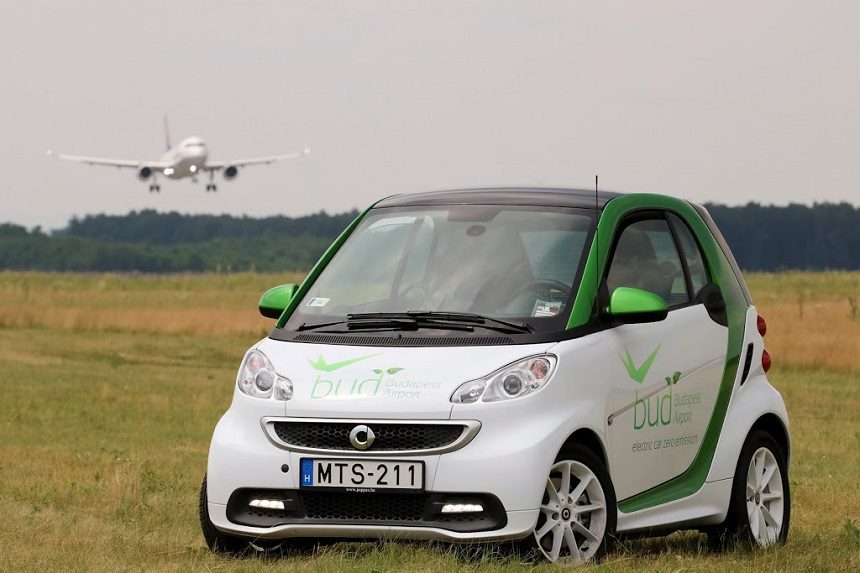
Budapest Airport: Amongst the greenest European airports

Member News

Although aviation is only responsible for global warming to an extent of two percent, and airports only generate 5 percent of the total emissions of the industry, airports around the world are making ever greater efforts to reduce carbon dioxide emissions and improve energy efficiency. Budapest Airport is leading the process amongst European airports, having reduced its emissions by approximately 6000 tons of carbon dioxide during the past two years. This is equivalent to the annual energy consumption of more than 500 households. Gábor Szarvas, director of community relations and environmental protection for Budapest Airport, was asked about their recipe for success and future plans. 

Your efforts to combat climate change were recognized recently by ACI Europe, the largest umbrella organization of European airports, by awarding a prestigious carbon accreditation certificate to Budapest Airport. When you received this for the first time, you said that Budapest Airport joined the elite club of European airports seeking to cut emissions. According to the latest news, you have now received a second certification, whereby you have reached the second level in this prestigious “club”, by achieving the 2nd grade of the accreditation. What does this mean precisely?

Budapest Airport joined the group of carbon–accredited airports in 2011. Carbon-accreditation is a comprehensive, multi-level environmental protection program spanning several years, with the ultimate goal of ensuring that the airport in question operates without any environmental carbon dioxide burdens. This is the long-term objective that Budapest Airport has also set itself when it joined the carbon accreditation program operated by Airports Council International (ACI). As a first step, since 2011 we measure the quantity of carbon dioxide emitted by Budapest Airport on a regular basis, which provides a clear picture about the energy consumption and the related environmental burdens of a given institution, company or sector. Every year, Budapest Airport drafts a report on this, and commissions an independent expert company to certify it. Following stagnation or a reduction of only a few percent in emissions during the previous years, Budapest Airport achieved a significant, 15% reduction in carbon dioxide emissions last year. The second level in the accreditation process basically means that we undertake to achieve a reduction of the same degree, on a continuous basis.

When you talk about energy consumption at an airport, what exactly do you mean? What counts towards these measurements?

Based on the methodology used since 2010, natural gas and electricity consumption, as well as the fuel consumption of the vehicles operated by Budapest Airport counts towards the total value. 

6000 tons of carbon dioxide during the past two years sounds impressive, but it does not mean too much to those of us who are not environmental experts. Could you give some examples how much or how significant this is?

Indeed, in 2013, airport operation generated nearly 6000 tons less in carbon dioxide emissions than in 2011. This is equivalent to the average annual energy consumption of 550 households, or burning 32 railroad cars of coal, or the average annual consumption of 1200 passenger cars. It is also an important indicator that 2000 hectares of forests would be required to store this quantity in one year.

This is considered a significant achievement in terms of emissions reduction. How were you able to achieve this, and, more importantly, how will you be able to fulfill your ambitious commitments for the future?

Our efforts over the past years have borne fruit. Amongst other things, we switched energy-inefficient machinery off the network, switched off the heating in a number of empty, disused buildings, optimized our energy supply systems in accordance with the specific needs of the summer and winter seasons, and installed solar collectors a long time ago to provide hot water for our offices. We are in the process of drafting our long-term energy strategy, and I am certain that once it is approved, we will be able to achieve additional, significant savings. We performed detailed calculations before we made our decision, so I am confident that we will be able to fulfill our undertaking. Moreover, the fact that ACI Europe issued the certification shows that they also believe we will be able to deliver on our commitments.

What measures does this involve specifically?

In order to reduce emissions, firstly we will implement numerous technical developments, including the modernization of our boiler house, the installation of new air handling units and LED lighting. Secondly, going forward we will place increased emphasis on trainings and raising awareness of energy efficiency. In addition, Budapest Airport has established an Energy and Carbon Management Working Group, with the aim of monitoring the achievement of our energy consumption objectives and coordinating the necessary measures.

A legzöldebb repülőterek között

In your view, Budapest Airport’s efforts to cut emissions can be described as average, lacking or pioneering, in international comparison?

Last year, at ACI’s general assembly held in Frankfurt, we learned that there are 102 large international airports participating in the international carbon accreditation program, including ourselves. Out of these, 85 are European. The total reduction in carbon dioxide emissions achieved was 133 599 tons, which is a reduction of 5.98 %. Budapest Airport is proud of the fact that in 2013, it was able to reduce its emission of greenhouse gases by a much greater degree, by nearly 15%. However, it is important to emphasize that in the case of the ACI program, participation is the most important, since the common enemy is climate change.

 It seems that airports are making ever greater efforts to reduce their carbon dioxide footprints. On a global scale, how much does this contribute to the collective fight against climate change?

Out of the various industries, aviation only makes a minor contribution of 2% to carbon dioxide emissions, and airport operation only accounts for 5% of that quantity. Irrespective of this, responsible thinking and operation is a must, as far as we are concerned. Our objective is to set a positive example for other sectors with our commitments and voluntary initiatives. I think the accreditation process is an excellent example of this, since it is not only recognized in our industry, but also by the environmental protection leaders of the United Nations. Also, it is ranked by the European Union amongst the three most successful programs on the continent in terms of contributing to an actual reduction in greenhouse gas emissions.

21.01.2015
0 0 admin https://bcsdh.hu/wp-content/uploads/2021/12/bcsdh-logo.png admin2015-01-21 15:40:412015-01-21 15:40:41Budapest Airport: Amongst the greenest European airports

KPMG study about materiality – not just for GRI G4 reports

Member News

KPMG’s recently published study provides guidance tomateriality assessment for sustainability reporting. It is in companies’ core interest to learn about the expectations of their stakeholders and to identify the most important topics for them. By doing so companies can assure to be able to react to the changes of their external environment effectivily and ensure sustainability. Furthermore, there is an increasing pressure on companies (mostly from regulatory bodies, consumers and the civil society) to report their non-financial performance according to internationally-recognised guidelines, that are based upon materiality assessment. Access the study here.

21.01.2015
0 0 admin https://bcsdh.hu/wp-content/uploads/2021/12/bcsdh-logo.png admin2015-01-21 14:40:252015-01-21 14:40:25KPMG study about materiality – not just for GRI G4 reports

Budapest Airport registers all-time passenger record in 2014

Member News

Budapest Airport consigned all previous passenger records to the history books in 2014. The capital airport of Hungary served 9,155,961 passengers last year, which is a solid 7.5 % increase against 2013. A series of new airlines started operating to new destinations from Budapest, while existing airlines either increased capacity or frequency to their earlier destinations.

9,155,961 – this was the exact number of departing and arriving passengers at Budapest Airport in 2014. Thus, the earlier record of 8.9 million passengers in 2011 has been surpassed by a large margin. The dynamic growth of passengers was spread evenly throughout the year, from which seven months generated all-time records in the history of Budapest Airport (February, March, April, May, June, November and December). The share of non-Schengen traffic increased to a healthy 36 %, which reduces the dependence of Budapest Airport on intra-European traffic.

The average load factor of airlines also rose to a record 79 %, which highlights the ever-growing demand amongst tourists and business travelers for visiting Budapest and Hungary. This high figure also makes flights to Budapest very attractive for airline operators, and provides a good basis for further improvements. Early forecasts by Budapest Airport’s aviation experts indicate a further traffic increase for 2015, to surpass 9.6 million passengers. With constantly increasing passenger numbers, Budapest Airport also managed to further improve the travel experience for passengers – a fact reflected in record high ratings given by travelers in the anonymous satisfaction surveys (ASQ) conducted on behalf of ACI (Airports Council International).budair

“We are extremely proud of the records reached in 2014, and see this as a result of our three years of effort to bring new airlines and new flights to Budapest. This is also the joint achievement of all those involved in the tourism industry, from airlines through travel agencies and hotels to our strategic partner, the national tourism organization (HNTO),” said Jost Lammers, the CEO of Budapest Airport. He added: “This robust growth enables us to continue our airport modernization and development program, worth over 15 million euros just this year. We will build a new maintenance hangar for Wizz Air in Budapest, and will modernize our instrument landing system (ILS). With this dynamic growth in passenger numbers, the airport and its related enterprises remain the largest employer in the Southern Pest region.”

For the summer of 2015, Budapest Airport has announced the renewal of transatlantic flights by Canadian carrier Air Transat, the addition of the 9th Budapest-based aircraft by Wizz Air to its local fleet, the start of new flights to Spain by Iberia and another Spanish carrier Vueling commencing flights from Barcelona and Rome-Fiumicino. “2015 is also set to be a bumper year, thanks to the huge boost in tourist numbers, driving new airlines to enter and existing ones to expand their operations. We expect more than 9.6 million passengers this year, which is great for the Hungarian economy, and is also a major boost for employment, especially in the hotel and tourism industry. We also continue to improve our services in all areas, ranging from airport parking, through digital information platforms to passenger-oriented commercial services in our terminals,” said Kam Jandu, chief commercial officer for Budapest Airport.

21.01.2015
0 0 admin https://bcsdh.hu/wp-content/uploads/2021/12/bcsdh-logo.png admin2015-01-21 09:16:452015-01-21 09:16:45Budapest Airport registers all-time passenger record in 2014

BASF’s product portfolio evaluated for sustainability

Member News
  • Around 50,000 product applications analyzed using new method
  • More than 20% of BASF products analyzed (by sales) today already make a particular contribution to sustainability

 In order to better help its customers align environmental and societal aspects with business success, BASF has developed a new process for steering its portfolio based on sustainability criteria. The Sustainable Solution Steering method is used to systematically review and evaluate the sustainability aspects of the approximately 50,000 relevant product applications in the company’s portfolio, which represent sales of €56 billion. The benefit: This externally validated process makes it possible to measure the products’ contribution to sustainability within their various markets and industries and to increase this contribution through targeted steps.

Over the past three years, BASF has already analyzed more than 80% of its portfolio of around 50,000 specific product applications. The data shows, for example, how a product contributes to cost effectiveness and resource conservation as well as to health and safety. The concrete sustainability requirements of various customer industries are taken into account as well as regional differences. Finally, the process determines the extent to which BASF solutions can accommodate these needs.

Based on the results to date, the analyzed product applications have been sorted into four categories:

  • Acceleratorsmake a substantial contribution in the value chain to sustainability. 22% of the analyzed products by sales are in this category.
  • Performersare solutions that meet the standard market requirements for sustainability. Around 73% fall under this category.
  • For the Transitioners , specific sustainability issues have been identified and concrete action plans defined. These recommendations are in the process of being implemented. Around 4.5% of the analyzed products are currently in this category.
  • Applications with a significant sustainability concern are labeled Challenged. BASF is developing action plans for these products in order to find improved solutions. This currently applies to 0.5%.

Sustainable Solution Steering aims to increase the number of “Accelerator” solutions in the long term in order to further improve the sustainability profile of both BASF and its customers. That is why the product portfolio is under continual review – which means that this four-category segmentation is also subject to change, for example, in response to altered market requirements or new legislation.

The whole product portfolio will have been analyzed by the end of 2014. With this new method, BASF continues to drive its “We create chemistry” strategy. “It is becoming increasingly important to our customers to be able to combine economic, environmental and societal demands. We see this development as a business opportunity for BASF, and intend to seize it in a targeted manner. This approach forms an integral part of our corporate purpose: ‘We create chemistry for a sustainable future.’ By analyzing our entire portfolio with respect to sustainability and systematically expanding on especially sustainable solutions, we underscore this endeavor,” said Dr. Kurt Bock, Chairman of the Board of Executive Directors of BASF.

16.10.2014
0 0 admin https://bcsdh.hu/wp-content/uploads/2021/12/bcsdh-logo.png admin2014-10-16 11:41:202014-10-16 11:41:20BASF’s product portfolio evaluated for sustainability

Nestlé and partners to create 100,000+ opportunities in Europe

Member News

Around 200 companies have joined forces under Nestlé’s “Alliance for YOUth” to tackle the youth unemployment crisis in Europe, pledging to create more than 100,000 opportunities for young people in the coming years.

The “Alliance for YOUth” is committed to working hand in hand with policy-makers and the education sector to foster both job employability and job creation.

Laurent Freixe, CEO Nestlé Europe said: “With around 200 companies from all over Europe, the “Alliance for YOUth” is the first pan-European business driven movement pledging to help young people be better prepared to enter the professional world and improve their chances in a challenging job market.”

YOUTH UNEMPLOYMEMENT: 1 in 4 young people under 25 is unemployed in Europe.

“Alliance for YOUth” companies have pledged to develop a number of joint and individual initiatives to give young people meaningful work experience and internships, generating more than 100,000 jobs and training opportunities.

The companies will also mobilise their employees to go out into the community and help young people get ready for work by offering practical advice, CV clinics and interview preparation.

Founding firms include recruiter Adecco, insurer AXA, international food group Cargill, logistics group CHEP, packaging company DS Smith, consultants Ernst & Young, social networking company Facebook and perfume and flavour firm Firmenich.

Information technology firm Google, consumer insights group Nielsen, communications firm Publicis Groupe, technology firm Salesforce, information exchange platform Twitter and law firm White & Case have also already signed up to the Alliance.

The “Alliance for YOUth” is the fourth pillar of Nestlé’s European youth employment initiative, “Nestlé Needs YOUth”, launched in November 2013.

16.10.2014
0 0 admin https://bcsdh.hu/wp-content/uploads/2021/12/bcsdh-logo.png admin2014-10-16 11:21:002014-10-16 11:21:00Nestlé and partners to create 100,000+ opportunities in Europe
Page 63 of 66«‹6162636465›»
Followon TwitterSubscribeto RSS Feed

Latest news

Categories

  • Award
  • Business Solution Award
  • Business Transformation award
  • Change Leader Award
  • Kiemelt hírek
  • Leading women award
  • Member News
  • New member
  • News
  • Uncategorized

Archives

  • January 2026
  • December 2025
  • November 2025
  • October 2025
  • September 2025
  • August 2025
  • July 2025
  • June 2025
  • May 2025
  • April 2025
  • March 2025
  • February 2025
  • January 2025
  • December 2024
  • November 2024
  • October 2024
  • September 2024
  • August 2024
  • July 2024
  • June 2024
  • May 2024
  • April 2024
  • March 2024
  • February 2024
  • January 2024
  • December 2023
  • November 2023
  • October 2023
  • September 2023
  • August 2023
  • July 2023
  • June 2023
  • May 2023
  • April 2023
  • March 2023
  • February 2023
  • January 2023
  • December 2022
  • November 2022
  • October 2022
  • September 2022
  • August 2022
  • July 2022
  • June 2022
  • May 2022
  • April 2022
  • March 2022
  • February 2022
  • January 2022
  • December 2021
  • November 2021
  • October 2021
  • September 2021
  • August 2021
  • July 2021
  • June 2021
  • May 2021
  • April 2021
  • March 2021
  • February 2021
  • January 2021
  • December 2020
  • November 2020
  • October 2020
  • September 2020
  • July 2020
  • June 2020
  • May 2020
  • April 2020
  • March 2020
  • February 2020
  • January 2020
  • December 2019
  • November 2019
  • October 2019
  • September 2019
  • August 2019
  • July 2019
  • June 2019
  • May 2019
  • April 2019
  • March 2019
  • February 2019
  • January 2019
  • December 2018
  • November 2018
  • October 2018
  • September 2018
  • August 2018
  • July 2018
  • June 2018
  • May 2018
  • April 2018
  • February 2018
  • January 2018
  • December 2017
  • November 2017
  • October 2017
  • September 2017
  • May 2017
  • April 2017
  • March 2017
  • February 2017
  • December 2016
  • November 2016
  • October 2016
  • September 2016
  • August 2016
  • July 2016
  • June 2016
  • May 2016
  • April 2016
  • March 2016
  • February 2016
  • December 2015
  • November 2015
  • October 2015
  • September 2015
  • August 2015
  • July 2015
  • June 2015
  • April 2015
  • March 2015
  • February 2015
  • January 2015
  • December 2014
  • November 2014
  • October 2014
  • September 2014
  • August 2014
  • July 2014
  • June 2014
  • May 2014
  • April 2014
  • March 2014
  • February 2014
  • January 2014
  • December 2013
  • November 2013
  • September 2013
  • July 2013
  • June 2013
  • May 2013
  • April 2013
  • March 2013
  • February 2013
  • January 2013
  • November 2012

Business Council for Sustainable Development in Hungary
1118 Budapest, Ménesi street 9/a.

About us
Our mission
Our vision
Our Members
Annual Report
Contact

Carbon-aware events
Gallery

Policies and statements
Privacy policy
Competition Law Statement
Code of Ethics

World Business Council for Sustainable Development (WBCSD) National Partner

© Copyright - BCSDH - powered by Enfold WordPress Theme
  • Facebook
  • LinkedIn
  • Mail
Scroll to top