Exclusive CEO Breakfast organized by BASF Hungary
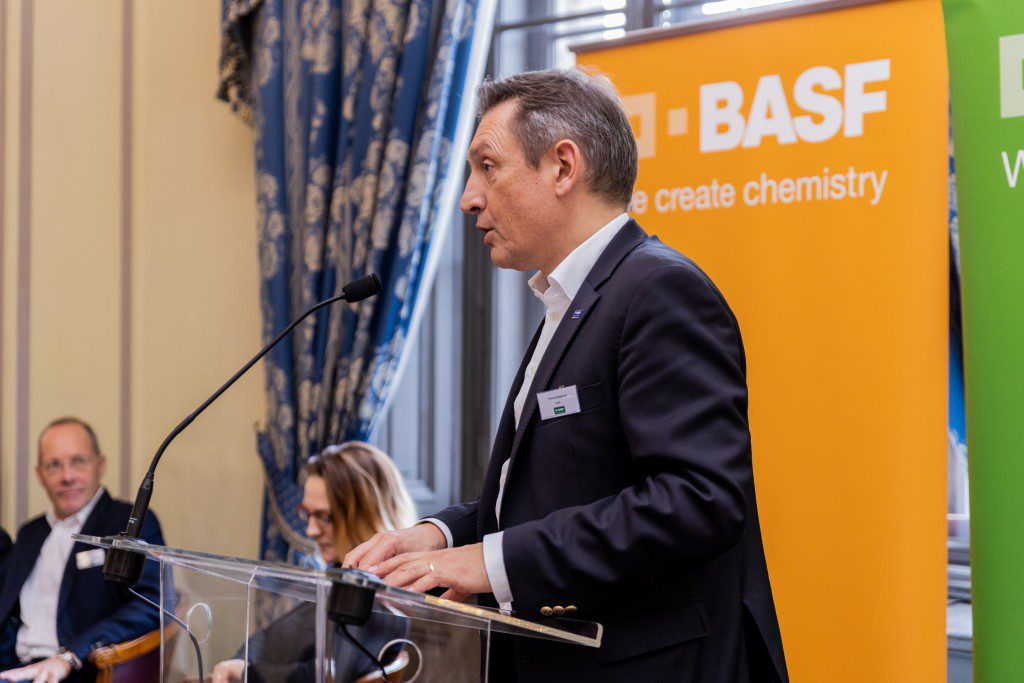
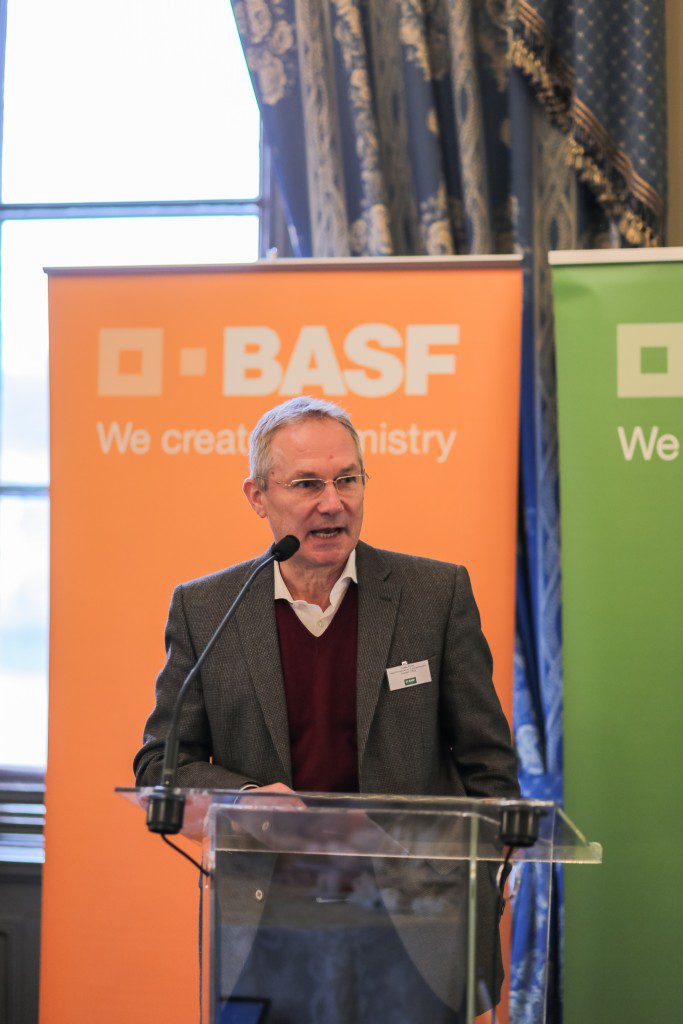
As a company investing in making our economy fit for the future, BASF is dedicated to support sustainable development globally, in Europe and also in Hungary. On the sidelines of the visit of former BASF EMEA president, Prof. Dr. Markus Kramer to Hungary on Dec 10th 2019, BASF Hungary organized an exclusive CEO business breakfast with the participation of Csaba Kőrösi, the Head of Directorate for Environmental Sustainability at the Office of the President of Hungary and H.E. Elizabeth Ellison-Kramer Ambassador of the Republic of Austria to Hungary. The host of the event was Dr. Thomas Narbeshuber, the leader of Country Cluster South-Central Europe (EUN/S). The business breakfast focused on concrete actions along with highlighting the importance of the legislative framework, and welcomed CEOs from Hungarian, German and international companies as well as many other local partners of BASF besides the representatives of the most important policital decision maker bodies, such as the Ministry for Innovation and Technology. After the presentation of Mr. Csaba Kőrösi and Prof. Dr. Kramer, a panel discussion was held featuring the keynote speakers as well as Dale Martin (Siemens), Anita Simon (Alteo) and Ekkehard Philipp (Fox Automotive).
As it was stated in the title of the event, the presentations and the panel discussion focused on how sustainability is reshaping business and how decision makers can or should cope with this fundamental transformation.
In his presentation, Mr. Csaba Kőrösi gave an insight on global sustainability developments and drew a sustainability vision for Hungary. In his view, sustainability cannot be regarded separate from economic and social developments but needs to consider all aspects. Therefore, we need to set new priorities, develop plans and change rules, institutions and mechanisms.
„The world (including the business scene) is currently in the largest transformation we have ever embarked on, much bigger than the industrial revolution was. The traditional perception is prompting that we shall have the current system continuing, we add some more money for sustainable solutions and that additional money will save our lives and businesses. But this is wrong.” – said Mr. Kőrösi. „The markets are undergoing a trajectory change nowadays. We need to reconsider our economic activities with careful view to the overall balance of all assets, including the social, human, natural, built and financial capitals. The integrated approach is inevitably redefining and will restructure markets. In the upcoming 15 years, USD 90-100 trillion of investment is expected to come into projects, solutions, new technologies if we really want to achieve our agreed sustainability goals. In 20 years, 40% of the global GDP will be generated by companies that do not exist today or are still in embryonic forms. There will be new winners and new losers. Where do we want to be as countries or companies? The time is now to decide.” – he added.
Representing the business, Prof. Dr. Markus Kramer called the political decision makers to action. He stated that industry has a huge role in shaping the future of mankind, but business alone cannot solve the problem, optimal framework is needed for fulfilling the needs of the society.
In his closing sentences the host of the event, Dr. Thomas Narbeshuber, pointed out that for reaching our common goals that were expressed in the speeches and the panel discussion, open, non-dogmatic dialogues like this are needed much more often. This is why BASF Hungary organizes forums and events for stakeholders with the topic sustainability regularly.