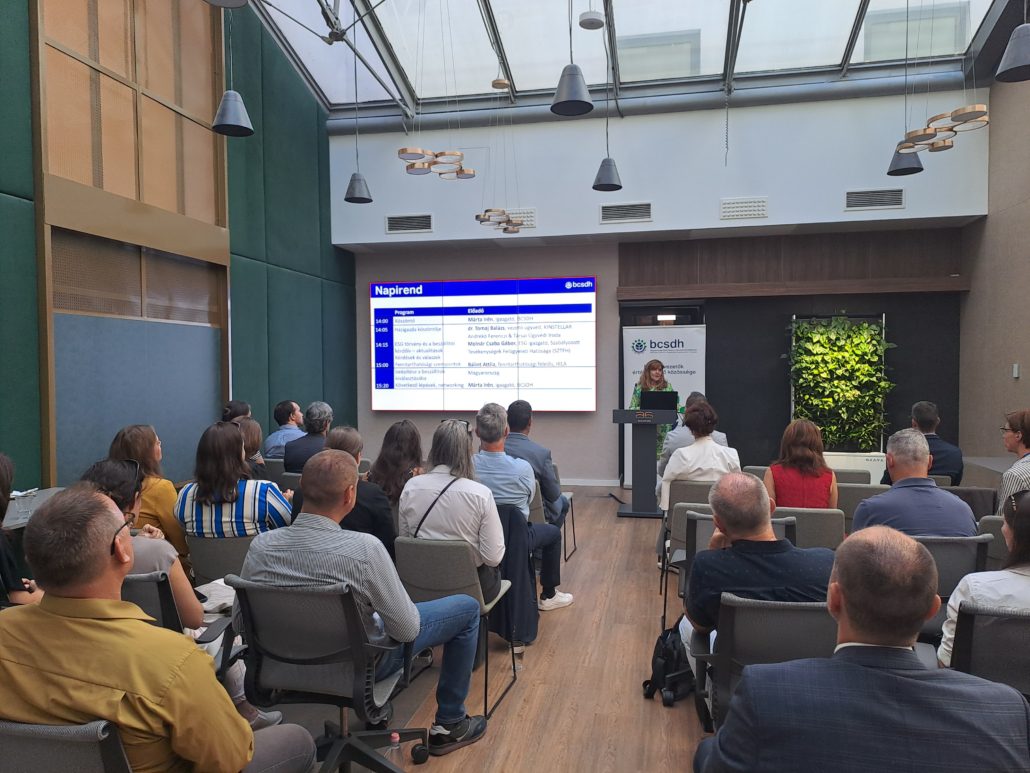
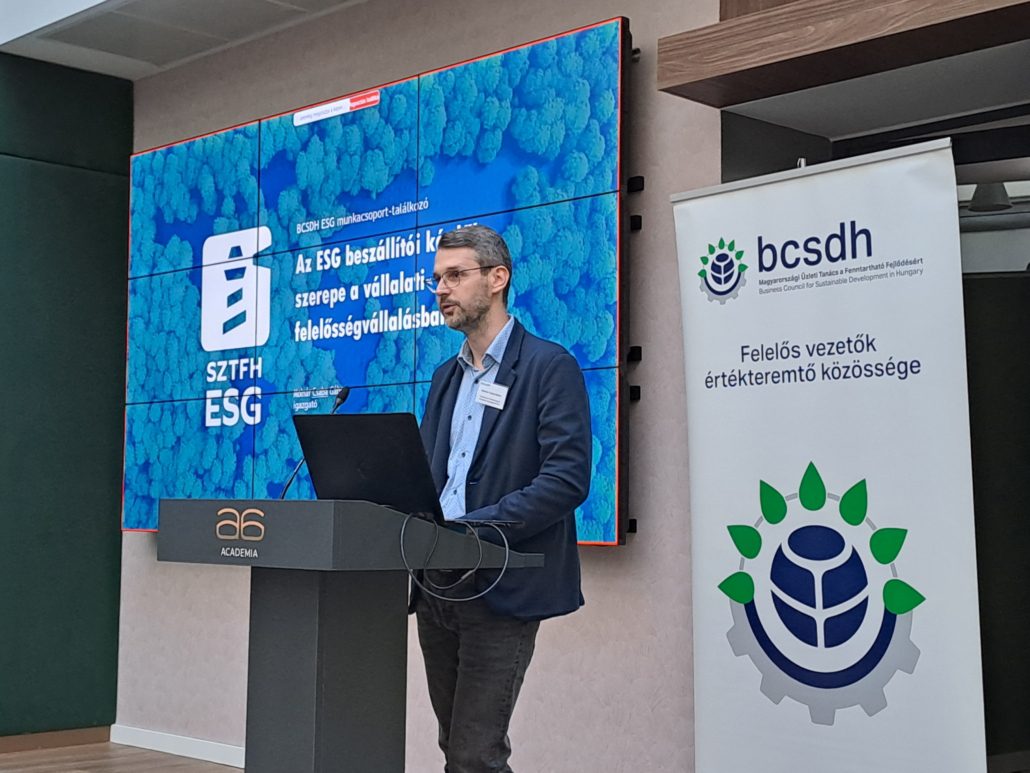
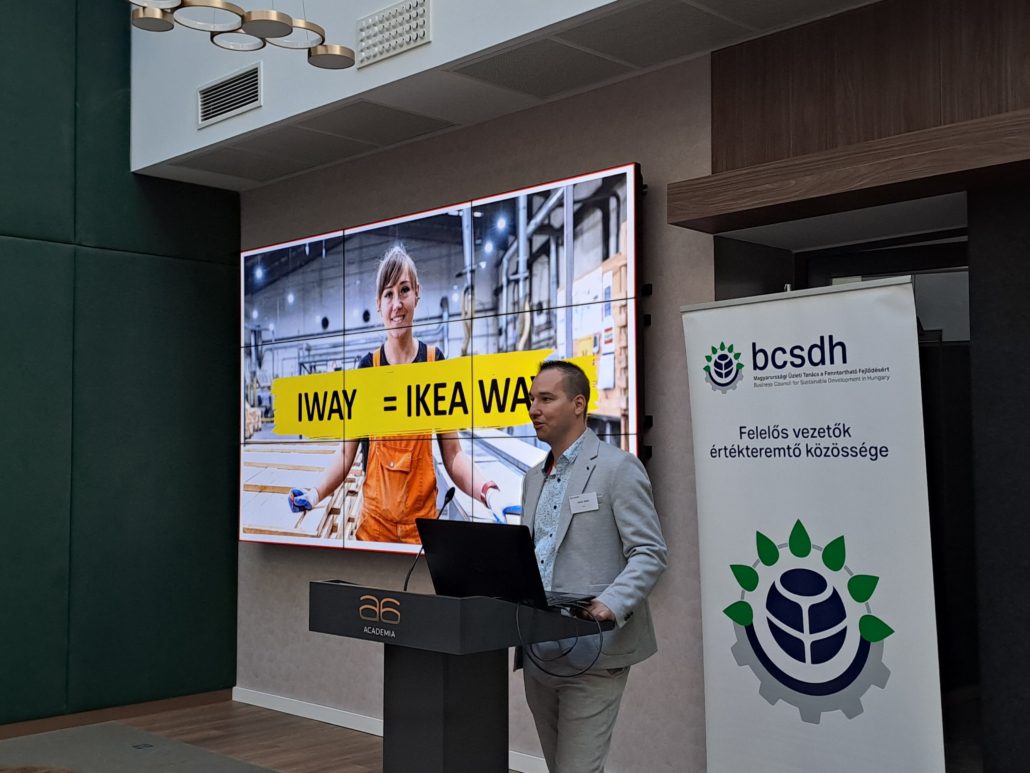
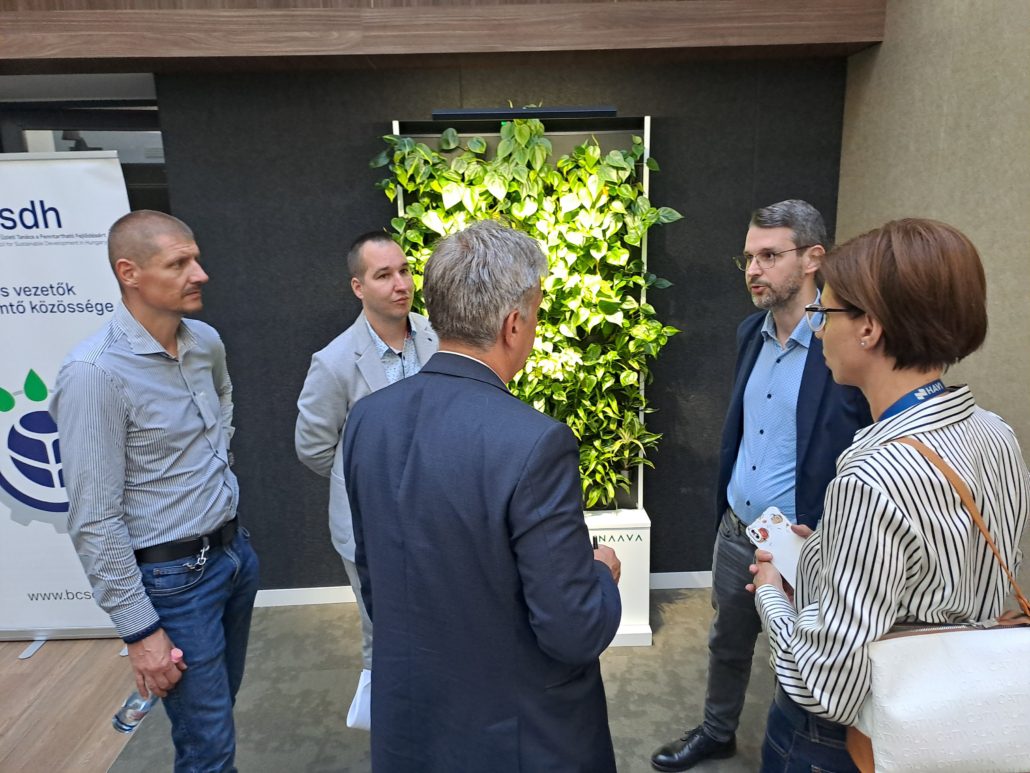
Can creating a sustainability report have a team-building aspect? Can such a report be a management tool? How can one get started, why is it worth preparing trial reports and collecting data now? These were the questions addressed by BCSDH’s first communications working group of the year, hosted by Gránit Pólus on March 20, 2024.
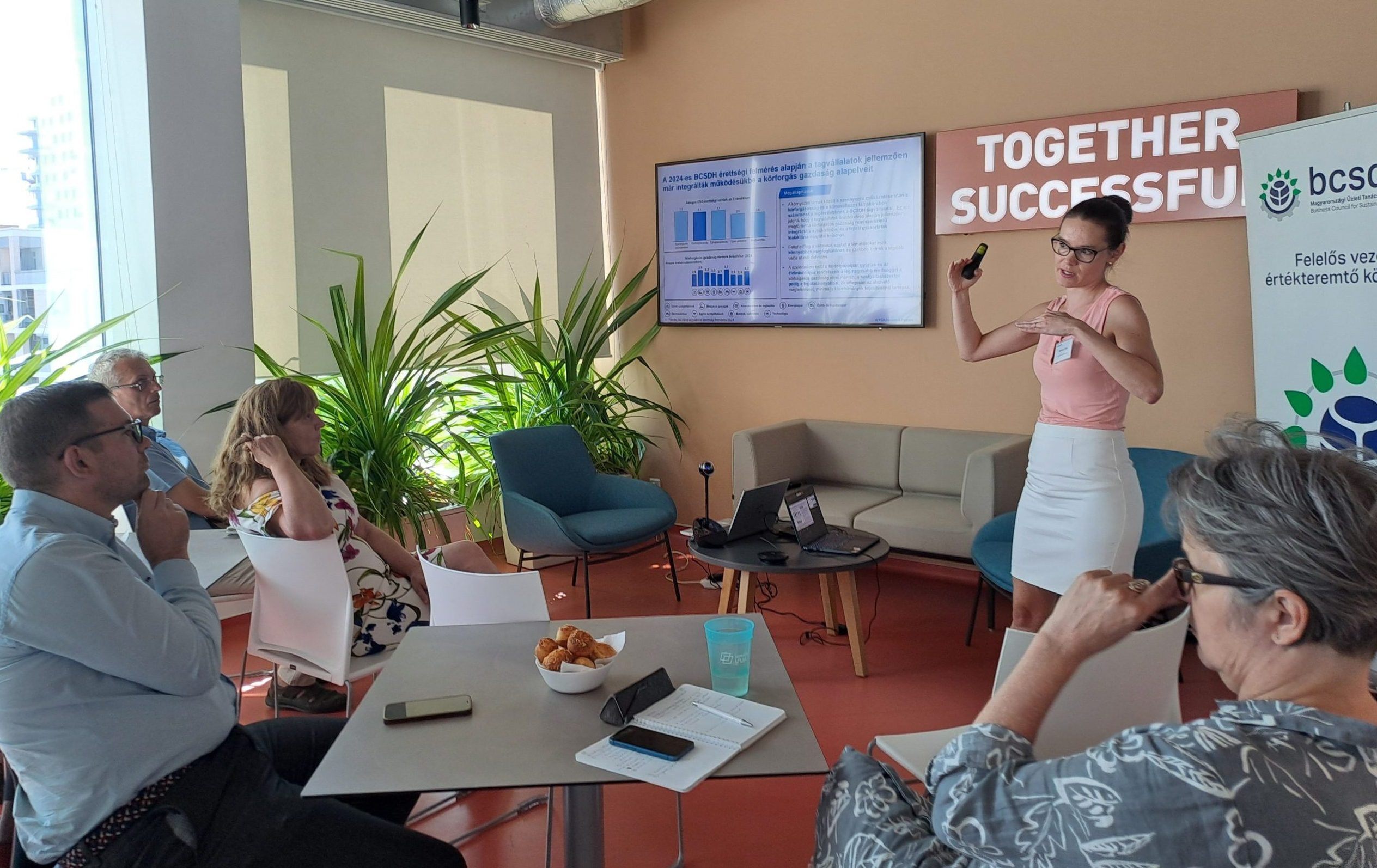
Eszter Ujvári, Employer Branding and Communications Coordinator, welcomed the participants, followed by Dóra Szemerédi, the company’s ESG leader, who gave an inspiring insight into her company’s sustainable operational strategy and good practices. She highlighted their achievements in energy and waste management, showcasing good examples like the expanding ReStore at WESTEND, which started with used clothing, and the Rooftop Terrace focusing on biodiversity and habitat regeneration.

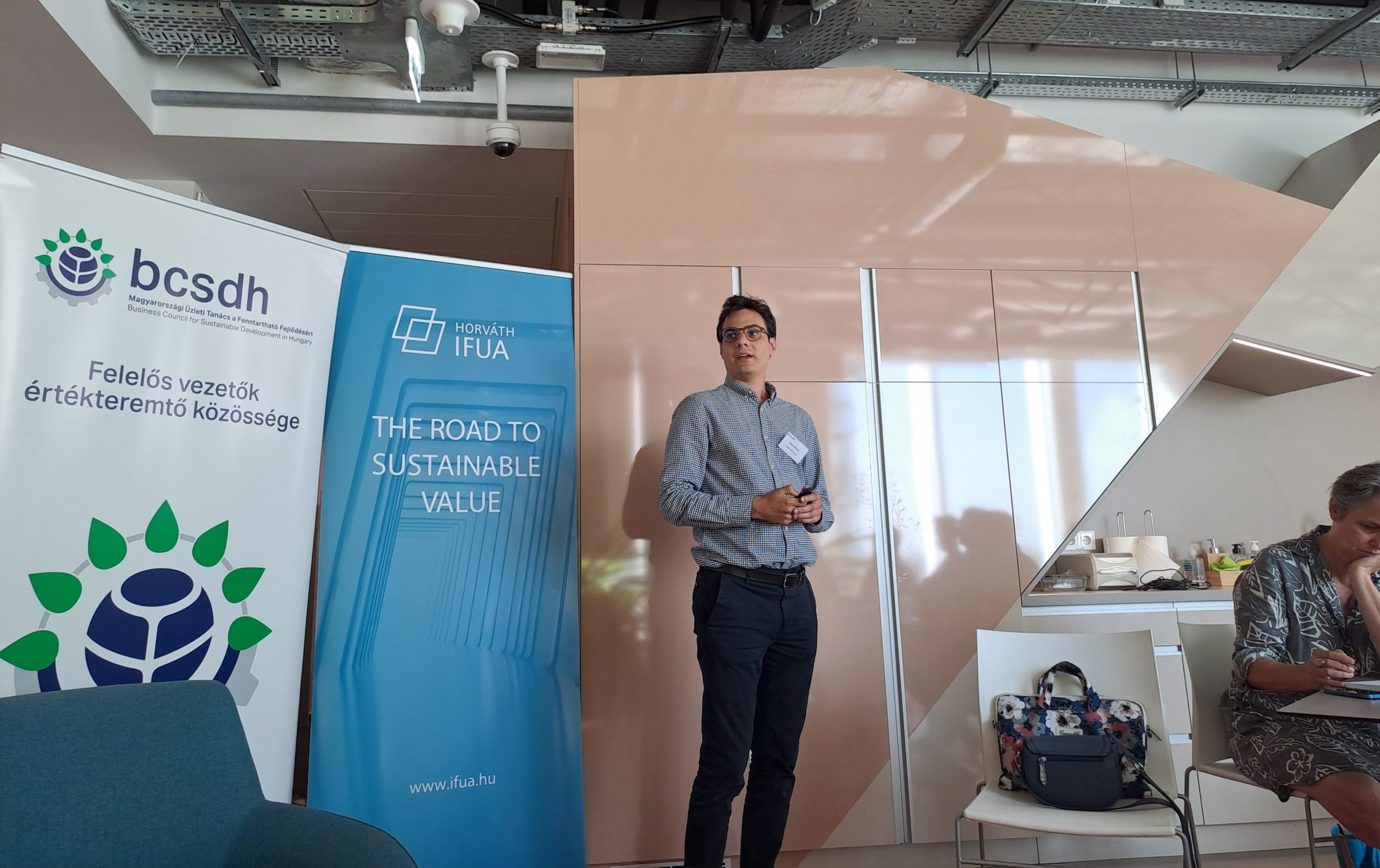
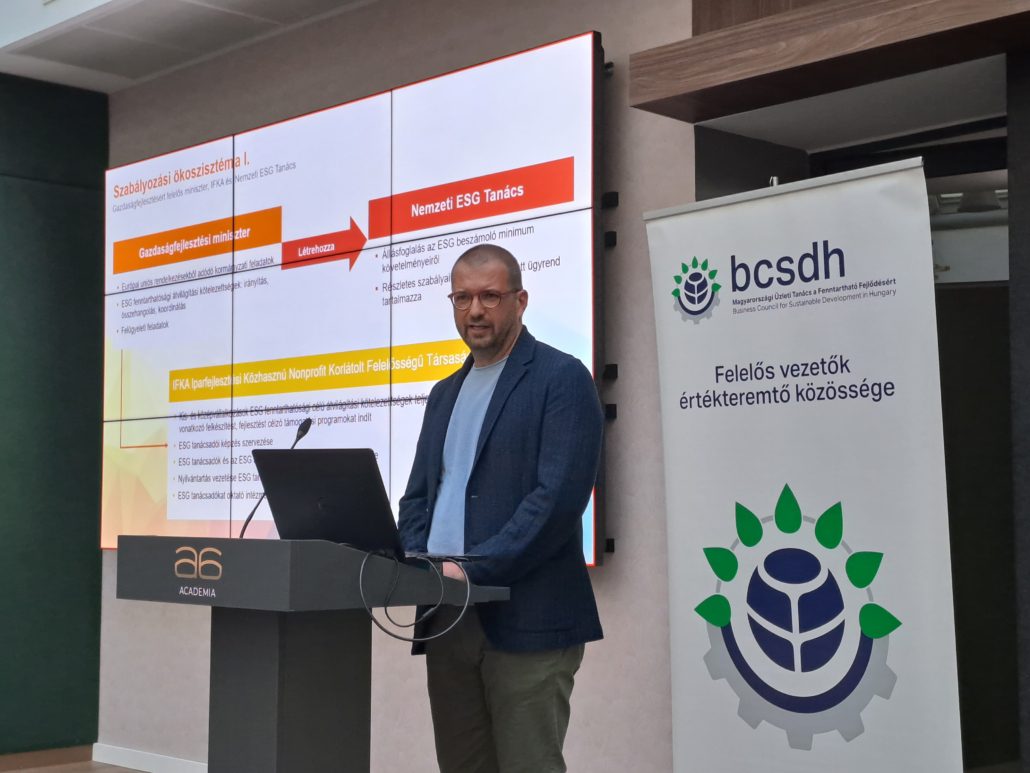
The greatest risks and challenges in business now relate to environmental and social issues. Increasing reporting pressure from the EU and Hungarian regulations will gradually affect all companies. Irén Márta, Executive Director of BCSDH, spoke about the current legal regulations, stakeholders, and the process.
It is up to the companies to leverage the advantages that the report, collected data, and articulated goals can offer. This work is often coordinated by the communications, CSR, or marketing departments.
Participants of the roundtable discussion following the introductory presentation provided insights into the practice of report preparation and shared their experiences: Ildikó Farkas, CFO of Graphisoft Park, Andrea Koncsikné Káli, Communications and Marketing Manager of PURECO Kft., and Gábor Dávid Kovács, Marketing Director of Zwack Unicum Nyrt.
Graphisoft Park, already based on a sustainable business model, prepared its first ESG/Sustainability report in 2023, encouraged by the BÉT, which won the Green Frog Award. PURECO Kft. also prepared its first report in 2023, winning the BÉT competition. Zwack Unicum Nyrt. has been reporting on its social and sustainability performance since 2008.
All three companies will have reporting obligations under the Hungarian ESG law and the European CSRD. They emphasized the importance of having established practices and processes and building the internal and external stakeholder relationships necessary to support the process and data collection by the time they need to report officially.
All three companies confirmed that this is a time and human resource-intensive task, but they have already experienced numerous benefits in the short term. Beyond business success and advantages, it has improved information flow within the organization, provided insights into different areas, raised awareness of achievements within the organization, and even served as a kind of “team-building.”