• Facebook
  • LinkedIn
  • Mail
  • Magyar Magyar Hungarian hu
  • English English English en
BCSDH
  • About us
    • Mission
      • Vision 2050
      • Management Guidelines
    • Organization
    • Partners
  • Our members
    • Membership
    • List of our members
    • Become a member
  • News
    • Our news
    • Member news
  • Our activities
    • 1. oszlop
      • Time to transform 2030
      • Race to Zero
      • Circular Economy Platform
      • ESG
      • Working groups
    • Future Leaders Program
      • Scholarship
    • For a Sustainable Future Award
    • International projects
      • ERASMUS+ DEDYCATING
      • ISSUE
      • Circular Regions
    • Archive
      • Action 2020
  • Events
    • Events calendar
    • Gallery
  • Resources
    • Business solutions
  • Circular Economy Hotspot 2026
  • Menu Menu
  • About us
    • Mission
      • Vision 2050
      • Management Guidelines
    • Organization
    • Partners
  • Our members
    • Membership
    • List of our members
    • Become a member
  • News
    • Our news
    • Member news
  • For a Sustainable Future Award
  • Our activities
    • Time to transform 2030
    • Race to Zero
    • Circular Economy Platform
    • ESG
    • Working groups
    • Future Leaders Program
      • Scholarship
    • International projects
      • ISSUE
      • Circular Regions
    • Archive
      • Action 2020
  • Resources
    • Business solutions
  • Events
    • Events calendar
    • Gallery
  • Circular Economy Hotspot 2026
You are here: Home1 / News2 / News

CIRCULAR ECONOMY- SUSTAINABLE FLOW MANAGEMENT IN AGRICULTURE – THE DUTCH EXPERIENCE

News

The Netherlands is a pioneer in the world of circular economy. The country even intends to become a circular hotspot in the whole European region. Following our succesful conference in May, the Royal Netherlands Embassy and the Netherlands-Hungarian Chamber of Commerce organise another event about circular economy. The aim of this conference is to present innovative Dutch ways for developing a circular approach in the agriculture for Hungarian companies and decision-makers.

12 December 2016 – Impact Hub, Ferenciek tere 2.

The conference is in Hungarian with English translation. You have the possibility to network during the matchmaking session. The event is free of charge, but registration is compulsory. Save the date in your calendar and register at the following link: http://dutcham.hu/events/registration/23

Our co-organising partner:

holland-magyar-kereskedelmi-kamara-logo

24.11.2016
0 0 admin https://bcsdh.hu/wp-content/uploads/2021/12/bcsdh-logo.png admin2016-11-24 09:41:572016-11-24 09:41:57CIRCULAR ECONOMY- SUSTAINABLE FLOW MANAGEMENT IN AGRICULTURE – THE DUTCH EXPERIENCE

We have to stop talking and start walking

News

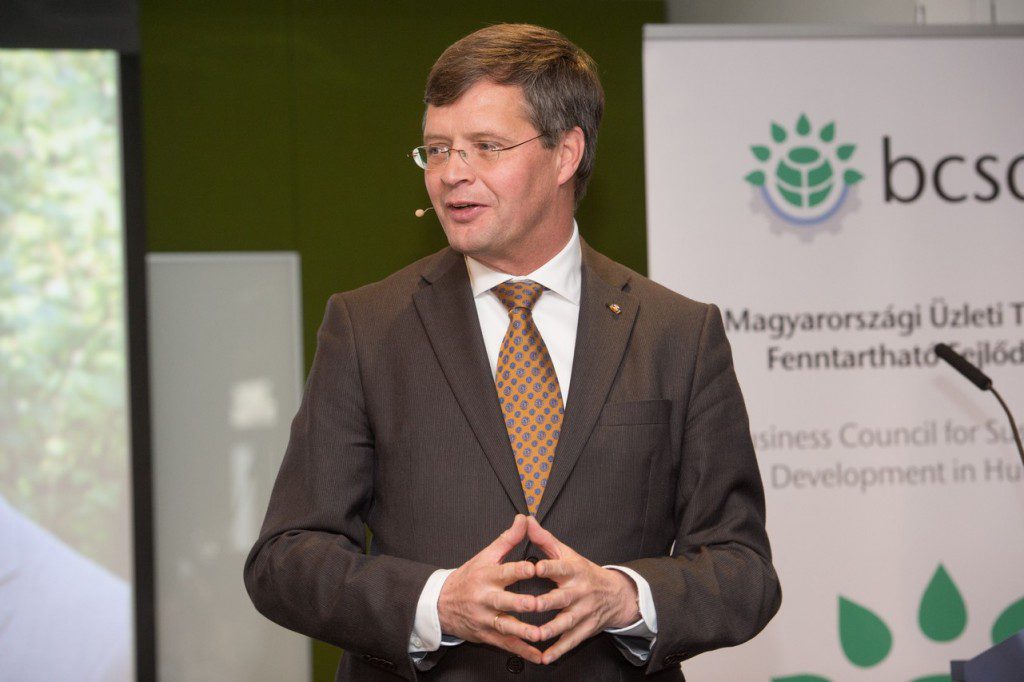
‘We have to stop talking and start walking.’ – with this provocative beginning, Jan Peter Balkenende, former prime minister of the Netherlands, delivered his successful speech about climate change at BCSDH’s business lunch organised for business leaders. During this event, BCSDH’s unique, four-point recommendations for the business sector were announced to help accelerate the shift towards a low-carbon economy, representing a milestone in Hungarian sustainability.

BCSDH Üzleti ebéd 2016.11.17.

BCSDH Üzleti ebéd 2016.11.17.

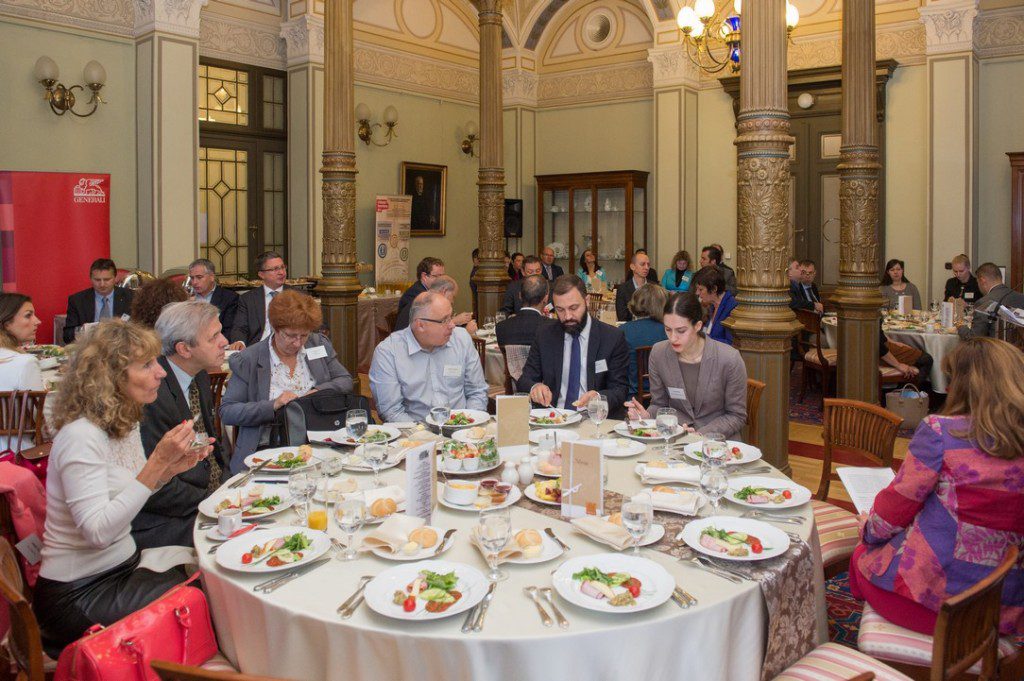
The Business Council for Sustainable Development (BCSDH) held its annual business lunch, simultaneously with the COP 22 Climate Change Conference in Marrakech. Recommendations were announced at this event, representing a milestone in sustainability initiatives for the Hungarian economy. As guest speaker, Professor Jan Peter Balkenende, former prime mister of the Netherlands, gave a successful speech about the role of businesses in mitigating climate change. BCSDH, which represents a community of 75 member companies that contribute 30% of Hungary’s GDP, invited the professor-politician to the event within the framework of the Action 2020 program in cooperation with the Embassy of the Kingdom of the Netherlands.

dsc_6886

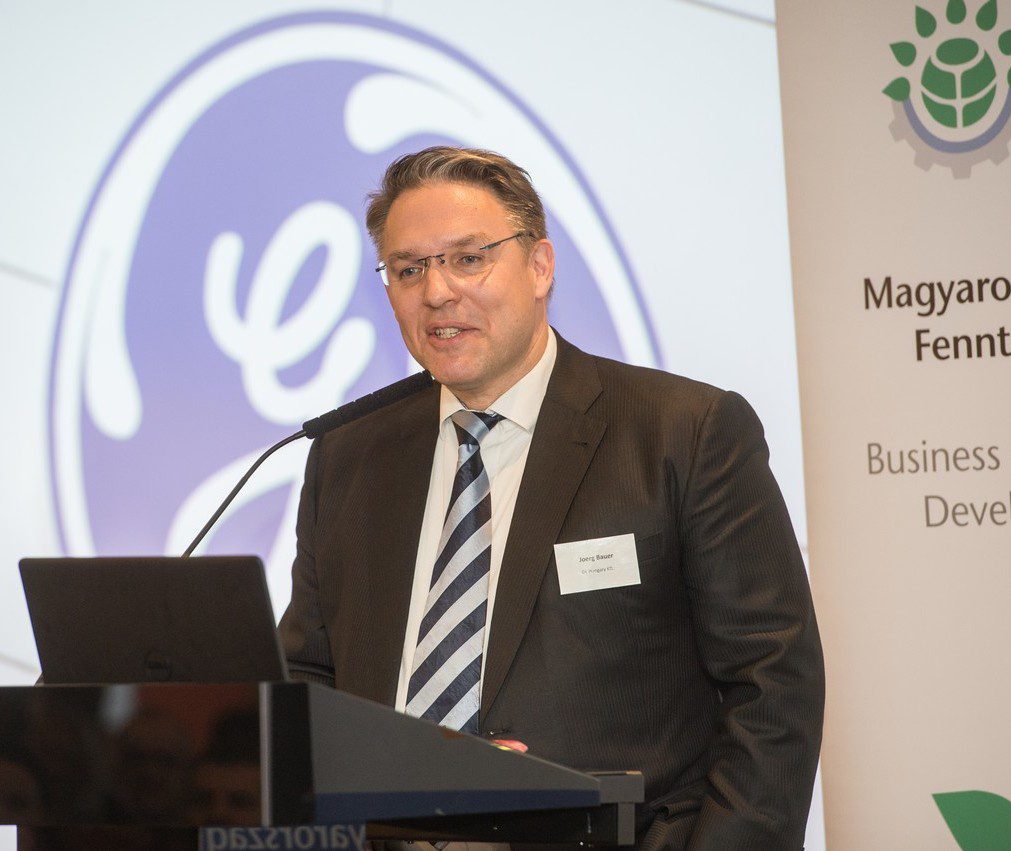
On behalf of GE, the host organisation of this event, President Joerg Bauer welcomed the 150 guests. Gajus Scheltema, Ambassador to Hungary of the Kingdom of the Netherlands then gave a welcome speech, followed by Jan Peter Balkenende, who spoke about the need for immediate action on climate change, and how the business sector should play a major role in this.

“Businesses and institutions are not only responsible for their own profits and well-being, but they also have a responsibility towards people and to create a better life for the next generation” – said Jan Peter Balkenende, adding that, besides other sustainability issues, climate change also makes long-term thinking indispensable for companies. “The longer you wait to implement measures, the tougher it will be in the future. So we cannot wait, and we need to do it together!”

dsc_6915

Irén Márta, managing director of BCSDH, stated that one company alone cannot change the world, so there is a need for new alliances and cooperation within value chains. BCSDH, the national partner organization of World Business Council for Sustainable Development (WBCSD), represents one such corporate alliance. WBCSD has just announced its business recommendations for introducing carbon pricing at the COP 22 Climate Change Conference. At the same time, its national partner organisation also put forward recommendations for the business sector to support the transition towards a low-carbon economy. The four points in the recommendation identify the ways in which Hungarian companies can effectively contribute to global processes. The entire business sector and any company can now take measurable steps forward.irenmarta


BCSDH’s recommendations for Business on Climate Change:

  1. Analyse the local risks and opportunities associated with climate change, and create related action plans
  2. Introduce carbon footprint measurement, analyse results and conduct action planning on an ongoing basis with regard to effectively decreasing carbon emissions
  3. Identify and create action plans for energy use and/or CO2 emissions related to the processes of consumption and the use of products and services by shaping the attitudes and behaviour of consumers and customers
  4. Raise awareness among employees

dsc_6876

“It is very important for us at BCSDH to cooperate with those business leaders that are familiar with sustainability and who are aware of the importance of climate protection. Through the Action 2020 program we have worked with more than 150 experts over the past years who represent the business, civil and scientific sectors, and this collaboration has resulted in the recommendations announced today. It’s my conviction that, in the long run, you can only survive as an economic player if you have an entrepreneurial spirit, you are innovative and you are sustainable. However, if these components are harmonized, you can obtain a significant competitive advantage.” – said Attila Chikán Jr., President of BCSDH.

One of the tools for achieving this goal is the BCSDH’s Action 2020 Hungary program which explores and inspires business solutions that go beyond ‘business as usual’, and which, as good practices, can be disseminated to a broader range of business actors. More than 50 companies have already joined the program.

In 2016, Climate Change is the main focal area of the Action 2020 Hungary program. With the involvement of CEOs, more than 50 civil, scientific and business experts formulated their recommendations on climate change. They have identified business solutions for both the business sector and the stakeholders who are affected, the promotion and implementation of which will positively impact climate change.

The main sponsors of this program in 2016: Siemens and Tesco, highlighted sponsors: Alteo Group, Generali, Hungrana, McDonald’s, Nestlé, Unilever

Photos of the event you can find here.

Mr. Balkenende’s presentation can be reached here.

18.11.2016
0 0 admin https://bcsdh.hu/wp-content/uploads/2021/12/bcsdh-logo.png admin2016-11-18 13:14:412016-11-18 13:14:41We have to stop talking and start walking

WBCSD Sustainable Materials cluster has launched the MarketplaceHUB

News

The WBCSD Sustainable Materials cluster is proud to announce the launch of the MarketplaceHUB, a network for circular economy practitioners.

The MarketplaceHUB is a tool for businesses and policymakers to establish a network of circular economy practitioners. It allows users to find a marketplace according to one’s location or by material category. The Hub also aims at facilitating knowledge exchange through case studies and encourages users to contribute to the website by submitting new marketplaces, best practice and other insights.

11.11.2016
0 0 admin https://bcsdh.hu/wp-content/uploads/2021/12/bcsdh-logo.png admin2016-11-11 10:34:412016-11-11 10:34:41WBCSD Sustainable Materials cluster has launched the MarketplaceHUB

SUSCO Budapest 2016 – Water and the City

News

The aim of SUSCO Budapest 2016 – Water and the City, the continuation of AJKC’s conference series on sustainable development, is to establish a regional multi-stakeholder forum and network on sustainable development from a Central and Eastern European perspective which provides the opportunity to discuss the challenges and best practices in the region, exchange experiences, and seek common solutions. SUSCO Budapest fosters dialogue between the governmental, private, and scientific sectors, as well as the civil society of the region.

This year’s conference is focusing on sustainable urban water management, reflecting upon the Sustainable Development Goals (SDGs) adopted by the United Nations in September 2015. The SDGs among others set milestones and calls for action in relation to water management in cities via ensuring availability and sustainable management of water and sanitation for all (SDG 6), as well as making cities and human settlements inclusive, safe, resilient, and sustainable (SDG 11).

Urban areas currently give home to approximately 50% of the global population, projected to reach over 60% by 2050. In this period, water demand will increase globally by 55% and around 4 billion people will live in water-stressed areas. This means that fierce competition is unavoidable among different water users – particularly agriculture, energy, and urban dwellers. If current tendencies are not changed, water security will be increasingly jeopardised.

Due to rapid urbanisation, water scarcity and poor water quality in heavily overcrowded cities, as well as the lack of extensive and sustainable urban water management systems are problems affecting not only the poorest but the developed countries of the world. Cities are facing significant challenges such as mitigating water risk and securing financially sustainable water and sanitation services to urban population. A concerted effort is required in putting water supply and sanitation policies in the wider context of institutional arrangements and water resources management. We must think carefully about how to manage urban water costs effectively and learn from the experience of others in addressing the demand and supply sides of the urban water management challenge. SUSCO Budapest 2016 therefore intends to bring together key stakeholders, facilitate the outlining of proper strategies conforming to national and regional circumstances, and put the theory of sustainable urban water management into practice.

Date: 9.15am, 16 November 2016

Venue: Akvárium Klub, Budapest

Resgistration: https://goo.gl/forms/4u3XpGoJVdA2xA2s2 (till 13 November 2016)

Draft Programme:

8.30am – 9.15am Registration

9.15am – 9.30am Opening Remarks

  • Péter Antall, Director of Antall József Knowledge Centre
  • Frank Spengler, Resident Representative, Konrad-Adenauer-Stiftung

9.30am – 9.40am Keynote Speech

  • Dr Gábor Náray-Szabó, Academic, Co-president of the National Council for Sustainable Development

9.40am – 10.40am Panel I—Water and Urbanisation

  • Faraj El-Awar, Programme Manager, Global Water Operators’ Partnerships Alliance/UN-Habitat
  • Oriana Romano, Policy Analyst / Lead Author of Water Governance in Cities report, OECD Water Governance Programme
  • Martina Zupan, Regional Chair, Global Water Partnership CEE

Moderator: János Zlinszky, Director of the Sustainable Development Academy, The Regional Environmental Center for Central and Eastern Europe (REC)

10.40am – 11.00am Coffee Break

11.00am – 12.15pm Panel II — Water in the City of Tomorrow

  • Tom Vereijken, Director, European Water Stewardship & Petra Eszter Katona, Researcher, KWR Watercycle Research Institute, Urban Water Agenda 2030 – The Leeuwarden Process
  • Dr Štefan Stanko, Vice-rector for Education, Head of Department of Sanitary and Environmental Engineering, Slovak University of Technology in Bratislava Urban Water Management and Planning in BRATISLAVA
  • Asier Abaunza, Councillor for Urban Planning at Bilbao City hall Urban Water Management and Planning in BILBAO
  • Szabolcs Sidó, Head of Unit, City Management Department, Municipality of Budapest, Urban Water Management and Planning in BUDAPEST
  • Moderator: Gábor Ungvári, Senior Research Associate at the Regional Centre for Energy Policy Research (REKK)

12.15pm – 1.30pm Lunch Break

1.30pm – 2.30pm Panel III — Innovative and Smart Urban Water Solutions

  • Péter Kereszturi, Representative of Budapest Sewage Works Ltd.
  • Dr. Zsolt Edgár Rasztovits, Treatment Growth Center Manager, EEE at Xylem Inc.
  • Richard Elelman, Head of Public Administrations of Eurecat-CTM
  • János Prikk, S&D Energy and Utility Sector Sales Leader at IBM

Moderator: Károly Kovács, President, European Water Association, Hungarian Water Cluster, EIP Water Steering Group

2.30pm – 2.45pm Key Outcomes / Closing Remarks

  • Dr Gábor Baranyai, Ministerial Commissioner for the Sustainable Management of Transboundary Natural Resources, Ministry of Justice

3.00pm – 5.20pm Side Event: SUSCO YOUTH Forum

The Knowledge Centre reserves the right to change the programme.

11.11.2016
0 0 admin https://bcsdh.hu/wp-content/uploads/2021/12/bcsdh-logo.png admin2016-11-11 10:11:402016-11-11 10:11:40SUSCO Budapest 2016 – Water and the City

The world-famous French climate veteran did not travel, but still visited Hungary

News

Paul Watkinson, a world-famous climate change negotiator, held an unconventional and carbon-neutral live Skype presentation at the BCSDH Business Breakfast about the tasks and business opportunities which have emerged following the entry into force of the Paris Climate Agreement.

Paul Watkinson, Head of the Climate Negotiation team at the French Ministry of Environment, Energy and the Sea and the French Chief Climate Negotiator held a successful video presentation at the Business Breakfast organised for CEOs by the Business Council for Sustainable Development in Hungary. The BCSDH currently has more than 70 corporate members that contribute 30% of Hungary’s GDP, and this year ‘Climate Change’ is the main topic of the BCSDH Action 2020 Hungary program. On this occasion the climate negotiator was invited by the BCSDH and the Embassy of France. 

dsc_5534

Followed by the opening speech of Mr. Eric Fournier, French Ambassador to Hungary, Paul Watkinson talked about the ratification of the Climate Agreement which has occurred at a faster pace than predicted, thereby influencing the current agenda. As early as in Marrakesh at the COP22 negotiations in November, the topic of how the agreement will be reflected in the concrete measures of certain countries, including EU member states, should be discussed: “Ambitious goals require decisive steps that have real impacts” – is how the most important goal for the upcoming period was summarised by the climate negotiator.

Paul Watkinson warned participants of the meeting that by the second half of the century we must become carbon neutral. This will not be an easy task, and everyone will play a significant role in it. One of the most important tools for making this change may be the introduction of carbon pricing. Even though a unified system is still under development, there are countries in which the implementation of carbon pricing is officially ongoing. In November, France might adopt a law aimed at defining a minimum price for carbon emissions at the rate of 30 Euro/tonne. The widespread introduction of this system could extensively impact the economic balance of power.

dsc_5563

“One of the outcomes of the Paris Climate Agreement is that national action plans will become visible and transparent, which will accelerate processes” –Watkinson highlighted. However, he added that close cooperation between governments and actors from the business sector will be crucially important in this development.

The business sector’s biggest challenge is to integrate medium and long-term considerations into businesses that operate in an ever-changing market environment and which are currently driven by strategies and decisions based on short-term market interests.

This will be achieved only if companies perceive these changes as advantages, and they are willing to transform their existing practices to meet these requirements.

Paul Watkinson closed his unconventional presentation by stating that “Defining the flow of investments and finances in accordance with their effects on climate change should be a major consideration”. 

dsc_5551

“The Paris Climate Agreement will come into force soon. BCSDH has an important mission supporting its members to become not only followers but also active leaders of future changes and global trends. Today’s event is designed to help us in this goal.” – explained Attila Chikán Jr., President of the BCSDH.

The BCSDH’s Action 2020 Hungary program is a tool for this purpose: to help with the discovery and promotion of good business solutions that go beyond business-as-usual and which can be disseminated amongst a wide range of business actors. Close to 50 companies have already joined the program.

The gallery of the event you can find here.

14.10.2016
0 0 admin https://bcsdh.hu/wp-content/uploads/2021/12/bcsdh-logo.png admin2016-10-14 17:41:072016-10-14 17:41:07The world-famous French climate veteran did not travel, but still visited Hungary

Ministers approve EU ratification of Paris Agreement

News

In a historic move, EU ministers approved the ratification of the Paris Agreement by the European Union. The decision was reached at an extraordinary meeting of the Environment Council in Brussels. This decision brings the Paris Agreement very close to entering into force.

Once approved by the European Parliament next week, the EU will be able to deposit its ratification instrument before national ratification processes are completed in each Member State.

European Commission President Jean-Claude Juncker said: “Today’s decision shows that the European Union delivers on promises made. It demonstrates that the Member States can find common ground when it is clear that acting together, as part of the European Union, their impact is bigger than the mere sum of its parts. I am happy to see that today the Member States decided to make history together and bring closer the entry into force of the first ever universally binding climate change agreement. We must and we can hand over to future generations a world that is more stable, a healthier planet, fairer societies and more prosperous economies. This is not a dream. This is a reality and it is within our reach. Today we are closer to it.”

EU Commissioner for Climate Action and Energy Miguel Arias Cañete said: “They said Europe is too complicated to agree quickly. They said we had too many hoops to jump through. They said we were all talk.  Today’s decision shows what Europe is all about: unity and solidarity as Member States take a European approach, just as we did in Paris. We are reaching a critical period for decisive climate action. And when the going gets tough, Europe gets going.”

So far, 61 countries, accounting for almost 48% of global emissions have ratified the deal.  The Agreement will enter into force 30 days after at least 55 countries, representing at least 55% of global emissions have ratified.

The EU, which played a decisive role in the adoption of the Paris Agreement last December, is a global leader on climate action. The European Commission has already brought forward the main legislative proposals to deliver on the EU’s commitment to reduce emissions in the European Union by at least 40% by 2030.

Next steps

Today’s approval will be forwarded to the European Parliament for its formal consent next week. Once Parliament has consented, the Council can formally adopt the Decision.

Read more:

  • Commissioner Miguel Arias Cañete’s press conference speech
  • Paris Agreement
10.10.2016
0 0 admin https://bcsdh.hu/wp-content/uploads/2021/12/bcsdh-logo.png admin2016-10-10 10:22:102016-10-10 10:22:10Ministers approve EU ratification of Paris Agreement

India ratifies Paris climate agreement

News

India, one of the world’s largest greenhouse gas emitters, has ratified the Paris global climate agreement.

Under the deal, India has committed to ensuring that at least 40% of its electricity will be generated from non-fossil sources by 2030.

CO2 emissions are believed to be the driving force behind climate change.

Last December in Paris, countries agreed to cut emissions in a bid to keep the global average rise in temperatures below 2C.

The Paris deal is the world’s first comprehensive climate agreement.

It will only come into force legally after it is ratified by at least 55 countries which between them produce at least 55% of global carbon emissions.

Prime Minister Narendra Modi announced last month that India would ratify the agreement on 2 October, the birthday of Mahatma Gandhi, the leader of the struggle for independence from Britain.

“India has deposited its instrument of ratification of the Paris Agreement with the United Nations,” the UN said in a statement on Sunday.

The US and China – together responsible for 40% of the world’s carbon emissions – both formally joined the Paris global climate agreement earlier this month.

India accounts for about 4.5% of global greenhouse gas emissions, and became the 62nd country to ratify the agreement.

The European Union is expected to do so in the near future, taking approvals past the 55% of emissions threshold.


Paris agreement: Key points

  • To keep global temperature increase “well below” 2C and to pursue efforts to limit it to 1.5C
  • To peak greenhouse gas emissions as soon as possible and achieve a balance between sources and sinks of greenhouse gases in the second half of this century
  • To review progress every five years
  • $100bn a year in climate finance for developing countries by 2020, with a commitment to further finance in the future
  • Once the deal comes into force, countries that have ratified it have to wait for a minimum of three years before they exit

Source: BBC News

10.10.2016
0 0 admin https://bcsdh.hu/wp-content/uploads/2021/12/bcsdh-logo.png admin2016-10-10 10:19:352016-10-10 10:19:35India ratifies Paris climate agreement

Regardless of size and industry, climate change poses a risk to all businesses

News

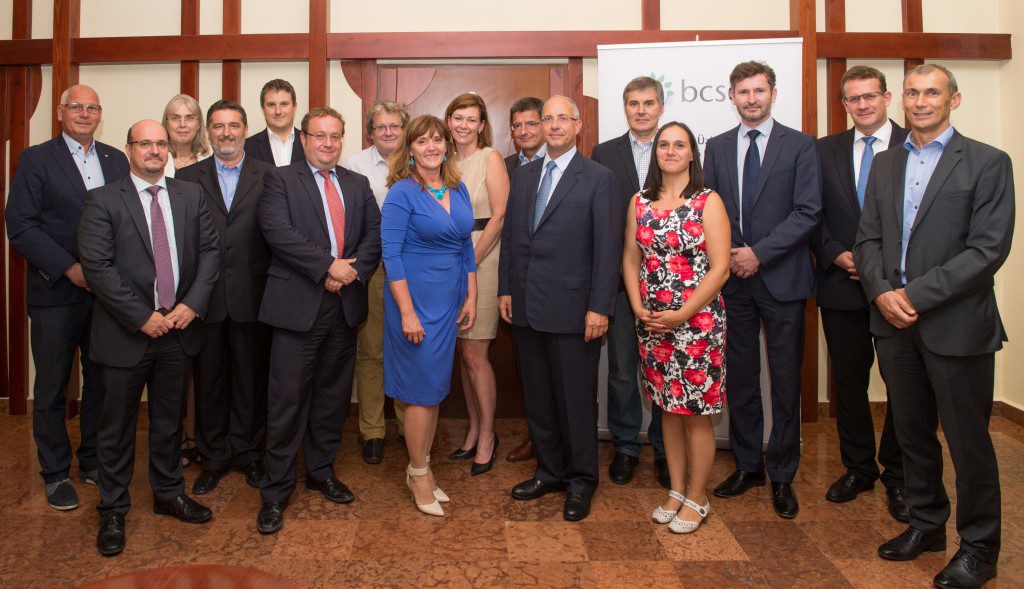
Regardless of size and industry, climate change poses a risk to all businesses- business leaders agreed on this statement at BCSDH’s CEO roundtable conversation in September 2016.  Within the framework of the three-year-old Action2020 Hungary program, this year’s focal topic is Climate Change.

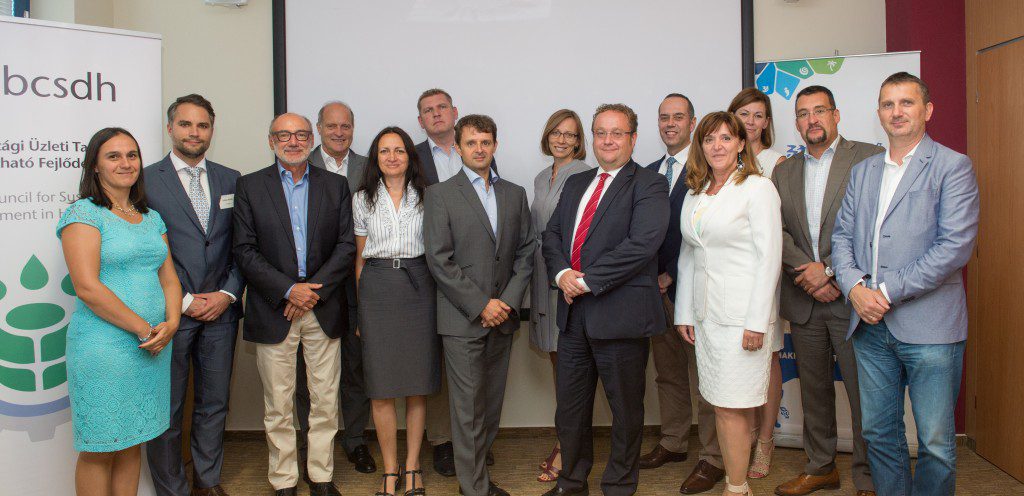
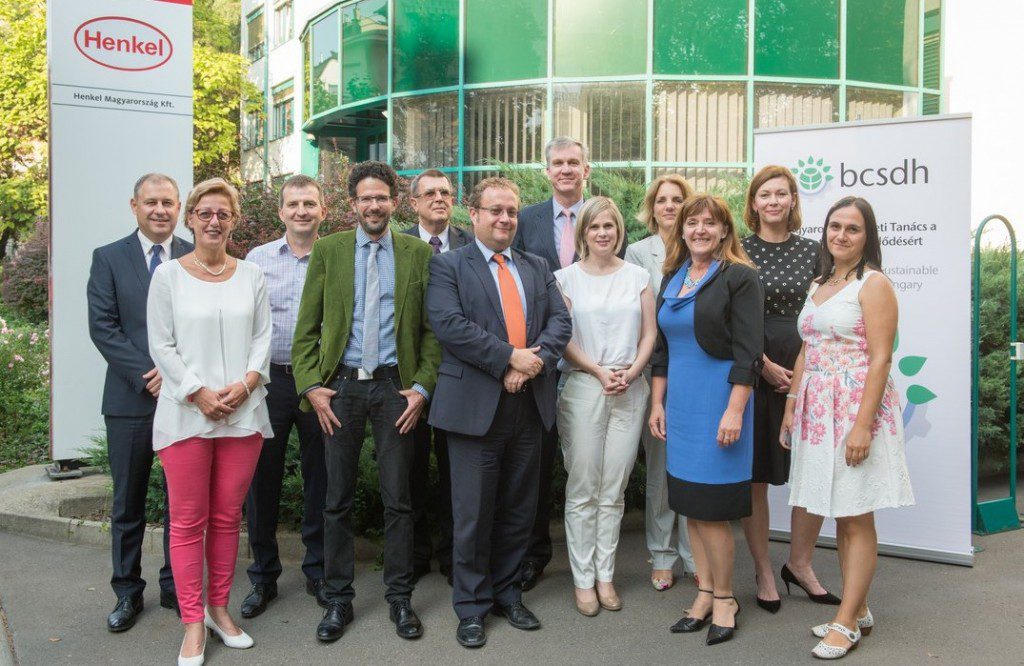
During the first week of September, CEO roundtable conversations took place on 3 different occasions with the participation of 34 CEOs from more than 10 industries. The aim of these conversations was to identify answers to the challenges posed by climate change, and to define the focal areas where BCSDH can formulate recommendations for the business sector. The roundtable conversations were hosted by three BCSDH members: Unilever, MagNet Bank and Henkel.

DSC_4346

Participants agreed that companies, regardless of their size and industry, have an impact on climate change and should bear the business risks associated with it. However, the same businesses also all have the chance to create business opportunities from it by reducing risks or investing in adaptation and innovation (which are more difficult to achieve but may provide greater benefits).

csoportkep

During the business dinner on the 17th November, and in our annual publication, BCSDH will identify the climate change-related areas in which most companies can apply easily adoptable business solutions and define recommendation for the business sector which will have a real impact on these areas.

DSC_4708

Photos of the event you can find here.

20.09.2016
0 0 admin https://bcsdh.hu/wp-content/uploads/2021/12/bcsdh-logo.png admin2016-09-20 17:03:312016-09-20 17:03:31Regardless of size and industry, climate change poses a risk to all businesses

Budapest Energy Summit, 5-6 December 2016

News

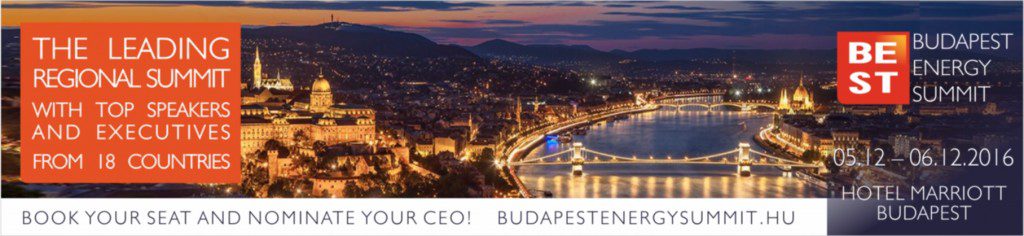
Budapest Energy Summit will be organized on the 5-6th of December 2016 at Budapest, Hungary.

The Main Patron of the conference is Mr. János Áder, President of Hungary.

The conference is a newly launched, biennial exclusive forum of the top energy leaders and EU leaders, representing businesses, authorities, and international organizations from 18 countries. The aim of the summit is to share insights and perspectives of the sector and to discuss the key energy issues of the broadly defined region. 

They will surely be there:

energysummit2

Some further speakers of the Summit are:

Marie-Theres Thiell (RWE); Alexander Alting von Geusau (ING); Kirill Komarov (Rosatom); Gergely Szabó (MET); Dan Byles (SmarterUK); Jan Springl (EP Energy); Andrew Walker (Cheniere).

All speakers are available on the continually updated website of the conference: www.budapestenergysummit.hu

Book your seat now!

The World Energy Outlook 2016 will be presented on the conference by the Chief Economist of IEA, László Varró.

BEST banner 2

Awards have been established to honor the outstanding achievements of energy executives and projects. You can nominate for „Energy Executive of the Year”, „Young Energy Executive of the Year”, „Woman Energy Executive of the Year”, „Energy Innovation Project of the Year” and „ Energy CSR project of the Year”. The winners will be selected by a professional, international jury. The awarding ceremony will be held on the gala dinner on the 5th of December (first day of the conference).


Details of the summit:

Date: 5-6th of December 2016

Venue: Hungary, Budapest, Hotel Marriott

Early bird tickets with 20% discount are available until September for 960 EUR!

Please note that the number of seats available are limited. 

For further information, please contact Henrietta Benkő at henrietta.benko@budapestenergysummit.hu.

The Main Sponsor of the event:

 mvm group kerethez igazitott-01

09.09.2016
0 0 admin https://bcsdh.hu/wp-content/uploads/2021/12/bcsdh-logo.png admin2016-09-09 09:44:082016-09-09 09:44:08Budapest Energy Summit, 5-6 December 2016

Which is the greenest, happiest country in the world?

News

Is life on this planet getting better? When it comes to the progress of nations, how do you measure what matters most? There’s wealth, there’s health, there’s basic human freedoms. These criteria, and others, make regular appearances in a variety of international rankings, from the Better Life Index to the Sustainable Economic Development Assessment and the World Happiness Report.

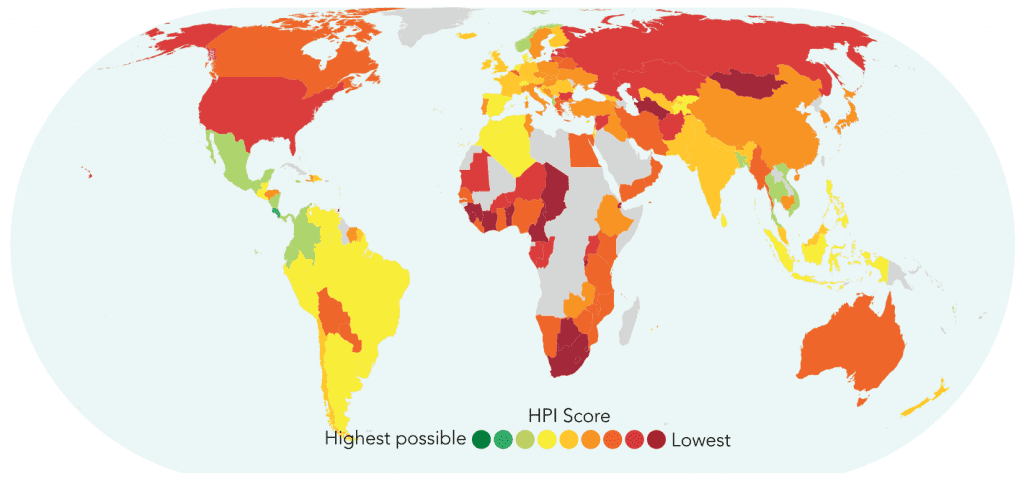
But a new study takes a different approach. The Happy Planet Index, which has just published its 2016 edition, measures health and happiness not in isolation but against a crucial new gold standard for success: sustainability.

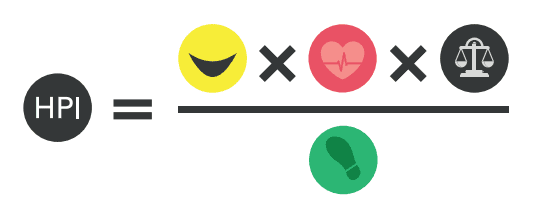
The formula goes something like this: take the well-being and longevity of a population, measure how equally both are distributed, then set the result against each country’s ecological footprint.

Pic1

In this calculation, the most successful countries are those where people live long and happy lives at little cost to the environment.

So which countries are they?

They’re not the wealthy Western countries you’d expect to see, or even the progressive Nordic ones that normally bag the lifestyle laurels. Instead, a list of the top 10 (the index ranks 140 countries overall) shows that when it comes to people’s ability to live good lives within sustainable limits, Latin American and Asia Pacific countries are ahead of the crowd.

Pic2

Green and pleasant land

There’s one country that stands out: Costa Rica, which tops the ranking for the third time. It is the happiest and most sustainable country on Earth, according to the Happy Planet Index.

So, what is it doing right?

A recent Gallup poll found the Central American nation to have the highest level of well-being in the world. It also has some of the longest-lived people: life expectancy there is 78.5 years – older than in the US. But what places the country time and again at the top of the index is that it delivers all this health and happiness while using a mere quarter of the resources that are typically used in the Western world.

How does it do that? Chiefly through a strong commitment to the environment: 99% of the country’s electricity supply is said to come from renewable sources, and the government has pledged to make the country carbon neutral by 2021. Other factors include robust investing in social programmes such as health and education, with public money that has been all the more plentiful since the abolition of the national army in 1949.

Wealthier Western countries tend to score highly when it comes to life expectancy and well-being, but the high environmental cost of their way of life sees their ratings plummet. The US, for instance, has one of the largest ecological footprints in the world. Of the Scandinavian nations, meanwhile, only Norway appears in the index’s top 20.

Pic3

Source: www.weforum.org

17.08.2016
0 0 admin https://bcsdh.hu/wp-content/uploads/2021/12/bcsdh-logo.png admin2016-08-17 12:17:172016-08-17 12:17:17Which is the greenest, happiest country in the world?
Page 25 of 35«‹2324252627›»
Followon TwitterSubscribeto RSS Feed

Latest news

Categories

  • Award
  • Business Solution Award
  • Business Transformation award
  • Change Leader Award
  • Kiemelt hírek
  • Leading women award
  • Member News
  • New member
  • News
  • új tagvállalat
  • Uncategorized

Archives

  • March 2026
  • February 2026
  • January 2026
  • December 2025
  • November 2025
  • October 2025
  • September 2025
  • August 2025
  • July 2025
  • June 2025
  • May 2025
  • April 2025
  • March 2025
  • February 2025
  • January 2025
  • December 2024
  • November 2024
  • October 2024
  • September 2024
  • August 2024
  • July 2024
  • June 2024
  • May 2024
  • April 2024
  • March 2024
  • February 2024
  • January 2024
  • December 2023
  • November 2023
  • October 2023
  • September 2023
  • August 2023
  • July 2023
  • June 2023
  • May 2023
  • April 2023
  • March 2023
  • February 2023
  • January 2023
  • December 2022
  • November 2022
  • October 2022
  • September 2022
  • August 2022
  • July 2022
  • June 2022
  • May 2022
  • April 2022
  • March 2022
  • February 2022
  • January 2022
  • December 2021
  • November 2021
  • October 2021
  • September 2021
  • August 2021
  • July 2021
  • June 2021
  • May 2021
  • April 2021
  • March 2021
  • February 2021
  • January 2021
  • December 2020
  • November 2020
  • October 2020
  • September 2020
  • July 2020
  • June 2020
  • May 2020
  • April 2020
  • March 2020
  • February 2020
  • January 2020
  • December 2019
  • November 2019
  • October 2019
  • September 2019
  • August 2019
  • July 2019
  • June 2019
  • May 2019
  • April 2019
  • March 2019
  • February 2019
  • January 2019
  • December 2018
  • November 2018
  • October 2018
  • September 2018
  • August 2018
  • July 2018
  • June 2018
  • May 2018
  • April 2018
  • February 2018
  • January 2018
  • December 2017
  • November 2017
  • October 2017
  • September 2017
  • May 2017
  • April 2017
  • March 2017
  • February 2017
  • December 2016
  • November 2016
  • October 2016
  • September 2016
  • August 2016
  • July 2016
  • June 2016
  • May 2016
  • April 2016
  • March 2016
  • February 2016
  • December 2015
  • November 2015
  • October 2015
  • September 2015
  • August 2015
  • July 2015
  • June 2015
  • April 2015
  • March 2015
  • February 2015
  • January 2015
  • December 2014
  • November 2014
  • October 2014
  • September 2014
  • August 2014
  • July 2014
  • June 2014
  • May 2014
  • April 2014
  • March 2014
  • February 2014
  • January 2014
  • December 2013
  • November 2013
  • September 2013
  • July 2013
  • June 2013
  • May 2013
  • April 2013
  • March 2013
  • February 2013
  • January 2013
  • November 2012

Business Council for Sustainable Development in Hungary
1118 Budapest, Ménesi street 9/a.

About us
Our mission
Our vision
Our Members
Annual Report
Contact

Carbon-aware events
Gallery

Policies and statements
Privacy policy
Competition Law Statement
Code of Ethics

World Business Council for Sustainable Development (WBCSD) National Partner

© Copyright - BCSDH - powered by Enfold WordPress Theme
  • Facebook
  • LinkedIn
  • Mail
Scroll to top