
“Our insurer’s calling, which involves preparing people for unexpected situations, has evolved with our commitment to sustainability: we need to do this while identifying, assessing, and managing ESG risks and opportunities in a responsible and forward-looking manner. Sustainable corporate operations require serious commitment and investment, which we are often tempted to postpone for short-term advantages. I am proud that at the Generali Group, we do not see our corporate transformation as a surrender but as a conscious investment in our future.”
Mihály Erdős, Chairman and CEO, Generali Hungary
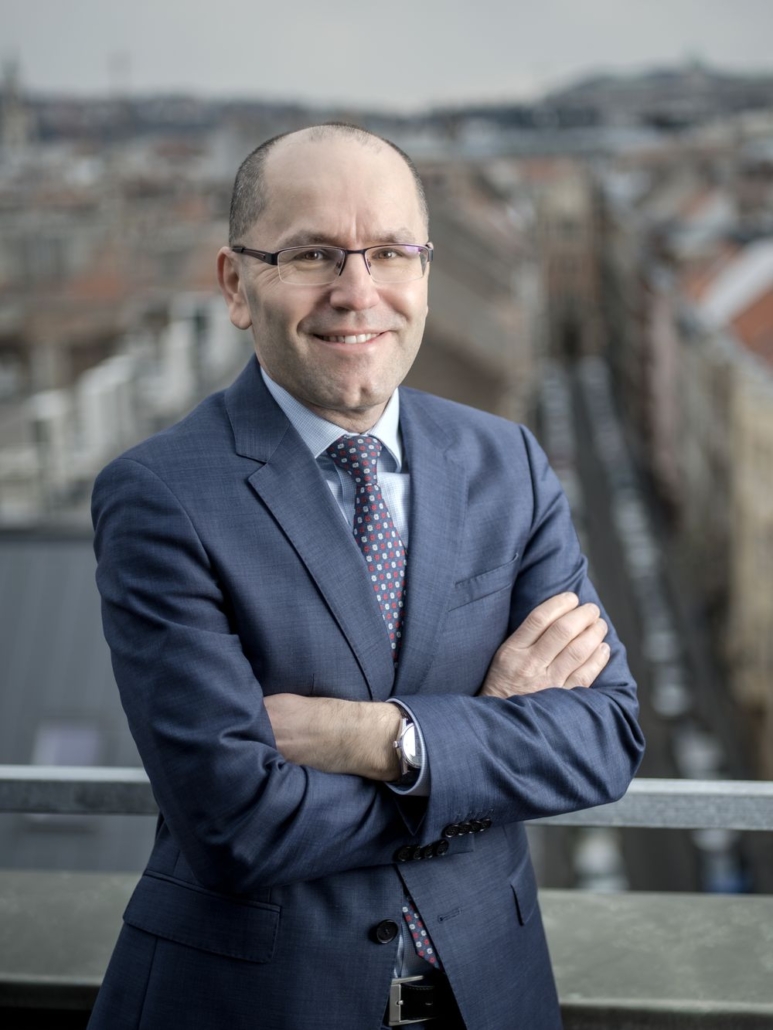 “Our insurer’s calling, which involves preparing people for unexpected situations, has evolved with our commitment to sustainability: we need to do this while identifying, assessing, and managing ESG risks and opportunities in a responsible and forward-looking manner. Sustainable corporate operations require serious commitment and investment, which we are often tempted to postpone for short-term advantages. I am proud that at the Generali Group, we do not see our corporate transformation as a surrender but as a conscious investment in our future.”
Executive Summary of the Application – Original, Unaltered Text
Executive Summary of the Business Transformation:
We believe that securing the future begins in the present, and the focus should shift from short-term gains to creating a sustainable world for future generations. To achieve this, we needed to change our focus within our own operations. At Generali Hungary, we did not have a dedicated organizational unit, resources, or a local sustainability strategy for sustainability. In 2022, we made changes: we developed a local sustainability strategy, and since early 2022, we have had a sustainability officer in the organization, under the direct control of the CEO. We support mindset change through targeted training and dedicated actions, our carbon reduction plan has been completed, and our operational carbon reduction target for 2025 is under review. We are in the process of transforming our vehicle fleet (reducing the number of diesel cars by -60%), and we have initiated a sustainability-focused review of business travel. Sustainability considerations have been integrated into procurement processes. We have taken significant steps towards paperless operations (a -70% reduction in paper usage). In terms of property management, we continue the ongoing energy efficiency investments: solar panels have been installed on 8 existing sites, resulting in annual savings of HUF 6.5 million. Through a comprehensive sustainability organizational review, we plan to further shape sustainable corporate governance processes.
 “The sustainable businesses of the future are being built in the present. Many organizations now need to examine their operations, plan how to catch up with a common goal, if they don’t want to fall behind in the competition. OPTEN not only supports businesses with ESG services for strategic reasons but also out of a sense of mission, right from the first step. Our goal is for the Hungarian business world to understand sustainability-related topics, to get to know their own and their partners’ situations, and then make business decisions based on the acquired knowledge and – the emphasis is on this – relying on credible data.”
 “We believe that humans are part of nature and feel at home where they have a direct connection with it. The Park was conceived in this spirit, and to this day, we continue to develop it in collaboration with our tenants. We are building modern offices, a diverse natural environment, and a cohesive community. We believe that sustainability goes beyond green technologies and is about creating a world where we can all thrive – a world that recognizes the dignity and value of every human being.”
 “Nestlé aims to source one-fifth of its key raw materials from areas where regenerative farming practices are employed by 2025. The essence of the LENS program is to eliminate the negative impacts of large-scale agricultural production, which has now become widespread worldwide, and restore the arable land exposed to it to a condition that allows the soil to maintain its fertility in the long term.”
 “At IKEA, our goal is to become a circular company by 2030. To achieve this, we need to rethink how we conduct our business and preserve our existing values. Entering the used furniture market is a fantastic opportunity for us to achieve sustainable business growth while reducing our dependence on limited resources. Our ‘Second Life for Furniture’ service enables IKEA customers to conveniently and economically pass on their used furniture while giving a second chance to products finding new homes.”


