• Facebook
  • LinkedIn
  • Mail
  • Magyar Magyar Hungarian hu
  • English English English en
BCSDH
  • About us
    • Mission
      • Vision 2050
      • Management Guidelines
    • Organization
    • Partners
  • Our members
    • Membership
    • List of our members
    • Become a member
  • News
    • Our news
    • Member news
  • Our activities
    • 1. oszlop
      • Time to transform 2030
      • Race to Zero
      • Circular Economy Platform
      • ESG
      • Working groups
    • Future Leaders Program
      • Scholarship
    • For a Sustainable Future Award
    • International projects
      • ERASMUS+ DEDYCATING
      • ISSUE
      • Circular Regions
    • Archive
      • Action 2020
  • Events
    • Events calendar
    • Gallery
  • Resources
    • Business solutions
  • Circular Economy Hotspot 2026
  • Menu Menu
  • About us
    • Mission
      • Vision 2050
      • Management Guidelines
    • Organization
    • Partners
  • Our members
    • Membership
    • List of our members
    • Become a member
  • News
    • Our news
    • Member news
  • For a Sustainable Future Award
  • Our activities
    • Time to transform 2030
    • Race to Zero
    • Circular Economy Platform
    • ESG
    • Working groups
    • Future Leaders Program
      • Scholarship
    • International projects
      • ISSUE
      • Circular Regions
    • Archive
      • Action 2020
  • Resources
    • Business solutions
  • Events
    • Events calendar
    • Gallery
  • Circular Economy Hotspot 2026
You are here: Home1 / News2 / Regisztráció – „A jövő vezetői” Alumni program tavaszi esemény3 / 20264 / May

Long-Term Goals and Purpose-Driven Initiatives at the BCSDH Social Capital Hub

News

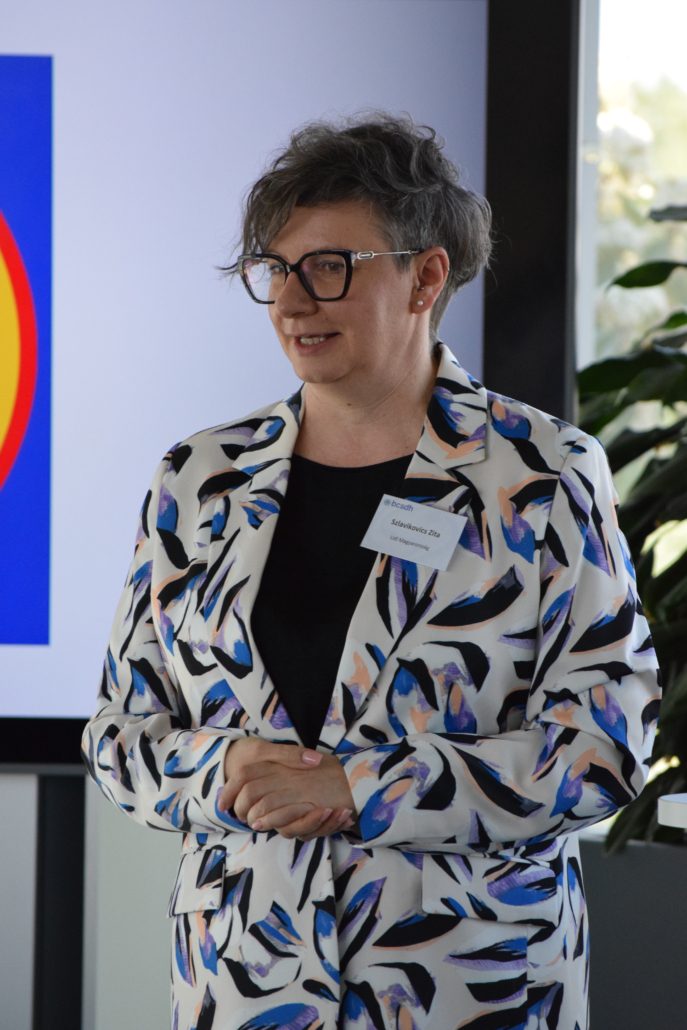
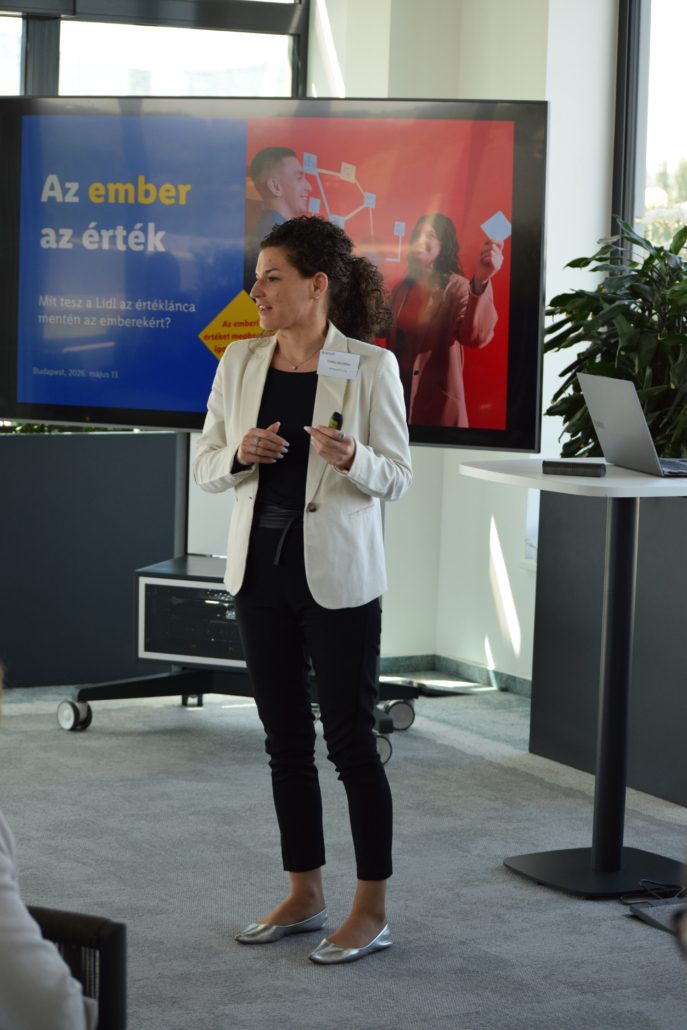
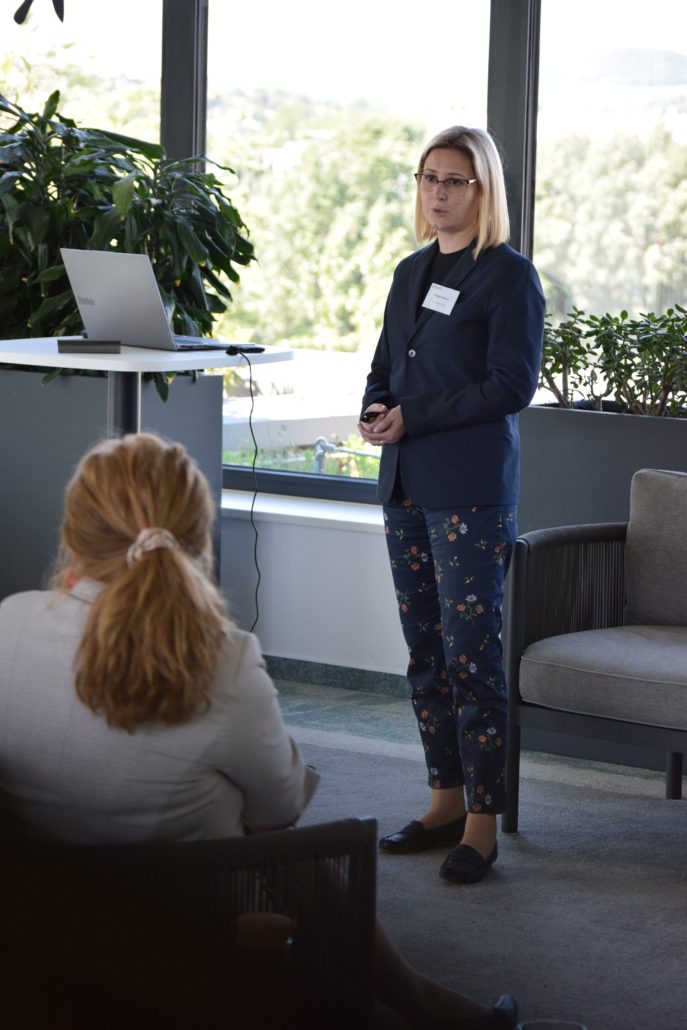
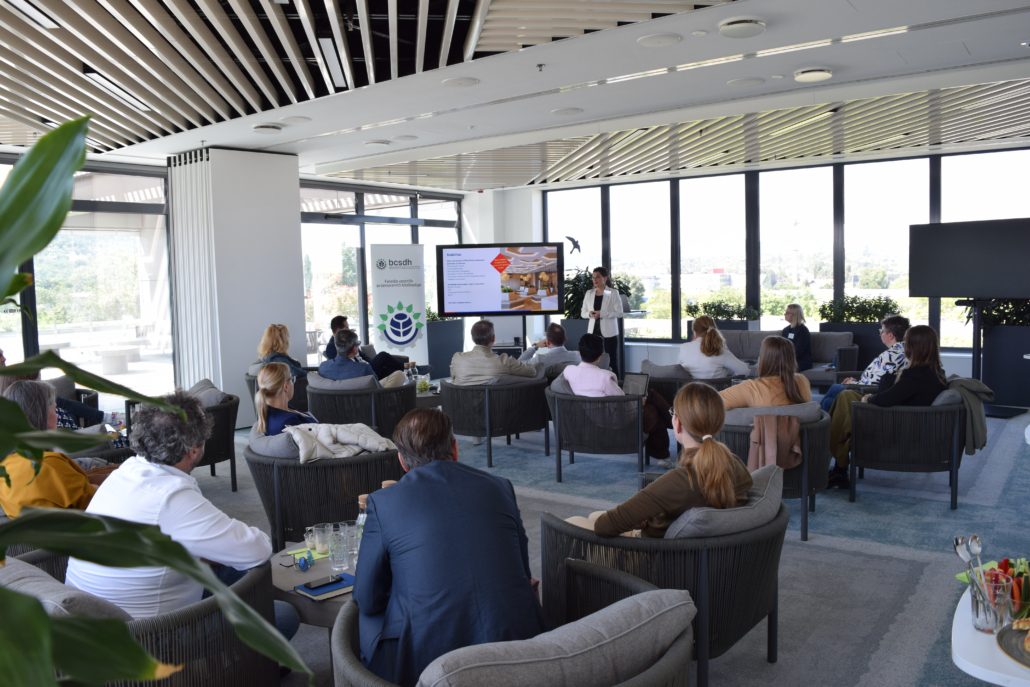
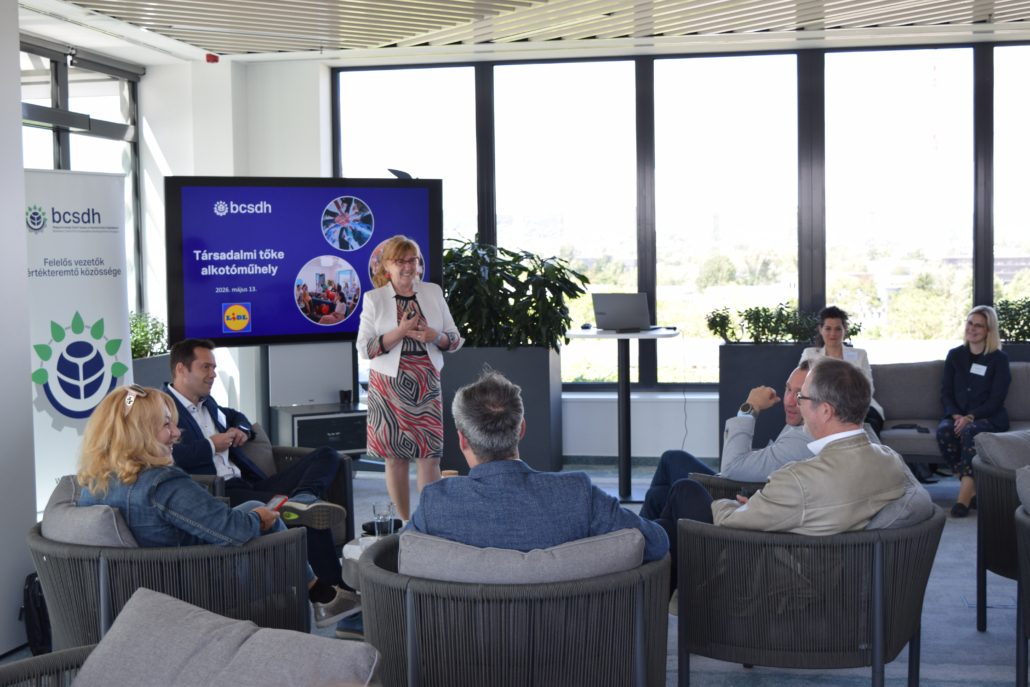
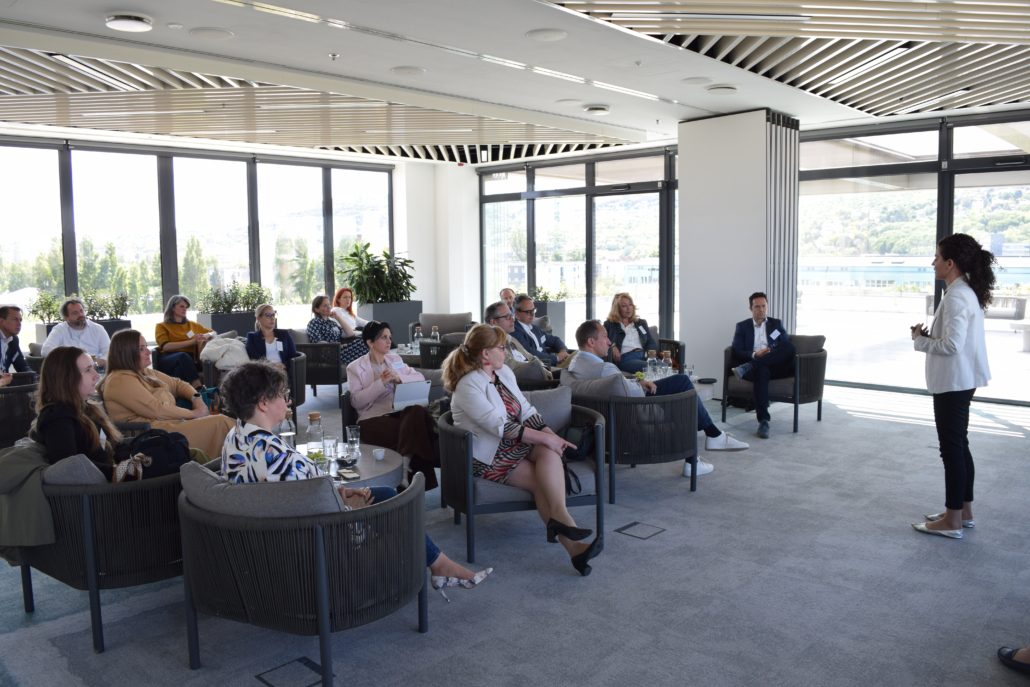
What can a company do for people along its value chain? This was the opening question at the recent meeting of the BCSDH Social Capital Creative Hub, which was hosted by Lidl Hungary on May 13, 2026.

Guests were welcomed by Zita Szlavikovics, Managing Director of Lidl Hungary.

At the beginning of the meeting, presentations by Dorottya Takács, HR Director, and Szabina Seregi, CSR Manager, gave us insight into the diversity of Lidl’s social activities. The company implements numerous initiatives not only for its employees but also for external stakeholders, as they believe that “it is truly worth valuing human worth.”

Following the presentation, an exciting, inspiring, and open discussion began, covering the implementation of long-term sustainability goals, the measurement of these goals, as well as the role and significance of “purpose-driven initiatives.”

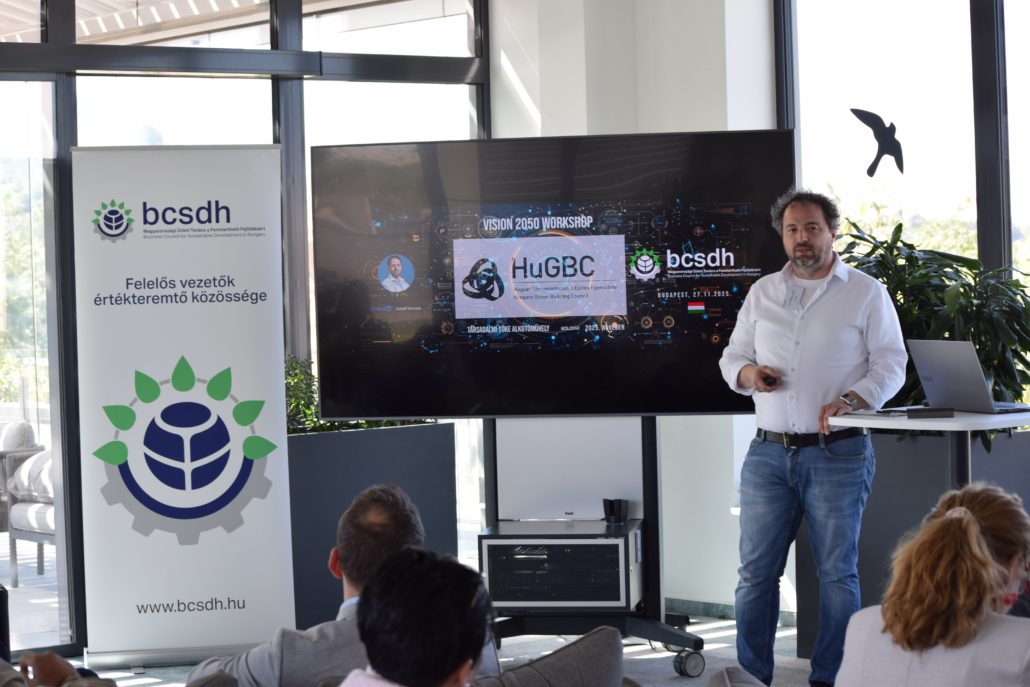
In the second part of the meeting, Dr. József Kolossa presented the results of last November’s Future Planning process, highlighting the values that connect the members of our community and form the basis of our shared thinking.

14.05.2026
https://bcsdh.hu/wp-content/uploads/2026/05/DSC_0248-scaled.jpg 1707 2560 Galambosne Dudas Zsofia https://bcsdh.hu/wp-content/uploads/2021/12/bcsdh-logo.png Galambosne Dudas Zsofia2026-05-14 00:11:462026-05-14 00:13:49Long-Term Goals and Purpose-Driven Initiatives at the BCSDH Social Capital Hub

Electrification slowing down, sales above the EU average: this was CEE automotive market in 2025

Member News

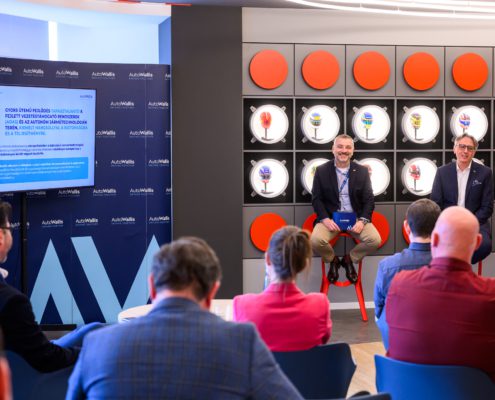
Despite the turbulent economic conditions, the automotive market in Central and Eastern Europe showed growth in 2025 that exceeded expectations and outpaced Western Europe. In the coming years, hybrid powertrains and Chinese brands are expected to gain further ground, as their goal is to establish a dominant global presence and demonstrate leadership in electrification technology, with Europe serving as a springboard – according to a report compiled by AutoWallis for the third time. As a leading integrated mobility service provider in the Central and Eastern European (CEE) region, AutoWallis is present in 17 countries with 30 brands, giving it a comprehensive view of the processes and trends in Hungary and neighboring countries, which they summarize in their regular CEE Automotive Report.

AutoWallis operates in Central and Eastern Europe, which is why their industry analysis focuses primarily on this region. The company is present in 17 countries (Austria, Albania, Bosnia and Herzegovina, Bulgaria, the Czech Republic, North Macedonia, Greece, Croatia, Kosovo, Poland, Hungary, Moldova, Montenegro, Romania, Serbia, Slovenia, and Slovakia) with wholesale and retail operations for vehicles and parts, as well as mobility services, representing 30 brands and boasting over three decades of automotive industry experience. AutoWallis’ growth strategy therefore focuses on this region, as it is in this environment with high growth potential that the group’s experts possess knowledge and value-creating capabilities that surpass those of its competitors.

The CEE Automotive Report 2025 provides a comprehensive overview of the state of the region’s automotive markets in 2025 and their growth potential for the coming period. In addition to a country-by-country breakdown, the report examines the market share of various powertrains (ICE, BEV, PHEV, HEV, etc.), analyzes the regional passenger car and light commercial vehicle fleets, and forecasts the expected trends in the automotive market for 2026. In compiling the report, in addition to the ACEA database, data from Datahouse, the European Commission, and the Hungarian Central Statistical Office (KSH) were used to conduct a detailed analysis of neighboring markets to create the most comprehensive regional overview possible.

The share of electric powertrains among new cars continued to grow

In terms of new passenger car registrations, countries in the CEE region saw a 7.7% increase, compared to the EU average of 1.8%. Within the region, Austria had the highest growth rate (12.3%), but the performance of the Slovenian (8.6%) and Polish (8.3%) markets was also notable. Slovakia was the only country in the region to record a decline (-0.3%). Of the 27 EU member states, 19 markets showed a positive trend compared to 2024, although the volume varies significantly by country.

At the same time, registrations of battery electric passenger cars (BEVs) increased by an average of 29.7% in Europe in 2025, with the European Union showing a 29.9% increase. Looking at the CEE region average, registrations of pure electric cars significantly exceed even the EU’s average growth rate (53.3%). Poland achieved the highest growth in electric vehicles in 2025, registering more than two and a half times as many such passenger cars (161.5%).

Battery electric vehicles (BEVs) remained the third most popular choice among buyers in the EU in 2025, behind hybrids and gasoline-powered cars. In the CEE region, hybrid-electric vehicles are also the most popular (37.8%), closely followed by gasoline-powered cars (33.7%). Unlike in the EU, fully electric cars are the fourth most popular (9.1%), trailing diesel vehicles (11%), according to an analysis by AutoWallis.

The Hungarian market offers a wealth of opportunities

The 4.2 million passenger cars on Hungarian roads represent the second-oldest fleet in the EU (16.5 years), and the number of cars per 1,000 inhabitants is the second lowest in the EU (445). Similar to passenger cars, the average age of light commercial vehicles (521,000 units) is also high (13.2 years), which highlights the lag in the business sector.

In 2025, the Hungarian passenger car market performed between the EU and regional averages: a 6.4% increase compared to the previous year translates to 129,000 newly registered cars. Lagging behind the EU’s 17.4% figure, the share of electric cars was 8.5%, nearly matching the CEE region’s average. Although electric car sales increased compared to the previous year (28.5%), the rate of growth remained below the EU average. Registrations of light commercial vehicles decreased by 4.5% (23,700 units), while registrations of purely electric vehicles within this segment increased by 60.1%.

2026 will be no less turbulent: ongoing (tariff) wars, unstable supply chains, government subsidies

The direct and indirect effects of escalating international conflicts, various protective tariffs and sanctions affecting major raw material-supplying countries, as well as the impact of major international routes (commercial shipping, air corridors) pose significant challenges on their own, but their combined presence makes economic planning more difficult globally, including in Europe.

The automotive industry remains heavily dependent on Chinese battery materials, Asian chip manufacturers, and global logistics routes. Geopolitical tensions (US-China, EU-China, Middle East) could disrupt production at any time. Soaring oil prices due to the war in Iran, as well as uncertain and increasingly expensive transportation (in terms of both cost and time), are expected to drive up costs for automakers (OEMs), which will manifest in even higher new car prices and general inflationary pressure. AutoWallis expects manufacturers to respond to these bottlenecks by focusing on higher-margin models, while in the longer term, they may accelerate the development of regionalized production and warehousing.

Growing market pressure and China’s continued expansion

While European manufacturers, who have fallen behind in both capacity and development and are under market pressure, China has been the world’s largest auto exporter since 2023. At the same time, Europe is one of the world’s most profitable car markets, with high purchasing power and strong demand for EVs. It is no wonder that Europe has become an extremely attractive and important target for Chinese OEMs, and a central element of China’s export strategy. Despite the EU launching an anti-subsidy investigation and imposing punitive tariffs on Chinese EVs, manufacturers have remained competitive, and exporting to Europe remains profitable even with the tariffs. Chinese manufacturers are particularly strong in the electric vehicle sector; according to the consensus among analysts, they have a competitive advantage of approximately 3–5 years in the field of electrification. At the same time, the segment of plug-in hybrids with extra-long range is gaining ground, as there are currently no additional tariffs on plug-in hybrid (PHEV) models, unlike on battery electric vehicles (BEVs) and extended-range electric vehicles (EREVs).

However, Europe is important to Chinese manufacturers not only because of its sales potential, but also as a valuable benchmark: if a model meets the EU’s notoriously strict safety and environmental standards, it lends strong credibility to the brand globally, including in their other export markets. Success in Europe is key to their global ambitions. Among the major Chinese brands, only a few are currently strong in Europe, but numerous other manufacturers are planning a vigorous market offensive over the next 12 months. We can therefore expect Chinese models to continue gaining ground in the European market, with the emergence of dedicated “budget EV” models – similar to the Japanese kei-car concept.


 

12.05.2026
https://bcsdh.hu/wp-content/uploads/2025/05/AutoWallis_DrivngTogether_LOGO_CMYK_inverse-darkblue.png 517 1237 Gyurgyik Anna https://bcsdh.hu/wp-content/uploads/2021/12/bcsdh-logo.png Gyurgyik Anna2026-05-12 08:50:122026-05-12 08:50:12Electrification slowing down, sales above the EU average: this was CEE automotive market in 2025

AutoWallis expands their portfolio with electric brands

Member News

Geely in Austria

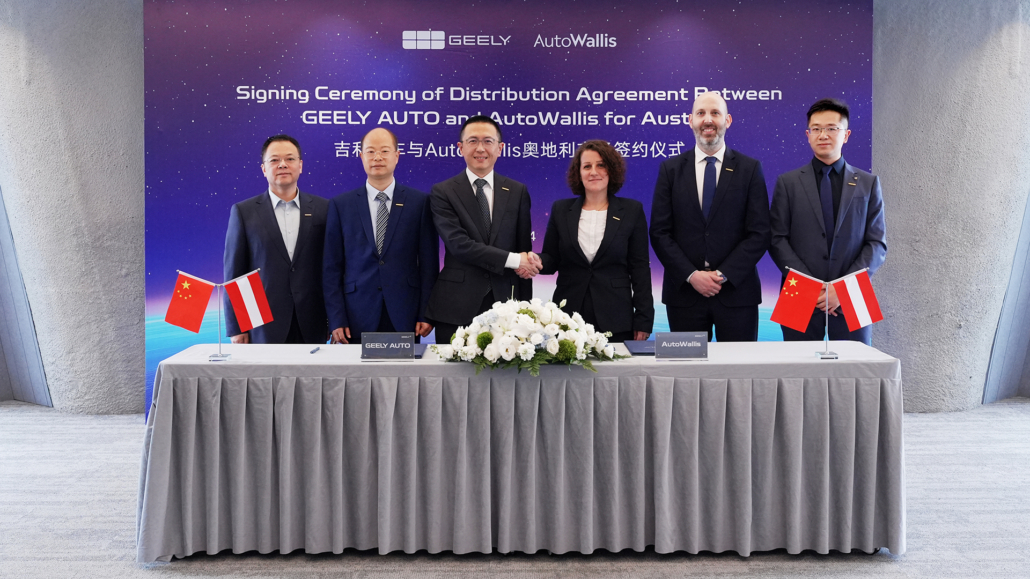
AutoWallis is further strengthening its portfolio with another leading brand after signing a distribution agreement for Austria with China’s Geely Auto. The agreement covers the Austrian distribution rights of the Geely brand this time. With this step, AutoWallis further expands the number of brands it represents and strengthens its cooperation with the world’s eighth largest vehicle manufacturer, while further diversifying its position in Central and Eastern Europe.

The Geely brand will enter the Austrian market in 2026 with two models and two types of powertrains: the E5, and the Starray EM-I models are a mid-range, elegant yet distinctive SUV. E5’s design has earned several prestigious international awards, including the Red Dot Award, the MUSE Design Award, the IDA Design Award, and the A’ Design Award. E5 has an outstanding drag coefficient of 0.269 and will be available with a 60.22 kWh battery pack, promising a WLTP range of 430 km, while the plug-in hybrid model with a 1.5-liter gasoline engine and 18.4 kWh battery has a total output of 217 hp and a range of approximately 940 km.


XPENG in Romania

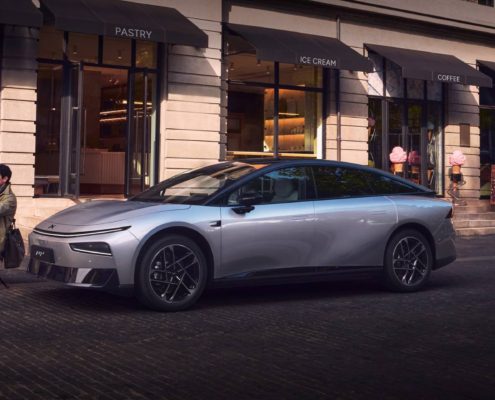
AutoWallis, the leading integrated car dealer and mobility service provider in the CEE region, has reached a tripartite agreement with its Portuguese partner, the Salvador Caetano Group and the innovative, AI-focused Chinese car manufacturer XPENG to become the importer of XPENG in Romania. This agreement is built on the foundations of the already ongoing cooperation in three other CEE countries (Hungary, Slovenia and Croatia) in 2025 with the innovative, AI-focused Chinese car manufacturer. Sales in the fourth market is expected to start early this summer.

The brand is at the forefront of the new energy car revolution: the quality of their cars is competing with the world’s leading premium manufacturers, and its technological superiority is outstanding in areas such as artificial intelligence, ultra-fast charging or advanced autonomous driving.

Commenting on this recent milestone, Gábor Ormosy, CEO of AutoWallis highlighted, that “We are delighted that XPENG has entrusted AutoWallis and our partner Salvador Caetano with a fourth market, especially given that Romania is the second most populous country in Central Eastern Europe. Compared to the three markets where we already started operations in 2025, Romania represents an additional sales volume opportunity of around 60%.”

11.05.2026
https://bcsdh.hu/wp-content/uploads/2025/05/AutoWallis_DrivngTogether_LOGO_CMYK_inverse-darkblue.png 517 1237 Gyurgyik Anna https://bcsdh.hu/wp-content/uploads/2021/12/bcsdh-logo.png Gyurgyik Anna2026-05-11 13:49:252026-05-11 13:50:24AutoWallis expands their portfolio with electric brands

Three MGFÜ publications are already helping SMEs with ESG issues

News

A key objective of the Hungarian Economic Development Agency (MGFÜ) is to expand and develop Hungarian businesses’ knowledge of ESG and to prepare companies affected by the ESG Act to meet reporting requirements.

The MGFÜ is helping businesses navigate the world of ESG with three free publications in Hungarian, enabling them to easily, quickly, and clearly integrate the regulations into their day-to-day operations:

  • ESG Basics 1: Corporate sustainability and ESG fundamentals, overview of the legal framework
  • ESG Basics 2: ESG criteria and reporting systems, disclosure of ESG activities and obtaining ratings
  • ESG Basics 3: Data collection and analysis, data reporting

Additional publications are in preparation, which will assist businesses in various areas. The publications already released are available here.

Source: MGFÜ, vali.hu

08.05.2026
https://bcsdh.hu/wp-content/uploads/2026/05/MGFU-kep.png 853 663 Galambosne Dudas Zsofia https://bcsdh.hu/wp-content/uploads/2021/12/bcsdh-logo.png Galambosne Dudas Zsofia2026-05-08 15:22:112026-05-08 15:22:11Three MGFÜ publications are already helping SMEs with ESG issues

Credible leaders, exemplary actions and innovative business solutions for systemic change – Inspiration Breakfast with the Winners of the “For a Sustainable Future” Award

News

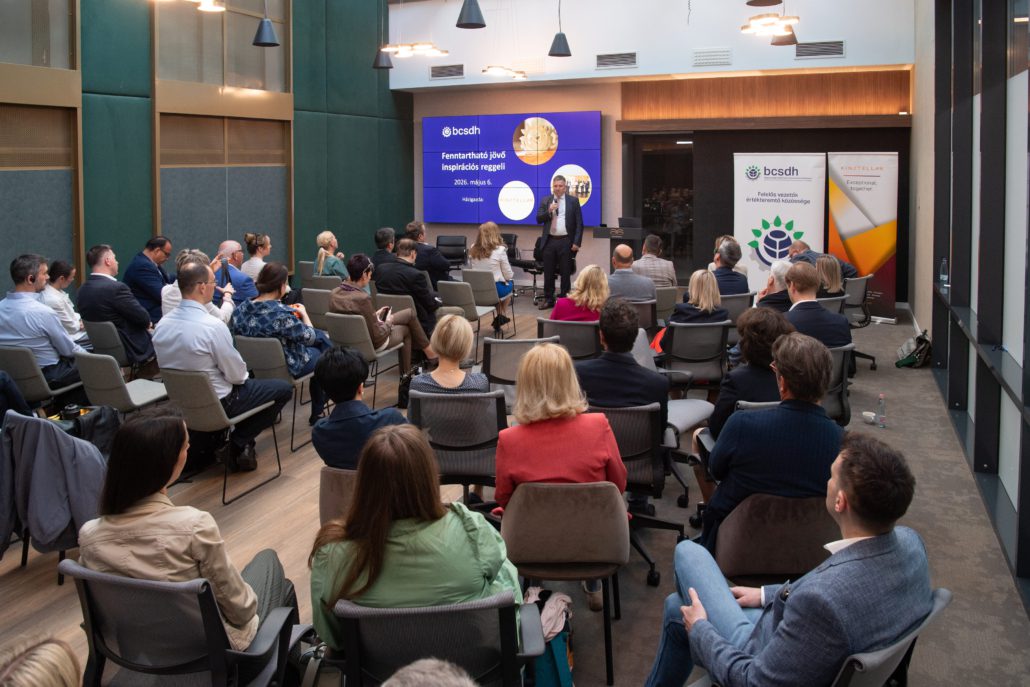
The application period for the 2026 “For a Sustainable Future” Award opens on 18 May. In connection with this, and to encourage action and the achievement of sustainable corporate operations, the “For a Sustainable Future” Inspiration Breakfast was held on 6 May 2026, organized by the Business Council for Sustainable Development in Hungary (BCSDH).

The event, which provided an opportunity to gain deeper insight into the winners of the 2025 award established to recognize outstanding individual and corporate achievements in the field of corporate sustainability, was hosted by Balázs Sepsey, Office Managing Partner of KINSTELLAR, who welcomed participants to the gathering.

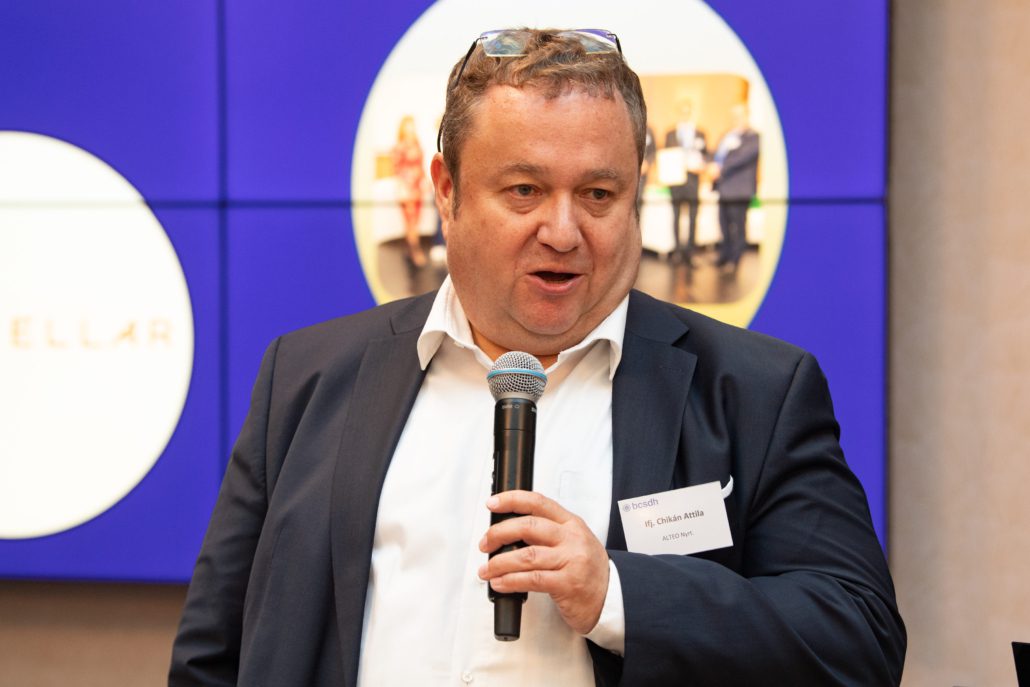
 „The world to which we adapted our companies, business models and systems no longer exists. Challenges are intensifying, and companies are already experiencing the growing impacts of climate change in their day-to-day operations. This makes rapid action and the transformation of our systems into more sustainable and resilient ones essential,” said Attila Chikán Jr., President of the Business Council for Sustainable Development in Hungary (BCSDH), in his opening remarks. “With the ‘For a Sustainable Future’ Award and this event, our aim is to inspire companies and their leaders to integrate sustainability considerations into their decision-making and to develop business solutions that go beyond business as usual. By scaling these solutions across the wider business community, we can achieve real, broad impact and accelerate systemic change,” he added.

Irén Márta, Managing Director of BCSDH and moderator of the event, emphasized that “we are continuously seeking ways to accelerate sustainability processes and support business leaders in initiating systemic change.” One of the explicit goals of the Inspiration Breakfast was to showcase previous award winners as credible change leaders, as well as to present creative business models and solutions in order to inspire outstanding applications during the 10th edition of the “For a Sustainable Future” Award, whose application period runs from 18 May to 18 July 2026.

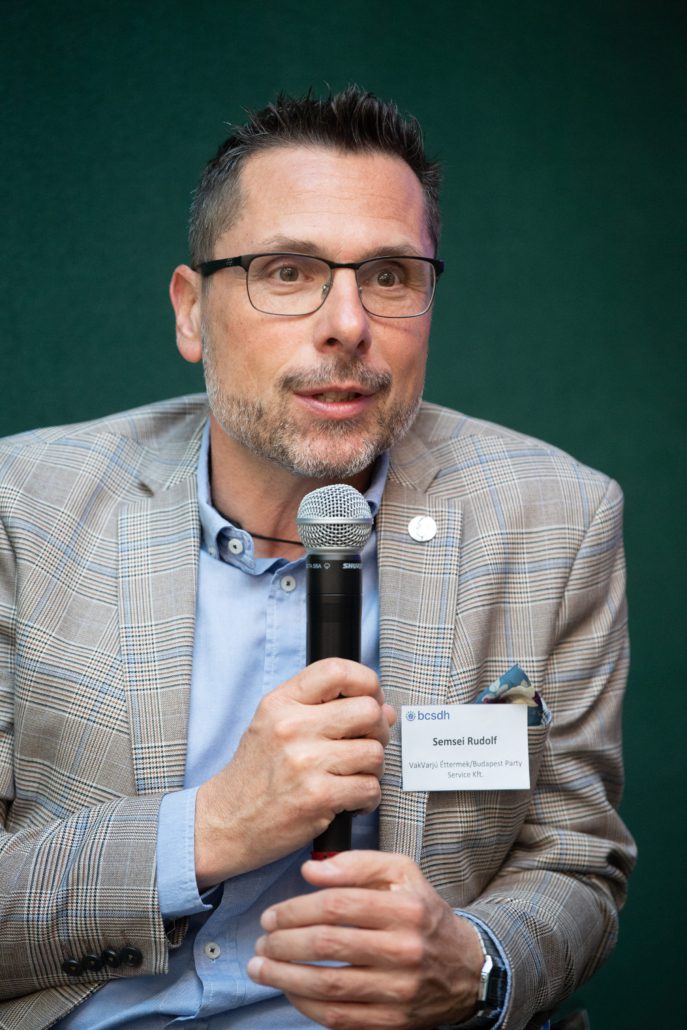
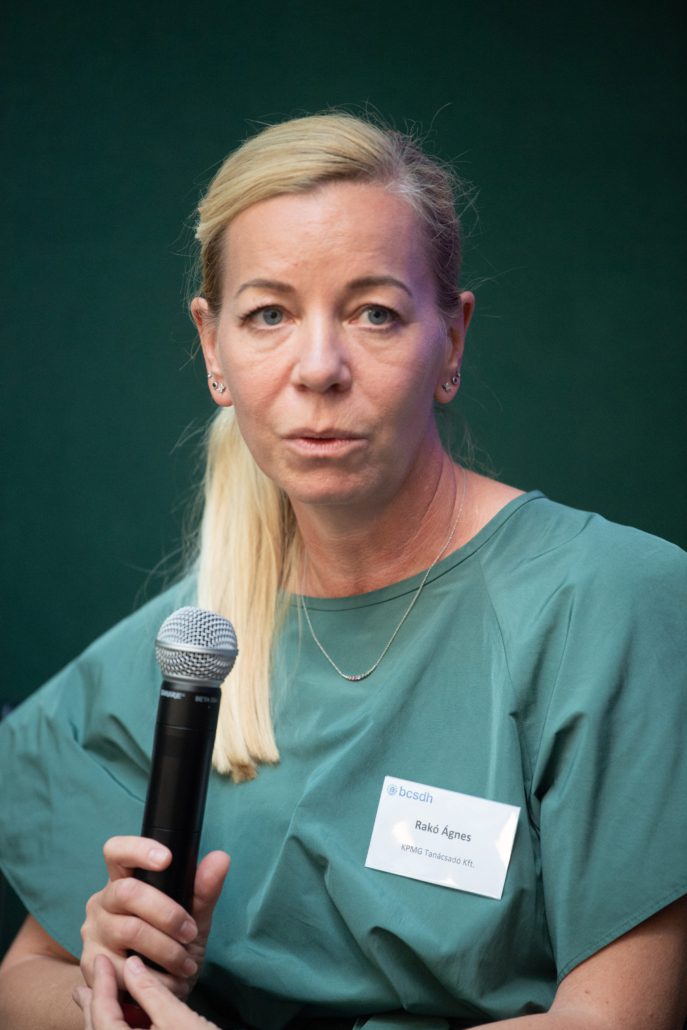
Achieving truly sustainable operations embedded at a strategic level and throughout the entire company is unimaginable without credible, committed leaders and outstanding companies.The executive roundtable discussion with the 2025 individual award winners explored the background of the applications and the personal motivations behind their dedication and commitment. The discussion was moderated by Irén Márta, Managing Director of BCSDH, and featured:

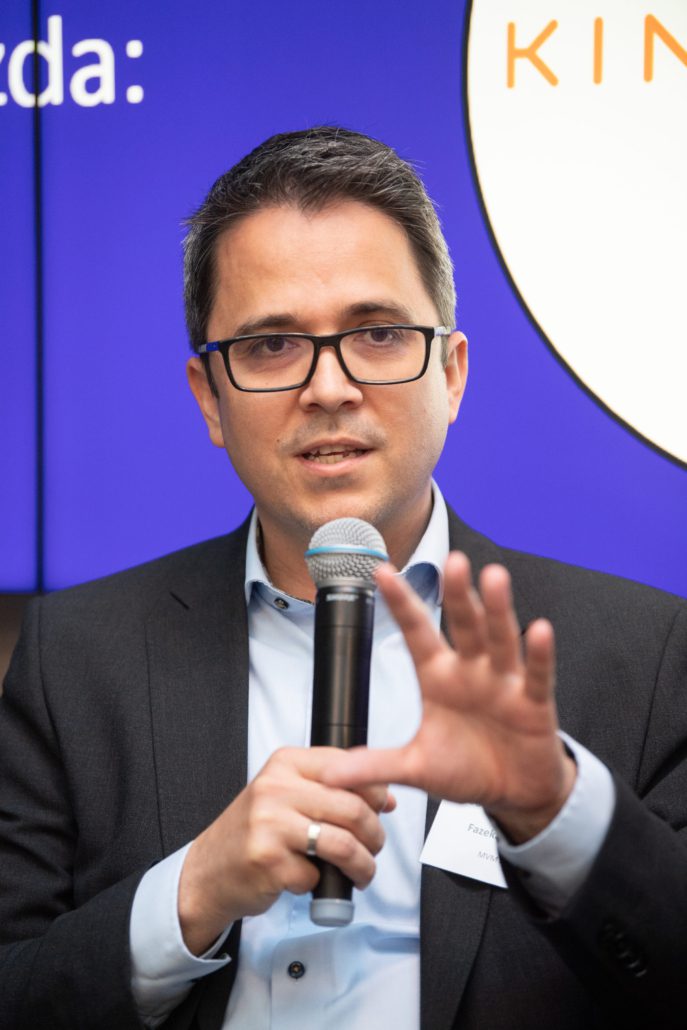
  • László Fazekas, Deputy CEO for Economic Affairs of MVM Zrt.,
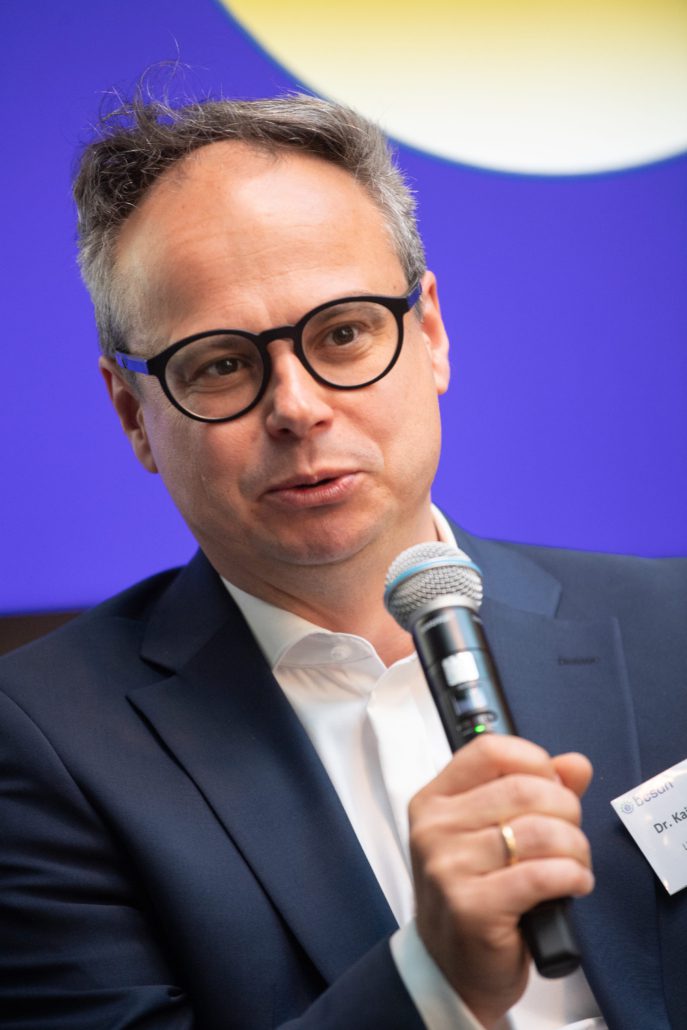
  • Tamás Kaibinger, Managing Director of Lidl Hungary,
  • Rudolf Semsei, Owner and Managing Director of VakVarjú Restaurants, Budapest Party Service and Dobay Confectioneries,
  • and Ágnes Rakó, Managing Director and Partner of KPMG Advisory Ltd..

Business solutions that go beyond business as usual and can be scaled, adapted and extended to other actors in the business sector are key drivers of systemic change. The following award-winning solutions from 2025 were presented and discussed:

  • the Grundfos Green Future Innovation Program, presented by environmental engineer Szilvia Gärtner,
  • and the HEINEKEN Net Zero Production program, presented by OpCo Chief engineer Gábor Ligeti.

In 2026, BCSDH will once again launch the “For a Sustainable Future” Award between 18 May and 18 July, continuing to focus on areas where companies can have a significant impact on transforming systems, across the following four main categories:

For a Sustainable Future Award 2026

In 2026, BCSDH will once again launch the “For a Sustainable Future” Award between 18 May and 18 July, continuing to focus on areas where companies can have a significant impact on transforming systems, across the following four main categories:

  1. Change Leader – Award for outstanding leadership by example and responsibility-taking
    Change Leader Award – BCSDH
  2. Leading Woman
    Leading Woman Award – BCSDH
  3. Corporate Transformation – Award for the greatest progress made towards achieving sustainable operations
    Corporate Transformation Award – BCSDH
  4. Business Model / Business Solution
    in one of the following areas:
      • Circular Economy
      • Climate Protection and Adaptation
      • Biodiversity Preservation and Restoration
      • Human Value

Business Solution Award – BCSDH

08.05.2026
https://bcsdh.hu/wp-content/uploads/2026/05/DSC_9459-scaled.jpg 1707 2560 eszter.chikankovacs https://bcsdh.hu/wp-content/uploads/2021/12/bcsdh-logo.png eszter.chikankovacs2026-05-08 08:36:152026-05-08 08:36:15Credible leaders, exemplary actions and innovative business solutions for systemic change – Inspiration Breakfast with the Winners of the “For a Sustainable Future” Award

How is the business sector responding to climate change? – the experiences of the Race to Zero working group, from mitigation and adaptation to resilience

News

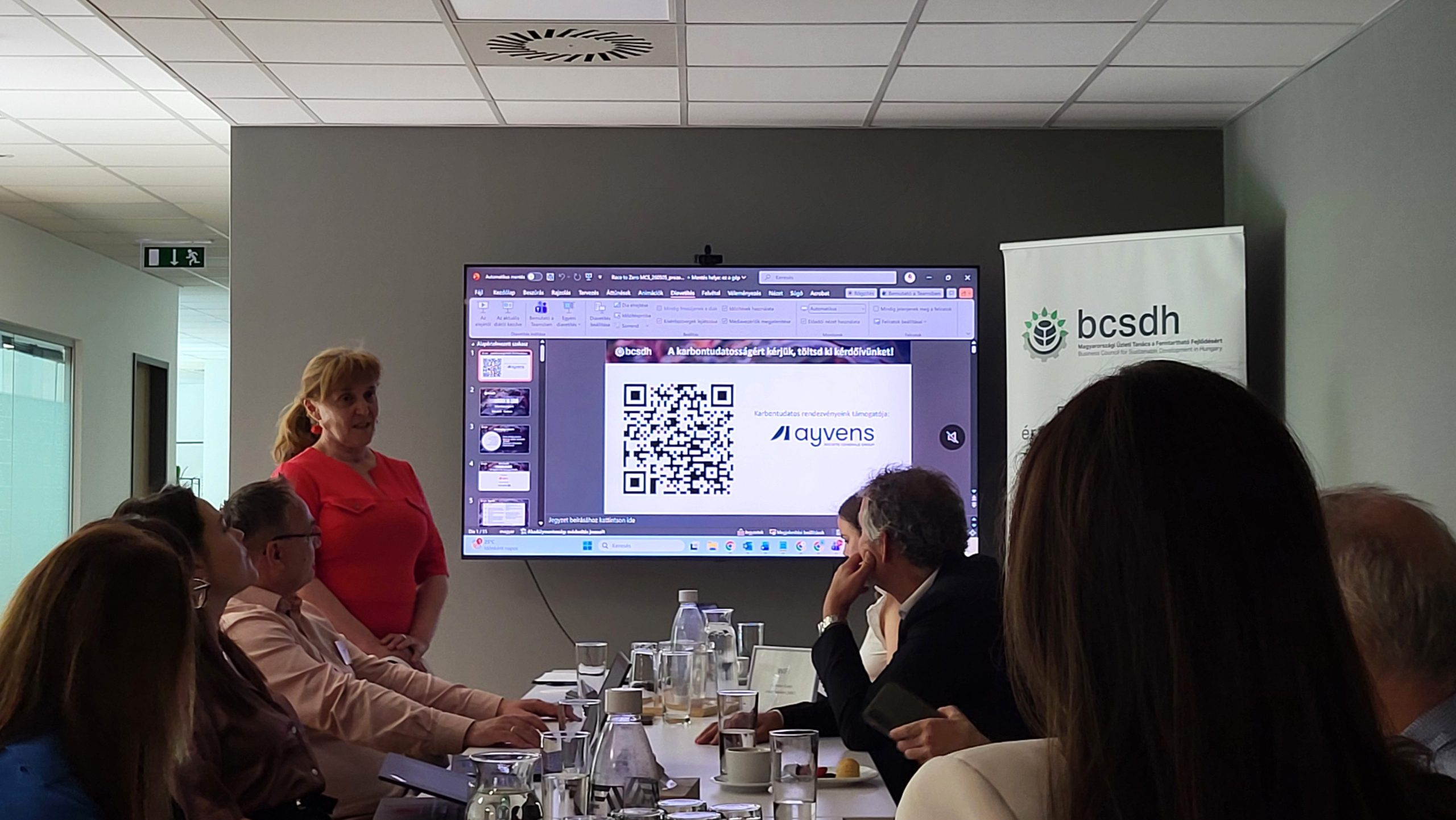
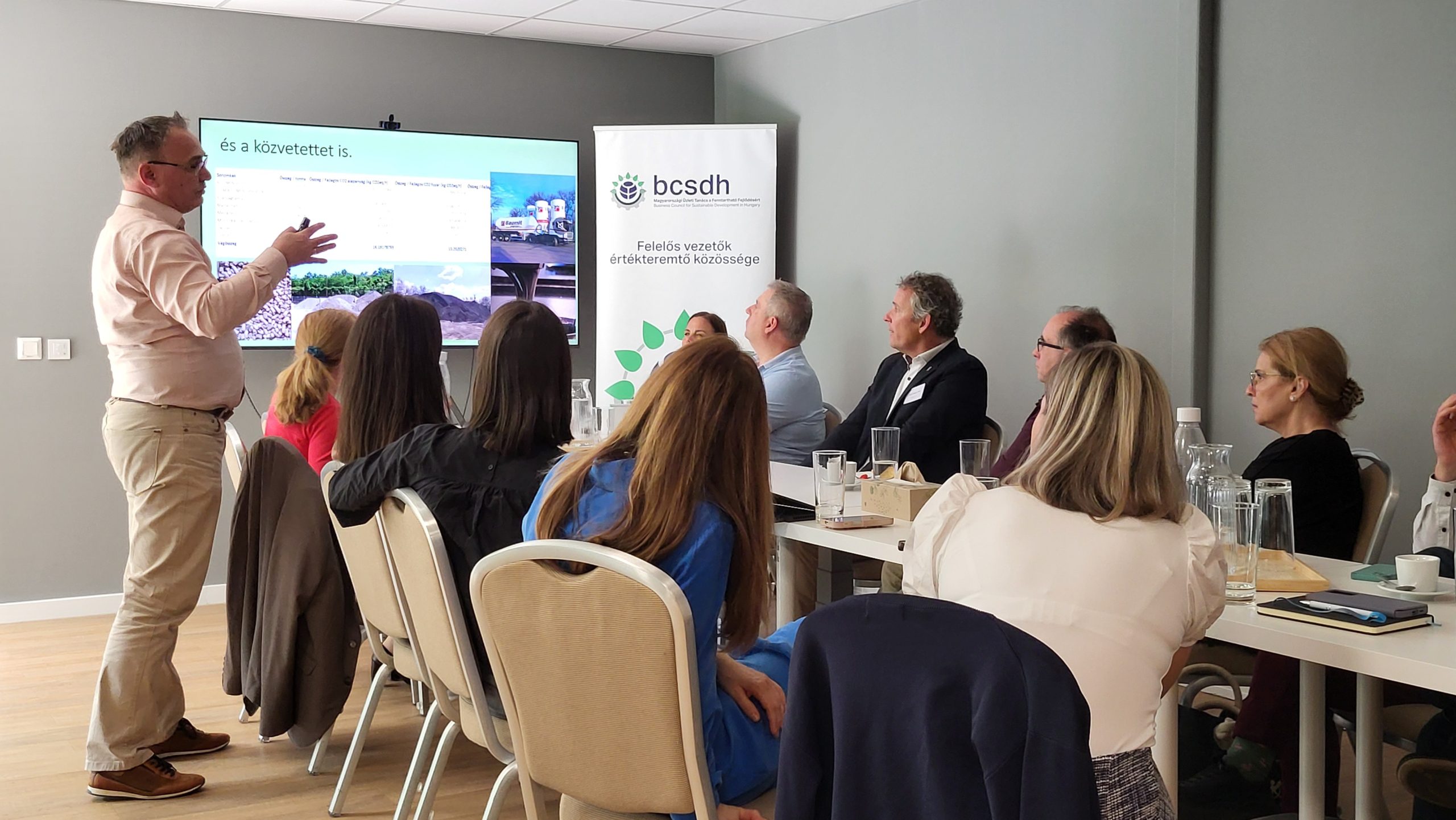
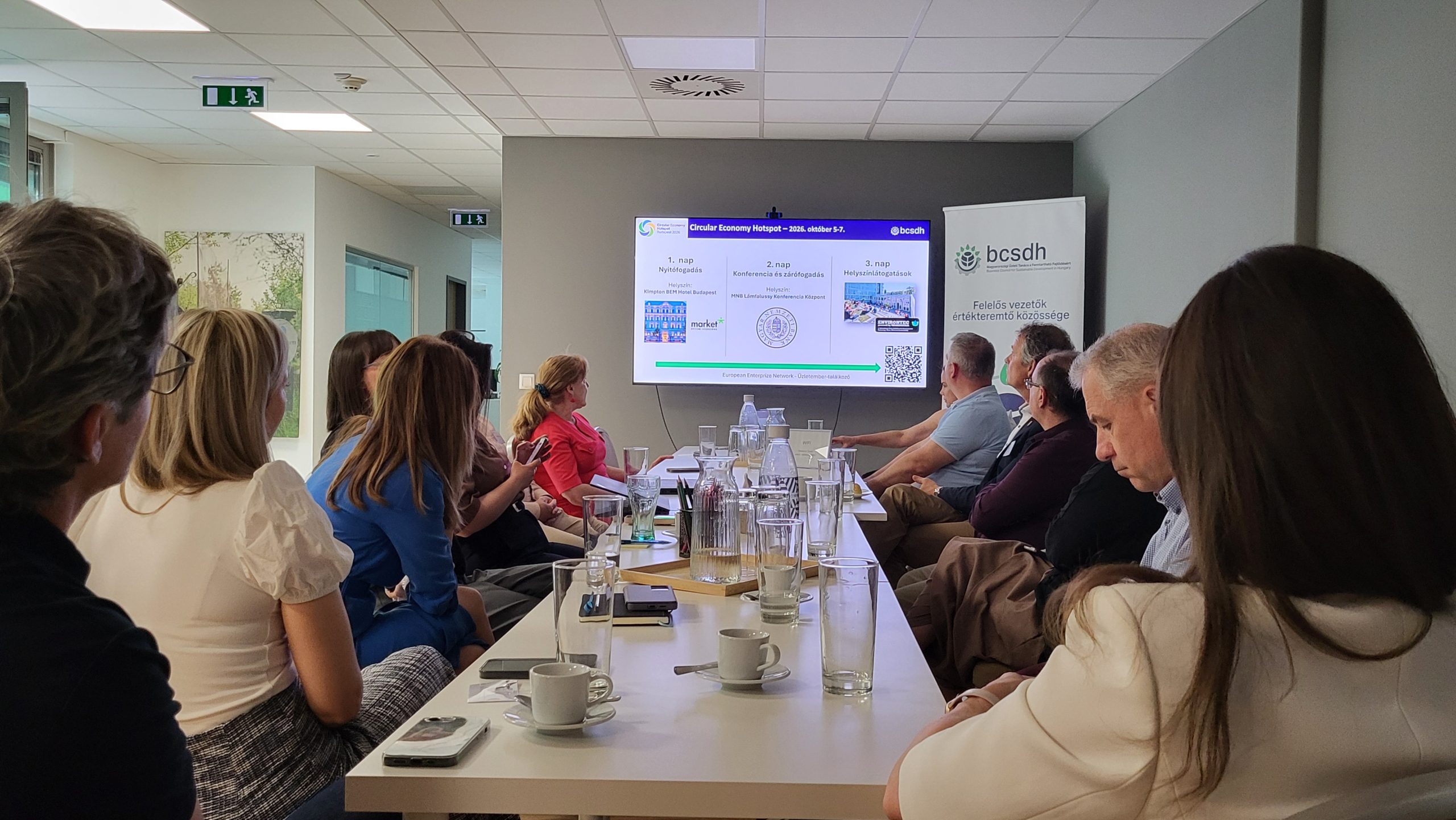
The built environment plays a key role in both achieving climate-neutral operations and building resilience—this was one of the main messages from the BCSDH Race to Zero working group on May 5.

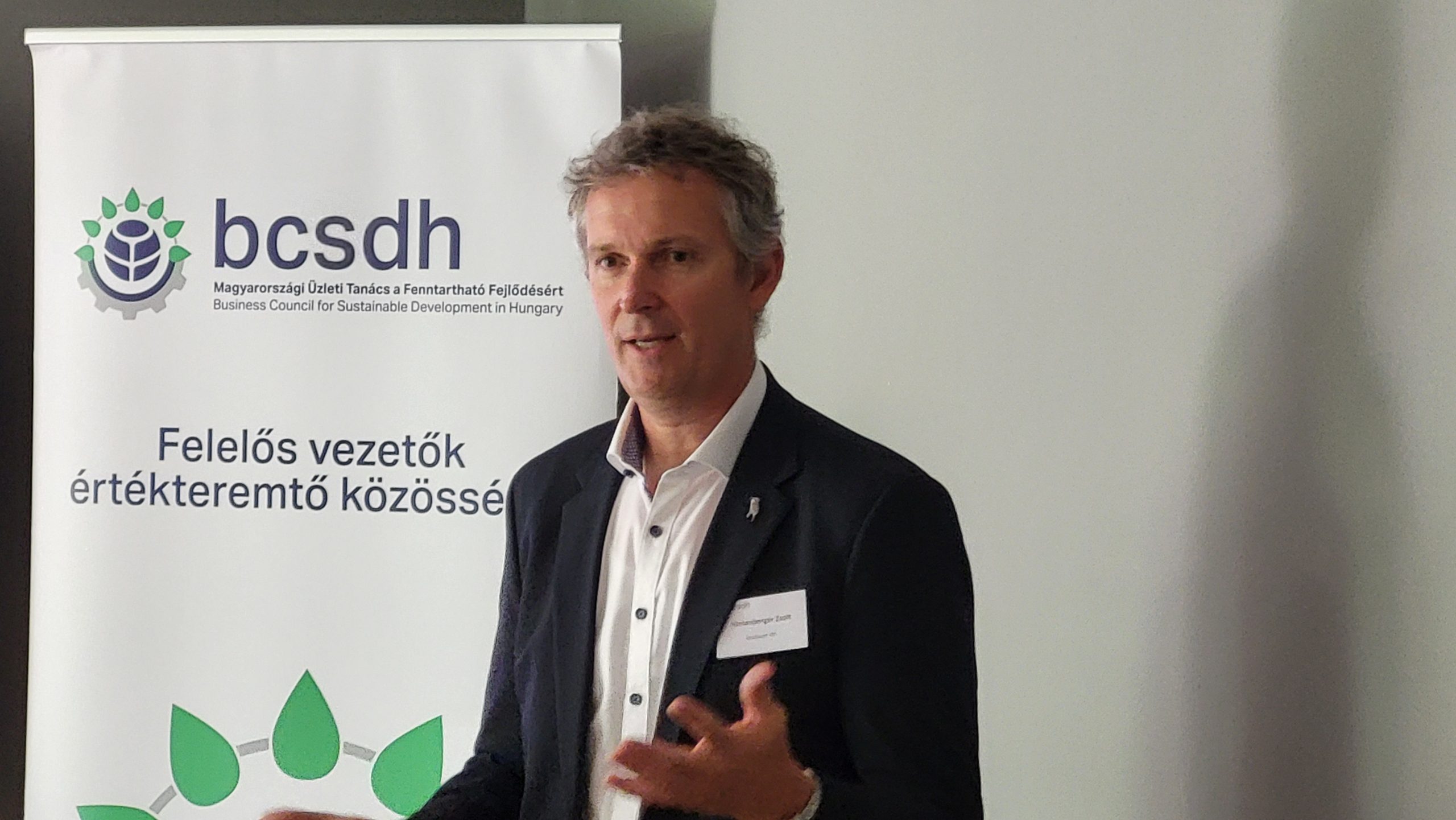
The event was opened by Irén Márta, managing director of the BCSDH, and Zsolt Hintenberger, founding partner of the host company Realiscon. In their opening remarks, they emphasized that companies play an indispensable role in combating climate change, particularly through the built environment.


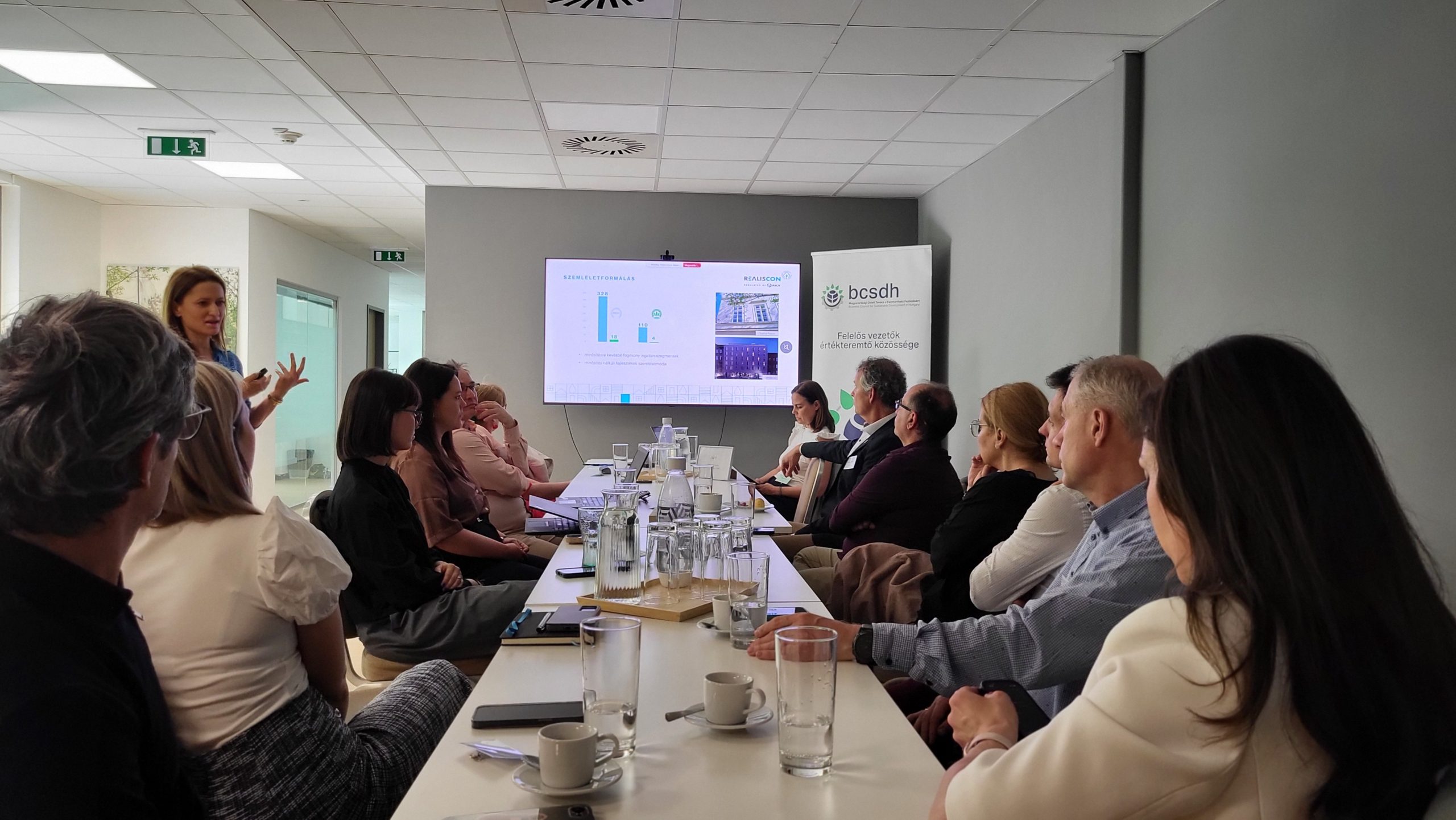
Tímea Fazekas, Business Development Manager at Realiscon, explained what sustainability in the built environment means to the company, emphasizing the importance of landscape architecture and the restoration and creation of natural habitats.

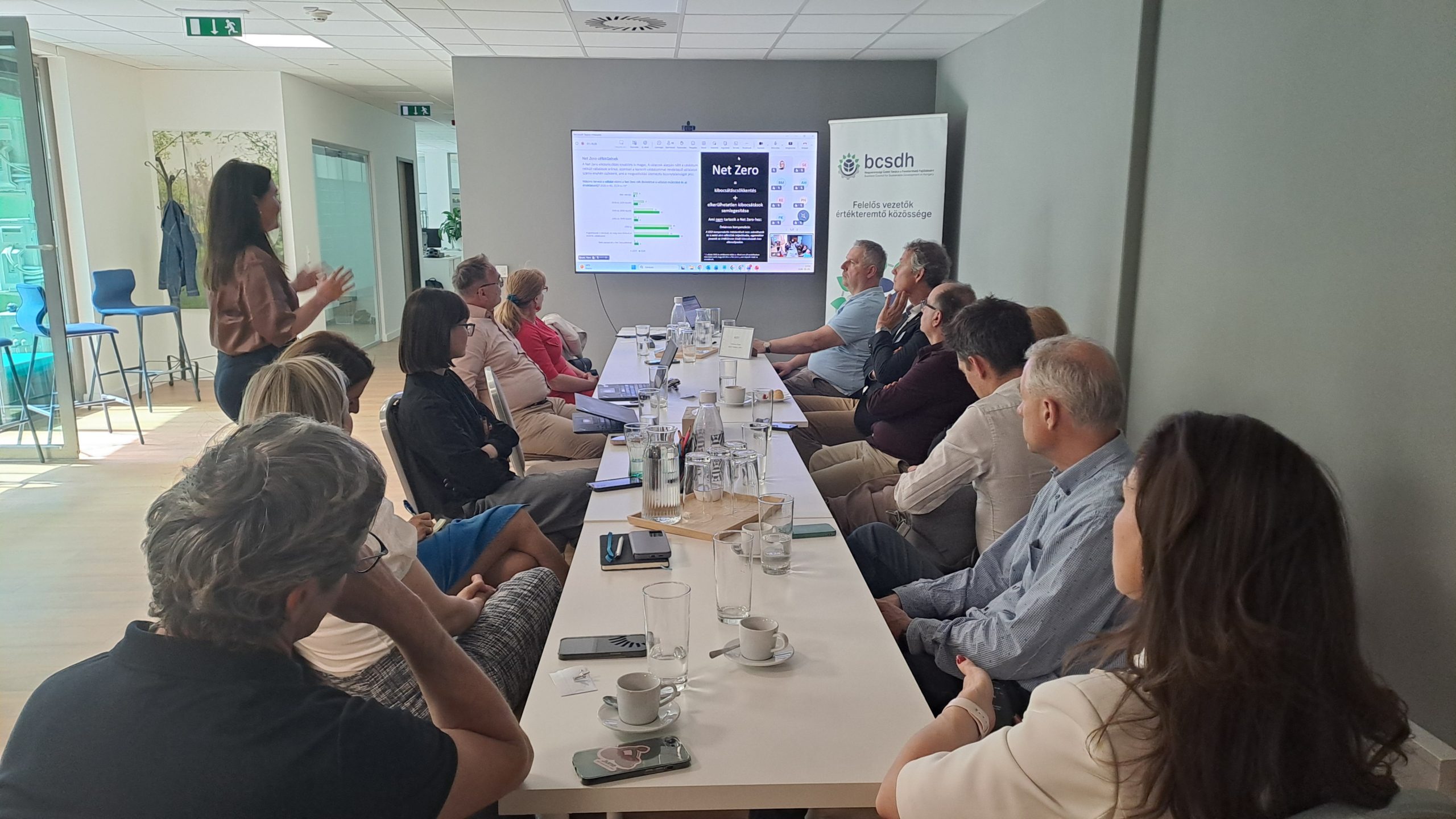
A presentation by our cooperating partner, Deloitte, on the latest findings of the Towards Net Zero survey conducted among member companies provided a comprehensive overview of corporate trends. In her presentation, Senior Manager Flóra Borek highlighted that member companies are increasingly focusing on mitigation and adaptation, yet the assessment and strategic integration of climate risks still require improvement in many cases.

The Towards Net survey conducted among member companies provided a comprehensive overview of corporate trends. Gábor Roszik, Quality  Manager at Colas Magyarország Zrt., presented on sustainability issues in infrastructure and road construction. His presentation revealed that carbon-conscious solutions and resilience have become critical factors not only from an environmental perspective but also, unequivocally, from a business perspective. Changes taking place in the industry indicate that climate risk analysis now forms the basis for strategic decisions.

The program continued with moderated panel discussions, where participants had the opportunity to share their experiences and practical solutions. As the group discussed these issues, it became clear that responses to climate change are now matters of competitiveness, and that engaging the entire value chain and raising awareness remain significant challenges.

The official part of the event concluded with an informal discussion, which further strengthened the potential for cooperation in the field of sustainability.

Thanks for our Race to Zero program sponsors!

Sponsor of our carbon-conscious events:

06.05.2026
https://bcsdh.hu/wp-content/uploads/2026/05/20260505_152308-1-scaled.jpg 1441 2560 Nagy Andrea https://bcsdh.hu/wp-content/uploads/2021/12/bcsdh-logo.png Nagy Andrea2026-05-06 16:25:182026-05-21 09:46:31How is the business sector responding to climate change? – the experiences of the Race to Zero working group, from mitigation and adaptation to resilience
Page 2 of 212
Followon TwitterSubscribeto RSS Feed

Latest news

Categories

  • Award
  • Business Solution Award
  • Business Transformation award
  • Change Leader Award
  • Kiemelt hírek
  • Leading women award
  • Member News
  • New member
  • News
  • új tagvállalat
  • Uncategorized

Archives

  • May 2026
  • April 2026
  • March 2026
  • February 2026
  • January 2026
  • December 2025
  • November 2025
  • October 2025
  • September 2025
  • August 2025
  • July 2025
  • June 2025
  • May 2025
  • April 2025
  • March 2025
  • February 2025
  • January 2025
  • December 2024
  • November 2024
  • October 2024
  • September 2024
  • August 2024
  • July 2024
  • June 2024
  • May 2024
  • April 2024
  • March 2024
  • February 2024
  • January 2024
  • December 2023
  • November 2023
  • October 2023
  • September 2023
  • August 2023
  • July 2023
  • June 2023
  • May 2023
  • April 2023
  • March 2023
  • February 2023
  • January 2023
  • December 2022
  • November 2022
  • October 2022
  • September 2022
  • August 2022
  • July 2022
  • June 2022
  • May 2022
  • April 2022
  • March 2022
  • February 2022
  • January 2022
  • December 2021
  • November 2021
  • October 2021
  • September 2021
  • August 2021
  • July 2021
  • June 2021
  • May 2021
  • April 2021
  • March 2021
  • February 2021
  • January 2021
  • December 2020
  • November 2020
  • October 2020
  • September 2020
  • July 2020
  • June 2020
  • May 2020
  • April 2020
  • March 2020
  • February 2020
  • January 2020
  • December 2019
  • November 2019
  • October 2019
  • September 2019
  • August 2019
  • July 2019
  • June 2019
  • May 2019
  • April 2019
  • March 2019
  • February 2019
  • January 2019
  • December 2018
  • November 2018
  • October 2018
  • September 2018
  • August 2018
  • July 2018
  • June 2018
  • May 2018
  • April 2018
  • February 2018
  • January 2018
  • December 2017
  • November 2017
  • October 2017
  • September 2017
  • May 2017
  • April 2017
  • March 2017
  • February 2017
  • December 2016
  • November 2016
  • October 2016
  • September 2016
  • August 2016
  • July 2016
  • June 2016
  • May 2016
  • April 2016
  • March 2016
  • February 2016
  • December 2015
  • November 2015
  • October 2015
  • September 2015
  • August 2015
  • July 2015
  • June 2015
  • April 2015
  • March 2015
  • February 2015
  • January 2015
  • December 2014
  • November 2014
  • October 2014
  • September 2014
  • August 2014
  • July 2014
  • June 2014
  • May 2014
  • April 2014
  • March 2014
  • February 2014
  • January 2014
  • December 2013
  • November 2013
  • September 2013
  • July 2013
  • June 2013
  • May 2013
  • April 2013
  • March 2013
  • February 2013
  • January 2013
  • November 2012

Business Council for Sustainable Development in Hungary
1118 Budapest, Ménesi street 9/a.

About us
Our mission
Our vision
Our Members
Annual Report
Contact

Carbon-aware events
Gallery

Policies and statements
Privacy policy
Competition Law Statement
Code of Ethics

World Business Council for Sustainable Development (WBCSD) National Partner

© Copyright - BCSDH - powered by Enfold WordPress Theme
  • Facebook
  • LinkedIn
  • Mail
Scroll to top