• Facebook
  • LinkedIn
  • Mail
  • Magyar Magyar Hungarian hu
  • English English English en
BCSDH
  • About us
    • Mission
      • Vision 2050
      • Management Guidelines
    • Organization
    • Partners
  • Our members
    • Membership
    • List of our members
    • Become a member
  • News
    • Our news
    • Member news
  • Our activities
    • 1. oszlop
      • Time to transform 2030
      • Race to Zero
      • Circular Economy Platform
      • ESG
      • Working groups
    • Future Leaders Program
      • Scholarship
    • For a Sustainable Future Award
    • International projects
      • ERASMUS+ DEDYCATING
      • ISSUE
      • Circular Regions
    • Archive
      • Action 2020
  • Events
    • Events calendar
    • Gallery
  • Resources
    • Business solutions
  • Circular Economy Hotspot 2026
  • Menu Menu
  • About us
    • Mission
      • Vision 2050
      • Management Guidelines
    • Organization
    • Partners
  • Our members
    • Membership
    • List of our members
    • Become a member
  • News
    • Our news
    • Member news
  • For a Sustainable Future Award
  • Our activities
    • Time to transform 2030
    • Race to Zero
    • Circular Economy Platform
    • ESG
    • Working groups
    • Future Leaders Program
      • Scholarship
    • International projects
      • ISSUE
      • Circular Regions
    • Archive
      • Action 2020
  • Resources
    • Business solutions
  • Events
    • Events calendar
    • Gallery
  • Circular Economy Hotspot 2026
You are here: Home1 / News2 / Regisztráció – „A jövő vezetői” Alumni program tavaszi esemény3 / 20264 / August

The climate act may enter a new phase in the fall of 2026

News

In 2025, the Constitutional Court struck down the 2030 emissions reduction target in the current law and ordered the National Assembly to enact new, more ambitious legislation by June 30, 2026.

In July, more than 200 civil society and professional organizations presented their own draft legislation, which they also submitted to the government and members of the National Assembly. The government’s fall legislative agenda includes an amendment to the Climate Protection Act, so the official legislative process can begin in the coming period, which is expected to be accompanied by professional and public consultations that may also involve the corporate sector.

In addition to emissions reduction, the proposal places a strong emphasis on adaptation and climate resilience, and would involve companies, financial institutions, local governments, government agencies, the scientific community, and civil society organizations.

26.08.2026
https://bcsdh.hu/wp-content/uploads/2026/08/Nevtelen-1000-x-630-keppont.png 630 1000 Gyurgyik Anna https://bcsdh.hu/wp-content/uploads/2021/12/bcsdh-logo.png Gyurgyik Anna2026-08-26 17:37:182026-08-26 17:37:18The climate act may enter a new phase in the fall of 2026

Sustainability Opportunities for Existing Buildings

Member News

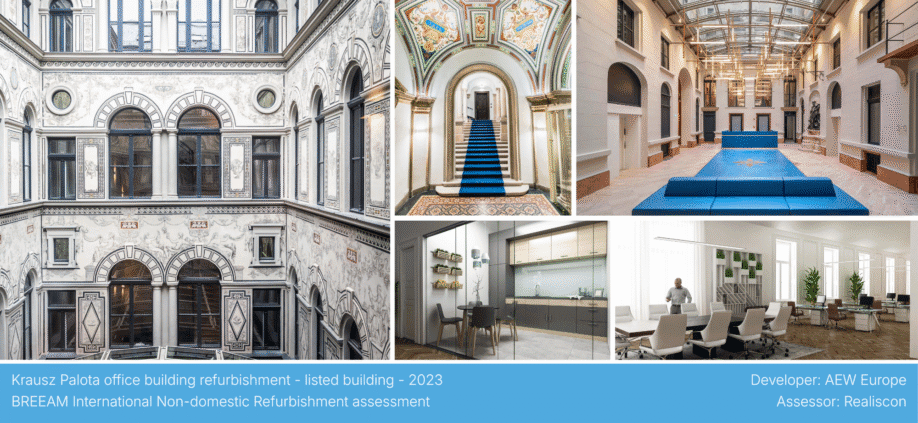
When we think about the sustainability challenges of the construction industry, new, energy-efficient buildings often come to mind. However, one of the most important ways to reduce environmental impact can also be to avoid new construction and instead modernise existing buildings, giving them a new lease of life and, potentially, a new function. Renovation offers opportunities not only to improve energy efficiency, but also to reduce embodied carbon, for example by retaining existing structures and materials, while increasing the building’s technical, economic and functional value. But how can sustainability considerations be incorporated within the constraints and specific characteristics of an existing building, and what value can a well-planned renovation create? The BREEAM Refurbishment and Fit Out rating system provides a structured framework precisely for this purpose.


Build or Renovate?

In our previous articles, we explored how sustainability principles can be integrated through BREEAM certification when preparing district-level developments and in the case of new-build projects.

There is a saying that the cheapest energy is the energy we do not use. Applied to buildings, we could similarly say that the most cost-effective or sustainable building is the one that does not need to be built in the first place. Professional forums increasingly emphasise that the construction industry should place greater focus on making use of and renovating the existing building stock rather than relying primarily on new construction.

Green building rating systems have also developed assessment frameworks specifically for these situations. BRE is currently introducing updated requirements for refurbishment projects under the name BREEAM Refurbishment and Fit Out Commercial v7. Similarly to the new-build scheme, this framework covers the entire lifecycle of a renovation project – from defining the need for the project and progressing through the design stages, construction and technical handover, through to commissioning and completion. In doing so, it encourages improvements in the performance, lifespan and resilience of existing buildings.

Based on our experience, it is encouraging to see that requests from owners and developers seeking building certification for refurbishment projects are becoming increasingly common.


Why Is It Not Difficult to Integrate Sustainability into Building Renovation?

The framework mentioned above specifically takes into account the characteristics of non-residential building renovation projects. Whether it is a shell & core refurbishment or a tenant fit-out, the criteria to be assessed and achieved as part of a BREEAM Refurbishment or Fit-out assessment can be tailored to the scope and technical content of the works. In addition, specific requirements can be addressed where a building is subject to heritage protection.

An existing building may have limitations and constraints in terms of its design and technical solutions, meaning that the same technical standards or level of energy efficiency as those achievable in a new building may not always be feasible. BREEAM takes this into account when assessing energy efficiency, for example, by not simply expecting performance equivalent to the standards of a new building, but instead comparing and assessing the building’s condition before and after the refurbishment.

Retaining the structural frame, external envelope or other building elements can shorten the construction period, thereby reducing the environmental impact associated with construction activities. At the same time, using fewer new materials can significantly reduce the building’s carbon footprint.

By retaining, reusing or recycling existing structures and materials, we can also support the principles of the circular economy.


Creating Value from Something Existing

The refurbishment of a deteriorated, vacant or simply outdated building holds significant potential. In addition to improving energy efficiency, already mentioned above, renovation can significantly enhance the comfort and wellbeing of future building users. Better indoor air quality, as well as improved thermal and acoustic comfort, all contribute to this. It can also make the building accessible to new groups of users, for example through improved accessibility.

Through modernisation, a building can also be prepared for the short- and long-term impacts of climate change, while existing natural hazards, such as flash flood, can be addressed. The renovation can also create opportunities to reduce energy and water consumption or, for example, to utilise rainwater and greywater. If the property includes external areas, their ecological quality can also be improved by enhancing biodiversity and increasing green space.

In addition to environmental value, refurbishment can also create economic value. A modernised building can have lower operating and maintenance costs than a building in need of renovation, as the quality and lifespan of its structures and systems have been improved. The market value, occupancy rate and rental potential of the property may also increase.

A well-planned investment can create urban and community value as well. A deteriorated or underutilised building can be brought back to life and reactivate its surroundings, while avoiding disruption to the existing urban fabric. In the case of valuable, protected buildings, refurbishment also provides an opportunity to preserve architectural and cultural heritage while adapting the building to contemporary needs and giving it a new lease of life or function.

26.08.2026
https://bcsdh.hu/wp-content/uploads/2026/05/Realiscon_logo_png-2-1.png 519 1246 Gyurgyik Anna https://bcsdh.hu/wp-content/uploads/2021/12/bcsdh-logo.png Gyurgyik Anna2026-08-26 12:37:022026-08-26 12:37:02Sustainability Opportunities for Existing Buildings

Dreher joins the Volunteer Watering Campaign

Member News

Dreher Breweries has entered into a partnership with the Beeco eco-app to jointly support the preservation of urban green spaces and raise awareness of the role of water in adapting to the impacts of climate change. As part of the collaboration, the company has joined the Volunteer Watering Campaign launched by the Municipality of Budapest and FŐKERT, which is supported by Beeco’s map-based mobile application designed to facilitate tree watering.

The initiative is closely linked to Dreher’s sustainability objectives, with responsible water management and the protection of natural resources playing a key role. Beyond its own operations, the company considers it important to contribute to the creation of a more livable, greener environment through local community initiatives.

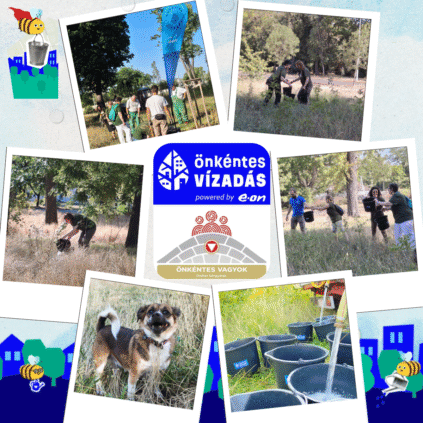
As part of the partnership, Dreher employees have already participated in several joint tree-watering activities in Népliget as part of the company’s Corporate Volunteering Program, where the regular watering of young trees is essential to help them survive the increasingly frequent periods of drought. Thanks to the application developed by Beeco, volunteers can easily identify trees in need of watering, enabling them to contribute directly and efficiently to the preservation of urban green spaces.

The aim of the collaboration is to help protect the natural assets of cities through practical solutions and community cooperation, while also encouraging employees to play an active role in sustainability efforts.


26.08.2026
https://bcsdh.hu/wp-content/uploads/2023/05/dreher_logo2.png 306 310 Gyurgyik Anna https://bcsdh.hu/wp-content/uploads/2021/12/bcsdh-logo.png Gyurgyik Anna2026-08-26 12:20:092026-08-26 12:21:33Dreher joins the Volunteer Watering Campaign

Renewable Energy, AI and Team Building at Katica Tanya

News
Read more
25.08.2026
https://bcsdh.hu/wp-content/uploads/2026/08/711248646_1569473271208401_6301132473291106385_n-1.jpg 1536 2048 Takacs Ivett https://bcsdh.hu/wp-content/uploads/2021/12/bcsdh-logo.png Takacs Ivett2026-08-25 14:42:202026-08-25 14:42:20Renewable Energy, AI and Team Building at Katica Tanya

BREEAM Refurbishment V7: What You Need to Know About the New Scheme

Member News

BRE officially published the BREEAM Refurbishment V7 manuals. Based on an initial review, the new version is not merely a minor update, but includes significant revisions across several areas compared to the previous BREEAM International Refurbishment and Fit Out 2015 (RFO) scheme.

Details HERE.
25.08.2026
https://bcsdh.hu/wp-content/uploads/2022/01/greenbors-consulting.png 170 450 Gyurgyik Anna https://bcsdh.hu/wp-content/uploads/2021/12/bcsdh-logo.png Gyurgyik Anna2026-08-25 11:53:502026-08-25 11:53:50BREEAM Refurbishment V7: What You Need to Know About the New Scheme

A New Era for Green Buildings: LEED v5 Has Arrived

Member News

In today’s global real estate market, it is no longer enough to describe a building as simply energy-efficient or sustainable. Investors, lenders, and tenants increasingly require verified, comparable data on a building’s energy performance, carbon emissions, climate resilience, and occupant well-being. LEED certification provides one of the world’s most widely recognized frameworks for evaluating these aspects, and its latest version—LEED v5—is now available for new projects.

Details HERE.


25.08.2026
https://bcsdh.hu/wp-content/uploads/2022/01/greenbors-consulting.png 170 450 Gyurgyik Anna https://bcsdh.hu/wp-content/uploads/2021/12/bcsdh-logo.png Gyurgyik Anna2026-08-25 11:50:472026-08-25 11:50:47A New Era for Green Buildings: LEED v5 Has Arrived

Global intent, local reality: What does sustainability practice mean in Central Europe?

Member News

Sustainability is a shared ambition at a global level, yet the way it is implemented differs significantly by region. According to Grant Thornton’s international research, the mid-market sector worldwide invests in ESG initiatives based on differing business considerations.
While in North America sustainability is primarily seen as a growth and investment opportunity, in Asia it forms part of innovation and digitalisation, whereas in Europe the focus is increasingly on optimising operational efficiency and regulatory compliance.

This difference is decisive from both a strategic and a business perspective.

Europe: From regulation to operational advantage

European companies operate in a more mature ESG regulatory environment. As a result of the CSRD, the EU Taxonomy and other regulations, most market participants have already gone beyond the initial compliance steps.

Accordingly, the focus is shifting:

  • from compliance to integration into operations;
  • from one-off projects to process-level integration;
  • and from obligations to measurable business impacts.

Sustainability is thus increasingly linked to cost efficiency, optimisation of energy use, and improved financing conditions.

The “twin transition”: Linking digitalisation and ESG

One of the key elements of the European approach is the connection between the green and digital transition. Digitalisation is both an enabling tool and a foundation of ESG operations.

In practice, this means that:

  • the collection and validation of ESG data is increasingly based on automated systems;
  • reporting and risk management rely on shared databases;
  • and decision-making is becoming increasingly data driven.

This is particularly relevant in the financial sector, where the management of ESG risks can no longer be separated from traditional risk models.

Regional differences, shared direction

Although ESG objectives are increasingly aligned across Europe, implementation continues to reflect local regulatory frameworks, market expectations and economic realities.

Hungary, Slovakia, Slovenia and Croatia all demonstrate different stages and drivers of ESG maturity. While the pace and mechanisms vary, the direction is remarkably similar: sustainability is becoming embedded into core business operations rather than remaining a standalone compliance exercise.

Hungary: From compliance to verification

Hungary has established one of the most structured ESG frameworks in the region. Mandatory ESG reporting requirements and independent certification obligations have accelerated the transition from sustainability commitments to measurable and verifiable performance.

Two parallel forces are currently shaping the Hungarian market.

Financing requirements are becoming ESG requirements

The first driver comes from the financial sector. Through supervisory expectations and prudential requirements, banks are increasingly required to integrate ESG risks into their lending and risk assessment processes.

As a result, sustainability-related information is becoming an important element of financing decisions. Companies that can provide reliable ESG data are better positioned when engaging with financial institutions and investors.

Mandatory certification raises expectations

The second driver comes from regulation. The Hungarian ESG Act and related implementing decrees require a broad group of companies to prepare ESG reports and subject them to independent certification.

This development shifts ESG from voluntary commitments towards auditable and verifiable information. Organisations are increasingly required to establish stronger governance frameworks, improve internal controls and ensure the quality of reported data.

Data quality remains a challenge

Despite significant progress, many companies still face challenges in collecting and managing ESG-related information. Manual processes, spreadsheets and fragmented data ownership remain common across the market.

The transition towards integrated ESG data management systems is underway, but for many organisations this remains one of the most important areas for development.

From reporting obligation to business value

As the market matures, ESG is increasingly viewed as more than a reporting requirement. Reliable sustainability data supports financing opportunities, supplier relationships and participation in international value chains.

For many Hungarian companies, ESG is gradually becoming a business capability that contributes directly to competitiveness and long-term value creation.

Slovakia: Supply chains remain the strongest driver

In Slovakia, ESG adoption has largely been driven by international supply chains and the requirements of multinational parent companies.

For many businesses, sustainability reporting first emerged as a response to information requests from customers, investors and group-level reporting obligations rather than domestic regulation.

As a result, Slovak companies have developed practical experience with ESG data collection and reporting, particularly within export-oriented industries and manufacturing sectors.

The focus is increasingly shifting from responding to questionnaires and customer requests towards building internal ESG management capabilities that support broader business objectives.

Slovenia: Sustainability as part of business culture

Slovenia benefits from a relatively mature sustainability culture and a long-standing focus on environmental responsibility.

Although the country does not have dedicated national ESG legislation comparable to the Hungarian framework, sustainability considerations are already well integrated into many business strategies and corporate governance structures.

Slovenian companies often approach ESG as part of broader business resilience, innovation and stakeholder engagement efforts rather than solely as a compliance exercise.

This cultural foundation has supported a relatively smooth transition towards more structured sustainability reporting requirements.

Croatia: From awareness to implementation

Croatia is currently in a transitional phase where sustainability is moving beyond awareness and becoming increasingly embedded into business decision-making.

While sustainability initiatives are particularly visible in sectors such as tourism and energy, ESG implementation is gradually expanding across industries as organisations respond to growing expectations from investors, financial institutions and international business partners.

Compared with Hungary, where ESG implementation is strongly influenced by dedicated national legislation and certification requirements, the Croatian market remains more market driven.

Data remains the key challenge

One of the most significant challenges for Croatian companies is organisational readiness and ESG expertise.

Many organisations continue to rely on manual data collection processes and external advisory support, while integrated ESG reporting systems remain at an earlier stage of development.

At the same time, many companies continue investing in sustainability programmes even when they are no longer legally required to do so, recognising the long-term strategic value of ESG capabilities.

The growing role of financial institutions

Croatian banks are increasingly incorporating ESG considerations into lending processes and financing frameworks.

While formal ESG certification is not generally required, sustainability performance is becoming more relevant in financing decisions, supported by incentive-based mechanisms such as green financing solutions and sustainability-linked lending products.

Different markets, common direction

Although ESG maturity differs across Central Europe, several common themes are emerging.

  • ESG is increasingly becoming part of competitiveness.
  • Data quality and digitalisation are taking on a central role.
  • Regulatory compliance is evolving into broader business value.
  • Financing institutions are becoming important drivers of ESG adoption.

The most successful organisations will be those that can combine reliable data, effective governance and long-term sustainability objectives within their business strategy.

Sustainability is no longer defined solely by reporting requirements. Across the region, it is becoming a practical business discipline that influences financing, operations, risk management and long-term growth.

Sustainability is a shared ambition at a global level, yet the way it is implemented differs significantly by region. According to Grant Thornton’s international research, the mid-market sector worldwide invests in ESG initiatives based on differing business considerations.
 

25.08.2026
https://bcsdh.hu/wp-content/uploads/2025/03/gt_logo-e1772810573440.webp 475 1730 Gyurgyik Anna https://bcsdh.hu/wp-content/uploads/2021/12/bcsdh-logo.png Gyurgyik Anna2026-08-25 11:40:292026-08-25 11:40:29Global intent, local reality: What does sustainability practice mean in Central Europe?

EmpCo: when sustainability claims must also be substantiated

Member News

The terms “green”, “sustainable” and “environmentally friendly” have become common elements of corporate communications in recent years. Under the European Union’s new rules, however, they will soon be subject to significantly stricter conditions.

The Empowering Consumers for the Green Transition Directive, or EmpCo for short, aims to ensure that consumers receive more accurate and verifiable information about the environmental characteristics of products and services. The new requirements will apply from 27 September 2026, leaving companies less than two months to prepare.

Which sustainability claims may become risky?

Under EmpCo, generic environmental claims that do not clearly specify what they refer to or what results or data support them will be subject to stricter scrutiny. Examples include:

  • “environmentally friendly”;
  • “green”;
  • “sustainable”;
  • “climate-friendly”;
  • “eco-friendly”;
  • “biodegradable”.

These claims may only be used in generic form if the company can demonstrate recognised excellent environmental performance relevant to the claim. If the precise meaning of the claim is presented clearly and prominently on the same communication medium, it may qualify as a specific environmental claim. However, its accuracy must still be supported by appropriate data.

Particular caution is required when using terms such as “climate-neutral” or “carbon-neutral”. Product-level claims based solely on the offsetting of greenhouse gas emissions will be prohibited under the new rules. Communications must be based on the product’s actual life-cycle impacts and the results achieved within the company’s own value chain.

Specific claims are coming to the fore

In the future, statements that clearly define the nature and extent of environmental performance will become increasingly important. For example:

  • “100 percent of the plant’s electricity consumption comes from renewable sources.”
  • “70 percent of the packaging is made from recycled materials.”
  • “The amount of water used in production decreased by 18 percent between 2023 and 2025.”

These claims provide consumers with more precise information but may only be used safely if the underlying data, calculation methods and time-based comparisons can be verified.

Stricter expectations will also apply to future commitments. Communicating a climate or emissions reduction target may require clear, publicly available and verifiable commitments, measurable time-bound targets, a realistic implementation plan and independent expert verification.

Labels and visual elements must also be reviewed

The impact of EmpCo extends beyond advertising copy. As a general rule, sustainability labels may only be used if they are based on an appropriate certification scheme or have been established by a public authority. Companies’ own “green” logos and certification marks may therefore also need to be reviewed.

The overall effect of the communication also matters. Leaves, water droplets, images of nature and green colour schemes used on packaging or in advertisements may themselves suggest an environmental benefit. Therefore, in addition to textual claims, the visual presentation and the overall impression created in the consumer should also be assessed as part of the compliance review.

What should companies do now?

Preparation requires coordinated efforts from ESG, marketing, legal, compliance, procurement and business functions. As a first step, it is advisable to:

  • identify environmental claims appearing on websites, in advertisements, on social media platforms, packaging and product materials;
  • verify the data, calculations and methodologies supporting the claims;
  • review the labels, logos and certificates being used;
  • identify wording that is too generic or potentially misleading;
  • establish an internal approval and documentation process for new environmental claims;
  • prepare marketing and sales teams to apply the new requirements.

The review must also cover communications and packaging relating to products already on the market, as the requirements will also apply to existing products from 27 September 2026.

Trust can be measured in the details

EmpCo places substantiation at the heart of sustainability communications. Accurate, measurable and properly documented claims can reduce legal and reputational risks while providing consumers with more credible information.

Preparing for the new requirements is therefore a broader task than reviewing marketing communications: it also requires the alignment of data, processes and responsibilities. Companies that establish the internal systems needed to verify their sustainability claims in good time may find themselves in a more favourable position.

25.08.2026
https://bcsdh.hu/wp-content/uploads/2025/03/gt_logo-e1772810573440.webp 475 1730 Gyurgyik Anna https://bcsdh.hu/wp-content/uploads/2021/12/bcsdh-logo.png Gyurgyik Anna2026-08-25 11:35:412026-08-25 11:35:41EmpCo: when sustainability claims must also be substantiated

Deforestation is no longer just an environmental issue – it is becoming a business compliance obligation

News

We cannot exist without forests: in addition to providing a habitat for numerous species and acting as carbon sinks, forests also provide a vital source of income for approximately one quarter of the world’s population.

The scale of forest loss worldwide has reached alarming levels: according to the Food and Agriculture Organization of the United Nations (FAO), 420 million hectares of forest were lost to deforestation between 1990 and 2020, an area equivalent to the size of the EU.

Deforestation and forest degradation affect the EU’s environmental objectives, including efforts to combat climate change and biodiversity loss, but they also have implications for human rights, peace and security. The EU is therefore committed to tackling global forest loss. A key objective is to improve the health of existing forests and significantly increase sustainable, biodiverse forest areas worldwide.

To achieve this, the EU adopted the Deforestation Regulation (EUDR – Regulation (EU) 2023/1115), which aims to minimise deforestation and forest degradation associated with agricultural commodities imported into the European Union.

The products covered by the Regulation are listed in Annex I. These include products that contain cattle, cocoa, coffee, oil palm, rubber, soya or wood, or that have been fed with or made using these commodities.

Every operator or trader who places the commodities specified in the Regulation on the EU market or exports them must demonstrate that the products do not originate from land that has recently been subject to deforestation or contributed to forest degradation. Otherwise, they may not be released for free circulation in the EU, exported from the EU, or traded within the EU.

Medium-sized and large companies must comply with the legal requirements from 30 December 2026, while micro and small enterprises must comply from 30 June 2027. However, for certain newly included product categories, the compliance obligations will only apply from 30 December 2027.

More information: European Commission


24.08.2026
https://bcsdh.hu/wp-content/uploads/2026/08/Honlap-hir-kepek.png 430 845 Galambosne Dudas Zsofia https://bcsdh.hu/wp-content/uploads/2021/12/bcsdh-logo.png Galambosne Dudas Zsofia2026-08-24 15:38:142026-08-24 15:39:01Deforestation is no longer just an environmental issue – it is becoming a business compliance obligation

The Magyar Nemzeti Bank has published its Green Finance Report for the sixth time

Member News

The main objective of the Magyar Nemzeti Bank’s publication entitled Green Finance Report is to provide a comprehensive annual overview of the domestic financial sector’s environmental sustainability risks, financing activities and related programmes. According to the latest report, the volume of green loans in Hungary, as well as the volume of ESG investments available behind ESG investment funds and life insurance products, has increased significantly, altough the green corporate bond market has shown signs of stagnation. The Hungarian banking system’s exposure to climate risks has remained unchanged. In line with the more prominent sustainability standards in financial regulation, supervisory expectations towards financial institutions have also increased. Through targeted initiatives, the central bank supports the financial system in the interests of the green transition.

The full press release is available in Hungarian here.

The Green Finance Report is available in English here.

24.08.2026
https://bcsdh.hu/wp-content/uploads/2022/01/MNB.png 170 450 Gyurgyik Anna https://bcsdh.hu/wp-content/uploads/2021/12/bcsdh-logo.png Gyurgyik Anna2026-08-24 12:27:002026-08-24 12:28:37The Magyar Nemzeti Bank has published its Green Finance Report for the sixth time
Page 1 of 212
Followon TwitterSubscribeto RSS Feed

Latest news

Categories

  • Award
  • Business Solution Award
  • Business Transformation award
  • Change Leader Award
  • Kiemelt hírek
  • Leading women award
  • Member News
  • New member
  • News
  • új tagvállalat
  • Uncategorized

Archives

  • August 2026
  • July 2026
  • June 2026
  • May 2026
  • April 2026
  • March 2026
  • February 2026
  • January 2026
  • December 2025
  • November 2025
  • October 2025
  • September 2025
  • August 2025
  • July 2025
  • June 2025
  • May 2025
  • April 2025
  • March 2025
  • February 2025
  • January 2025
  • December 2024
  • November 2024
  • October 2024
  • September 2024
  • August 2024
  • July 2024
  • June 2024
  • May 2024
  • April 2024
  • March 2024
  • February 2024
  • January 2024
  • December 2023
  • November 2023
  • October 2023
  • September 2023
  • August 2023
  • July 2023
  • June 2023
  • May 2023
  • April 2023
  • March 2023
  • February 2023
  • January 2023
  • December 2022
  • November 2022
  • October 2022
  • September 2022
  • August 2022
  • July 2022
  • June 2022
  • May 2022
  • April 2022
  • March 2022
  • February 2022
  • January 2022
  • December 2021
  • November 2021
  • October 2021
  • September 2021
  • August 2021
  • July 2021
  • June 2021
  • May 2021
  • April 2021
  • March 2021
  • February 2021
  • January 2021
  • December 2020
  • November 2020
  • October 2020
  • September 2020
  • July 2020
  • June 2020
  • May 2020
  • April 2020
  • March 2020
  • February 2020
  • January 2020
  • December 2019
  • November 2019
  • October 2019
  • September 2019
  • August 2019
  • July 2019
  • June 2019
  • May 2019
  • April 2019
  • March 2019
  • February 2019
  • January 2019
  • December 2018
  • November 2018
  • October 2018
  • September 2018
  • August 2018
  • July 2018
  • June 2018
  • May 2018
  • April 2018
  • February 2018
  • January 2018
  • December 2017
  • November 2017
  • October 2017
  • September 2017
  • May 2017
  • April 2017
  • March 2017
  • February 2017
  • December 2016
  • November 2016
  • October 2016
  • September 2016
  • August 2016
  • July 2016
  • June 2016
  • May 2016
  • April 2016
  • March 2016
  • February 2016
  • December 2015
  • November 2015
  • October 2015
  • September 2015
  • August 2015
  • July 2015
  • June 2015
  • April 2015
  • March 2015
  • February 2015
  • January 2015
  • December 2014
  • November 2014
  • October 2014
  • September 2014
  • August 2014
  • July 2014
  • June 2014
  • May 2014
  • April 2014
  • March 2014
  • February 2014
  • January 2014
  • December 2013
  • November 2013
  • September 2013
  • July 2013
  • June 2013
  • May 2013
  • April 2013
  • March 2013
  • February 2013
  • January 2013
  • November 2012

Business Council for Sustainable Development in Hungary
1118 Budapest, Ménesi street 9/a.

About us
Our mission
Our vision
Our Members
Annual Report
Contact

Carbon-aware events
Gallery

Policies and statements
Privacy policy
Competition Law Statement
Code of Ethics

World Business Council for Sustainable Development (WBCSD) National Partner

© Copyright - BCSDH - powered by Enfold WordPress Theme
  • Facebook
  • LinkedIn
  • Mail
Scroll to top