
Business Council for Sustainable Development in Hungary
1118 Budapest, Ménesi street 9/a.
Policies and statements
Privacy policy
Competition Law Statement
Code of Ethics
World Business Council for Sustainable Development (WBCSD) National Partner
In today’s global real estate market, it is no longer enough to describe a building as simply energy-efficient or sustainable. Investors, lenders, and tenants increasingly require verified, comparable data on a building’s energy performance, carbon emissions, climate resilience, and occupant well-being. LEED certification provides one of the world’s most widely recognized frameworks for evaluating these aspects, and its latest version—LEED v5—is now available for new projects.
Details HERE.

Sustainability is a shared ambition at a global level, yet the way it is implemented differs significantly by region. According to Grant Thornton’s international research, the mid-market sector worldwide invests in ESG initiatives based on differing business considerations.
While in North America sustainability is primarily seen as a growth and investment opportunity, in Asia it forms part of innovation and digitalisation, whereas in Europe the focus is increasingly on optimising operational efficiency and regulatory compliance.
This difference is decisive from both a strategic and a business perspective.
European companies operate in a more mature ESG regulatory environment. As a result of the CSRD, the EU Taxonomy and other regulations, most market participants have already gone beyond the initial compliance steps.
Accordingly, the focus is shifting:
Sustainability is thus increasingly linked to cost efficiency, optimisation of energy use, and improved financing conditions.
One of the key elements of the European approach is the connection between the green and digital transition. Digitalisation is both an enabling tool and a foundation of ESG operations.
In practice, this means that:
This is particularly relevant in the financial sector, where the management of ESG risks can no longer be separated from traditional risk models.
Although ESG objectives are increasingly aligned across Europe, implementation continues to reflect local regulatory frameworks, market expectations and economic realities.
Hungary, Slovakia, Slovenia and Croatia all demonstrate different stages and drivers of ESG maturity. While the pace and mechanisms vary, the direction is remarkably similar: sustainability is becoming embedded into core business operations rather than remaining a standalone compliance exercise.
Hungary has established one of the most structured ESG frameworks in the region. Mandatory ESG reporting requirements and independent certification obligations have accelerated the transition from sustainability commitments to measurable and verifiable performance.
Two parallel forces are currently shaping the Hungarian market.
The first driver comes from the financial sector. Through supervisory expectations and prudential requirements, banks are increasingly required to integrate ESG risks into their lending and risk assessment processes.
As a result, sustainability-related information is becoming an important element of financing decisions. Companies that can provide reliable ESG data are better positioned when engaging with financial institutions and investors.
The second driver comes from regulation. The Hungarian ESG Act and related implementing decrees require a broad group of companies to prepare ESG reports and subject them to independent certification.
This development shifts ESG from voluntary commitments towards auditable and verifiable information. Organisations are increasingly required to establish stronger governance frameworks, improve internal controls and ensure the quality of reported data.
Despite significant progress, many companies still face challenges in collecting and managing ESG-related information. Manual processes, spreadsheets and fragmented data ownership remain common across the market.
The transition towards integrated ESG data management systems is underway, but for many organisations this remains one of the most important areas for development.
As the market matures, ESG is increasingly viewed as more than a reporting requirement. Reliable sustainability data supports financing opportunities, supplier relationships and participation in international value chains.
For many Hungarian companies, ESG is gradually becoming a business capability that contributes directly to competitiveness and long-term value creation.
In Slovakia, ESG adoption has largely been driven by international supply chains and the requirements of multinational parent companies.
For many businesses, sustainability reporting first emerged as a response to information requests from customers, investors and group-level reporting obligations rather than domestic regulation.
As a result, Slovak companies have developed practical experience with ESG data collection and reporting, particularly within export-oriented industries and manufacturing sectors.
The focus is increasingly shifting from responding to questionnaires and customer requests towards building internal ESG management capabilities that support broader business objectives.
Slovenia benefits from a relatively mature sustainability culture and a long-standing focus on environmental responsibility.
Although the country does not have dedicated national ESG legislation comparable to the Hungarian framework, sustainability considerations are already well integrated into many business strategies and corporate governance structures.
Slovenian companies often approach ESG as part of broader business resilience, innovation and stakeholder engagement efforts rather than solely as a compliance exercise.
This cultural foundation has supported a relatively smooth transition towards more structured sustainability reporting requirements.
Croatia is currently in a transitional phase where sustainability is moving beyond awareness and becoming increasingly embedded into business decision-making.
While sustainability initiatives are particularly visible in sectors such as tourism and energy, ESG implementation is gradually expanding across industries as organisations respond to growing expectations from investors, financial institutions and international business partners.
Compared with Hungary, where ESG implementation is strongly influenced by dedicated national legislation and certification requirements, the Croatian market remains more market driven.
One of the most significant challenges for Croatian companies is organisational readiness and ESG expertise.
Many organisations continue to rely on manual data collection processes and external advisory support, while integrated ESG reporting systems remain at an earlier stage of development.
At the same time, many companies continue investing in sustainability programmes even when they are no longer legally required to do so, recognising the long-term strategic value of ESG capabilities.
Croatian banks are increasingly incorporating ESG considerations into lending processes and financing frameworks.
While formal ESG certification is not generally required, sustainability performance is becoming more relevant in financing decisions, supported by incentive-based mechanisms such as green financing solutions and sustainability-linked lending products.
Although ESG maturity differs across Central Europe, several common themes are emerging.
The most successful organisations will be those that can combine reliable data, effective governance and long-term sustainability objectives within their business strategy.
Sustainability is no longer defined solely by reporting requirements. Across the region, it is becoming a practical business discipline that influences financing, operations, risk management and long-term growth.
Sustainability is a shared ambition at a global level, yet the way it is implemented differs significantly by region. According to Grant Thornton’s international research, the mid-market sector worldwide invests in ESG initiatives based on differing business considerations.
The terms “green”, “sustainable” and “environmentally friendly” have become common elements of corporate communications in recent years. Under the European Union’s new rules, however, they will soon be subject to significantly stricter conditions.
The Empowering Consumers for the Green Transition Directive, or EmpCo for short, aims to ensure that consumers receive more accurate and verifiable information about the environmental characteristics of products and services. The new requirements will apply from 27 September 2026, leaving companies less than two months to prepare.
Under EmpCo, generic environmental claims that do not clearly specify what they refer to or what results or data support them will be subject to stricter scrutiny. Examples include:
These claims may only be used in generic form if the company can demonstrate recognised excellent environmental performance relevant to the claim. If the precise meaning of the claim is presented clearly and prominently on the same communication medium, it may qualify as a specific environmental claim. However, its accuracy must still be supported by appropriate data.
Particular caution is required when using terms such as “climate-neutral” or “carbon-neutral”. Product-level claims based solely on the offsetting of greenhouse gas emissions will be prohibited under the new rules. Communications must be based on the product’s actual life-cycle impacts and the results achieved within the company’s own value chain.
In the future, statements that clearly define the nature and extent of environmental performance will become increasingly important. For example:
These claims provide consumers with more precise information but may only be used safely if the underlying data, calculation methods and time-based comparisons can be verified.
Stricter expectations will also apply to future commitments. Communicating a climate or emissions reduction target may require clear, publicly available and verifiable commitments, measurable time-bound targets, a realistic implementation plan and independent expert verification.
The impact of EmpCo extends beyond advertising copy. As a general rule, sustainability labels may only be used if they are based on an appropriate certification scheme or have been established by a public authority. Companies’ own “green” logos and certification marks may therefore also need to be reviewed.
The overall effect of the communication also matters. Leaves, water droplets, images of nature and green colour schemes used on packaging or in advertisements may themselves suggest an environmental benefit. Therefore, in addition to textual claims, the visual presentation and the overall impression created in the consumer should also be assessed as part of the compliance review.
Preparation requires coordinated efforts from ESG, marketing, legal, compliance, procurement and business functions. As a first step, it is advisable to:
The review must also cover communications and packaging relating to products already on the market, as the requirements will also apply to existing products from 27 September 2026.
EmpCo places substantiation at the heart of sustainability communications. Accurate, measurable and properly documented claims can reduce legal and reputational risks while providing consumers with more credible information.
Preparing for the new requirements is therefore a broader task than reviewing marketing communications: it also requires the alignment of data, processes and responsibilities. Companies that establish the internal systems needed to verify their sustainability claims in good time may find themselves in a more favourable position.
The main objective of the Magyar Nemzeti Bank’s publication entitled Green Finance Report is to provide a comprehensive annual overview of the domestic financial sector’s environmental sustainability risks, financing activities and related programmes. According to the latest report, the volume of green loans in Hungary, as well as the volume of ESG investments available behind ESG investment funds and life insurance products, has increased significantly, altough the green corporate bond market has shown signs of stagnation. The Hungarian banking system’s exposure to climate risks has remained unchanged. In line with the more prominent sustainability standards in financial regulation, supervisory expectations towards financial institutions have also increased. Through targeted initiatives, the central bank supports the financial system in the interests of the green transition.
The full press release is available in Hungarian here.
The Green Finance Report is available in English here.
In response to the exceptional situation caused by the prolonged heatwave and reduced nuclear power generation capacity, and in support of the government’s call for energy conservation, E.ON Hungária Group introduced extraordinary energy-saving measures at its sites in Budapest and across the country in early August. The measures were aimed at helping to conserve environmental resources and reduce the load on the electricity system. At the same time, ensuring a safe and reliable electricity supply for customers remained a top priority: throughout this exceptional period, E.ON employees maintained an enhanced level of operational readiness to respond swiftly to any potential faults.
Although the government subsequently withdrew its call for extraordinary energy-saving measures, E.ON considered it important to continue using energy responsibly and efficiently in its own operations and therefore kept the measures in place until 20 August.
The measures focused primarily on reducing energy consumption in buildings. Across more than one hundred E.ON sites, the use of air conditioning was reduced during the day, while between 4 p.m. and 7 a.m. air-conditioning systems were switched off completely, with the exception of buildings required for the operation of critical infrastructure. Employees were also encouraged to share office spaces, allowing air conditioning to be switched off entirely in unoccupied rooms.
The use of certain electrical equipment was also restricted. Electric vehicles at E.ON sites could only be charged between 7 a.m. and 4 p.m. Façade lighting, illuminated signs, decorative lighting and advertising displays were temporarily switched off, while internal communication screens were also taken out of operation. Employees were encouraged to hold meetings online instead of in person, thereby also reducing energy consumption associated with travel.
During this exceptional period, every kilowatt-hour saved made a difference: responsible energy use helped reduce the load on the electricity system.
Climate change and increasingly frequent periods of drought are putting growing pressure on urban green spaces, while trees play a vital role in creating cooler, more liveable urban environments. The FŐKERT and BeEco Volunteer Watering Programme provides a community-based response to this challenge, with E.ON Hungária Group joining the initiative this year as its title sponsor and supporting it with its own awareness-raising campaign. Running from 1 July to 30 August, the initiative engaged local residents in caring for young urban trees: using the BeEco app, anyone could locate trees in need of watering and nearby water access points. Last year, the programme mobilised 1,500 volunteers, who watered 10,000 trees with more than 500,000 litres of water; this year, the initiative expanded beyond Budapest to include Pécs and Veszprém.
In addition, E.ON Hungária Group carries out tree-planting initiatives at its own sites and places particular emphasis on protecting trees, creating green corridors and choosing solutions that minimise disturbance to forested areas when developing its electricity networks. For example, the new transmission line currently under construction between Zirc and Litér is being built along the route of the existing 400 kV network rather than creating an entirely new corridor. Where tree removal cannot be avoided as part of network development, E.ON compensates through replacement afforestation: following network construction works in the Bakony region, for example, the company is planting a new contiguous forest near Lake Balaton.
Shopping with children is rarely just about shopping. Queueing, decision-making situations or unexpected conflicts can all test parents’ patience. The year-long campaign offers clear, practical and immediately applicable guidance for these real-life situations. As part of the collaboration, experts from the Hintalovon Foundation will create educational content every month for SPAR Magyarország’s social media platforms. The topics specifically focus on situations that arise in stores: what parents can say instead of simply prohibiting something, how conflicts can be prevented, how children can be involved in shopping, or what parents can do when faced with a difficult situation at the checkout with a tired and frustrated child.
One of the campaign’s greatest strengths is that it addresses familiar, everyday situations experienced by families and offers professionally grounded yet easy-to-understand solutions. The aim is not merely to “manage” these situations, but to help parents and children learn from them together, encouraging a more conscious, child-centred approach in the long term.
“Our foundation’s mission is to make children’s wellbeing part of everyday life, and this partnership is exactly about achieving that. Shopping is a regularly recurring situation in which the relationship between parents and children can truly develop – it can become a source of tension, but it can also become a shared learning experience. We are delighted that SPAR Magyarország is a partner in this change of perspective and that we can share the Hintalovon Foundation’s professional expertise with families through such a widely accessible platform,” said Kinga Rohrböck, managing director of the Hintalovon Foundation.
“For our company, it is particularly important not only to support families through our products, but also through initiatives connected to everyday life situations. This collaboration demonstrates that a supermarket can also function as a learning environment, where experiences gained during shopping can contribute to children’s development and parents’ confidence,” said Márk Maczelka, head of communications at SPAR.
Through this initiative, SPAR Magyarország goes beyond the traditional role of a retailer by actively contributing to making everyday shopping not merely a routine task, but a shared
experience through which families can develop and discover new ways of dealing with challenges. The collaboration also demonstrates that partnerships between the civil and business sectors can create genuine social impact. Over the coming months, the social media channels of SPAR Magyarország will feature numerous practical tips and inspiring pieces of content to help families handle shopping-related situations in a more conscious, calm and cooperative way.
About the Hintalovon Foundation
The Hintalovon Children’s Rights Foundation is dedicated to promoting and protecting the rights of children living in Hungary.
Since 2016, the Foundation has been working to ensure that every child is well and feels safe. Its goal is to encourage greater attention to children in all areas of life and to help adults and institutions respond appropriately to children’s needs.
Its key activities include protecting children from abuse and violence, strengthening children’s online safety, and increasing awareness of children’s rights. Through the NEMECSEK Programme, the Foundation creates safer communities and supports the operation of the child protection alert system. The Hintalovon Academy strengthens responsible adults through training programmes and provides practical tools and examples. During its Children’s Rights Advice Days, the Foundation offers guidance to parents and professionals seeking support. Its professional materials make children’s rights more widely known and easier to understand. Each year, its Children’s Rights Report summarises the most important events, legislative changes and children’s rights issues that have shaped public discourse during the year. Through its Child Participation Programme, the Foundation incorporates the opinions and experiences of its child volunteers – known as Junior Colleagues – into as many aspects of its work as possible.
The Foundation is a member of major European child protection organisations and civil cooperation networks, and since 2020 it has represented ECPAT in Hungary – the world’s largest organisation dedicated to combating sexual exploitation of children.
The team consists of a diverse group of highly qualified professionals, as well as Junior Colleagues aged 13-17 and 70 volunteers.

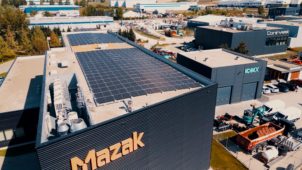
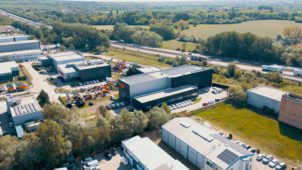
Mazak has implemented a new energy-efficiency project at its Hungarian facility by installing a solar power system on its office building. The new system is expected to provide close to 40% of the site’s electricity demand from renewable energy sources.
The investment is part of the company’s global Mazak Go Green initiative, which focuses on reducing environmental impact and improving energy efficiency across both operations and products. The programme shows Mazak’s commitment to integrating sustainability into daily operations and long-term planning.
By generating a significant share of its electricity on-site, the new solar installation helps reduce reliance on grid-supplied energy and supports a more efficient use of resources. The project represents a practical step towards reducing the facility’s environmental footprint while improving overall operational efficiency.
The development is aligned with Mazak’s broader efforts to promote responsible and resource-efficient operations. While the company is widely recognised for its advanced manufacturing technologies, it also places strong emphasis on improving the sustainability of its own facilities and business processes.
The commissioning of the solar power system delivers a measurable contribution to these objectives and demonstrates how targeted investments can support both environmental and operational goals. Mazak will continue to explore opportunities to enhance energy efficiency further and support the long-term ambitions of its Mazak Go GREEN programme.
 |
 |
 |
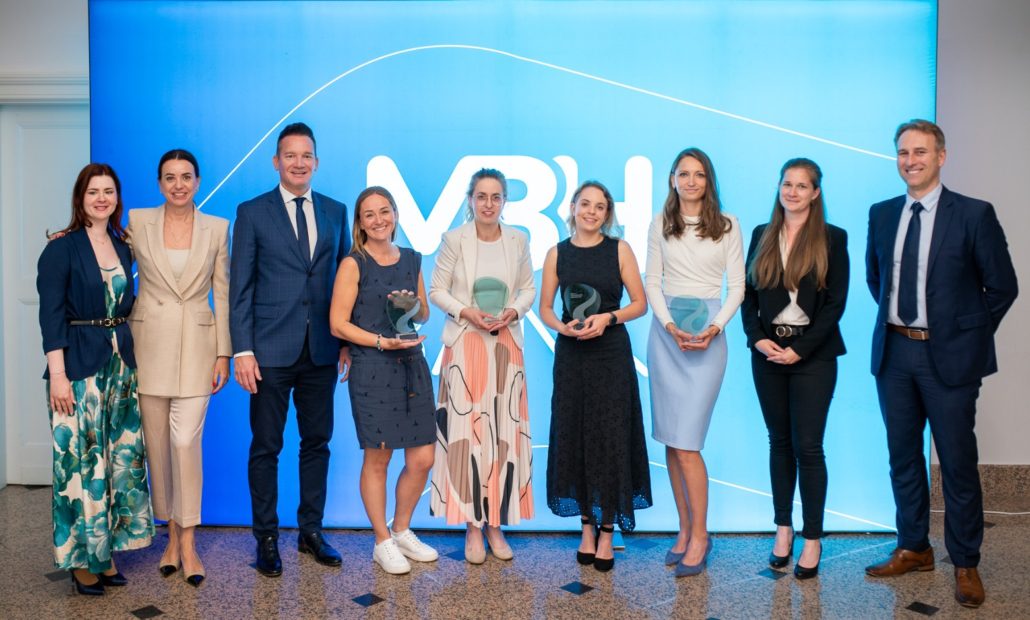
For the first time, MBH Bank presented its “Journey to a Sustainable Future” Award (Fenntartható Jövő Útja), recognizing corporate and agri-food sector clients that have implemented exemplary sustainability initiatives. This year’s award winners included companies that have achieved outstanding results in sustainable hospitality, social responsibility, ESG-based corporate governance, and the circular economy.
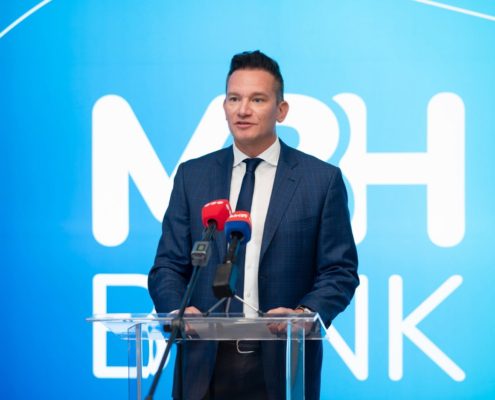
The awarded projects clearly demonstrate that sustainability has become a key driver of competitive business operations, innovation, and long-term value creation. MBH Bank views the transition to a sustainable economy as a shared responsibility and, as a financial partner, aims to play an active role alongside its clients in promoting future-proof and responsible business solutions.
Business Council for Sustainable Development in Hungary
1118 Budapest, Ménesi street 9/a.
Policies and statements
Privacy policy
Competition Law Statement
Code of Ethics
World Business Council for Sustainable Development (WBCSD) National Partner