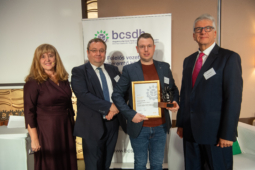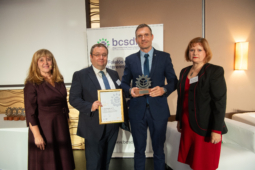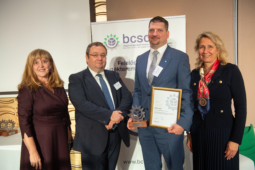
BCSDH and Corvinus University sign a strategic cooperation agreement
Could the extreme weather events of 2026 mark a turning point in how the economic implications of climate change are perceived? The disruption of the balance of natural systems is having increasingly severe consequences for businesses. We are in the twenty-fifth hour – we have already run out of time. We must act now, collectively and on multiple fronts simultaneously. This was the central message of BCSDH’s Business Lunch, held on 19 November 2026, which focused on climate resilience.
Budapest, 19 November 2026 – Corporate profitability is declining, the risk of damage to physical assets is increasing, and disruptions to supply chains, infrastructure and the functioning of society are becoming more frequent. Physical climate risks have become business risks that are shaping the economy. All this calls for a new leadership mindset.
The Business Lunch of the Business Council for Sustainable Development in Hungary (BCSDH), an organisation bringing together 153 member companies accounting for approximately 40% of Hungary’s GDP, focused on the economic implications of climate resilience and the importance of taking action.
Europe is warming twice as fast as the global average, leaving an even shorter window of opportunity for adaptation. Hungary is among the particularly exposed countries, presenting domestic businesses with even greater challenges. The Draghi Report also highlights that Europe’s future economic performance is closely linked to strengthening energy security, water security, critical infrastructure and climate resilience.
 |
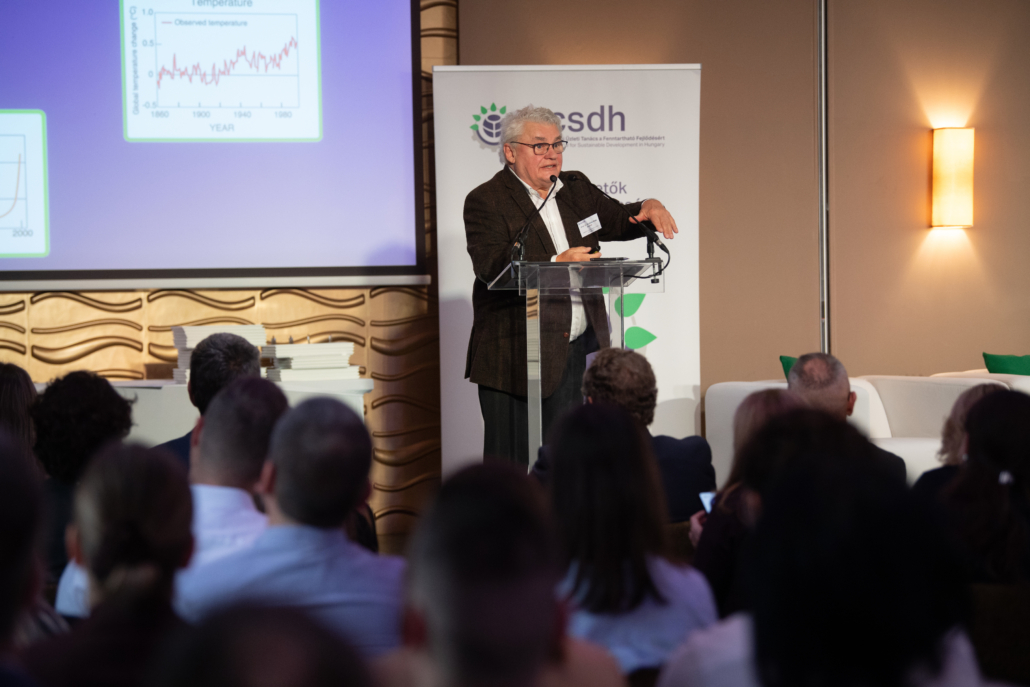 |
“A significant proportion of the impacts of climate change are manifested through water. The likelihood of extreme events will increase, meaning that more floods can be expected, while drought conditions are also likely to intensify in both spatial extent and duration. Hungary is particularly exposed to these extremes. Every business must therefore prepare for rational water management planning. Only 0.007% of the Earth’s water resources are available as surface water to which we have direct access. The acceleration of climate change is already making it clear that we are facing a water crisis,” said Prof. Dr András Szöllősi-Nagy, Vice-Chair of the Intergovernmental Council of UNESCO’s International Hydrological Programme and Doctor of the Hungarian Academy of Sciences.
“Climate change and water-related conflicts must not be approached solely from an engineering perspective, as water management is also a major economic, sociological and political issue. In the coming years, the greatest risk factors will be the failure to address water-related problems, extreme weather events and climate change, as well as their social consequences. With the big data algorithms and AI applications available today, technological barriers have largely disappeared. Global change and adaptation are needed at every level of water management,” added András Szöllősi-Nagy.
Climate change hazards – such as disruptions to water supplies, damage to physical assets and declining workforce productivity – are driving up corporate costs while reducing operational efficiency. According to BCSDH’s latest 2026 Towards Net Zero survey, while 86% of companies are experiencing the impacts of climate change on their operations, only 34% have a climate adaptation action plan. Although this represents a significant increase from 16% two years ago, only 25% have assessed how resilient their strategy or business model is to these changes. Companies urgently need to reassess their climate resilience and adaptation plans to safeguard their long-term viability and protect the business and social value they create.
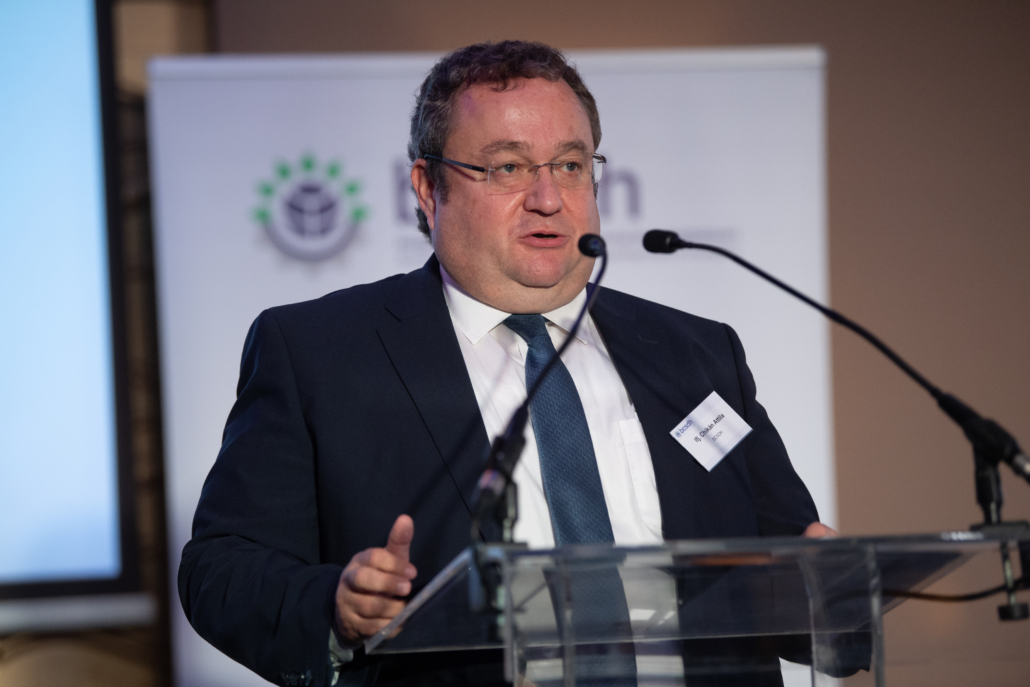 |
In his opening remarks, Attila Chikán Jr., President of BCSDH, emphasised: “At a time when geopolitical tensions are reshaping supply chains, creating uncertainty in energy and raw material markets, and often pushing long-term sustainability considerations into the background in favour of short-term economic interests, action is more important than ever. We are beyond the eleventh hour. The impacts of climate change are already tangible, and inaction is no longer an option. Extreme weather events – heatwaves, droughts and floods – are no longer merely environmental concerns but also serious economic and societal challenges. It has become clear that, alongside more ambitious emissions reductions, preparing for the unavoidable impacts of climate change is equally urgent. The question is not only how we adapt to these changes, but also how we can maintain business continuity and become more resilient to future challenges.”
 |
The business sector must find solutions, and BCSDH supports and inspires companies to take action by sharing best practices, recommendations, business solutions and knowledge. Events such as expert forums, discussions with business leaders and Business Breakfasts support corporate leaders in driving systemic transformation by presenting scientific findings, corporate achievements and best practices, while providing a platform for sharing experiences and initiating collective action. The BCSDH Academy’s Climate Adaptation module and its related Climate Resilience module directly support companies in building resilient and future-proof operations, while its Circular Economy module contributes to this goal indirectly.
 |
 |
 |
 |
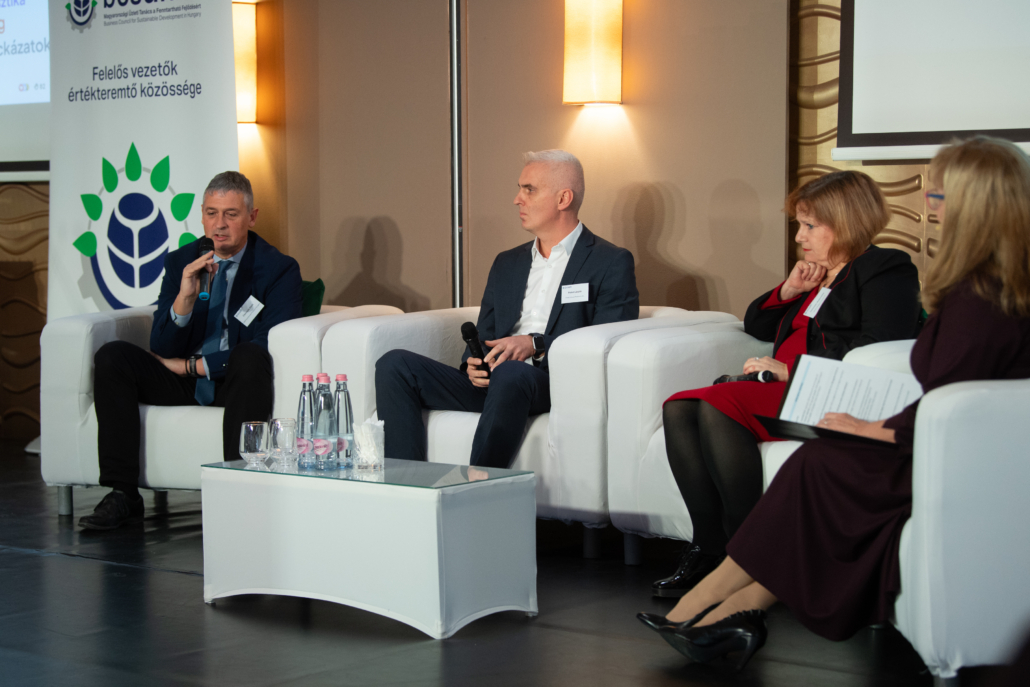
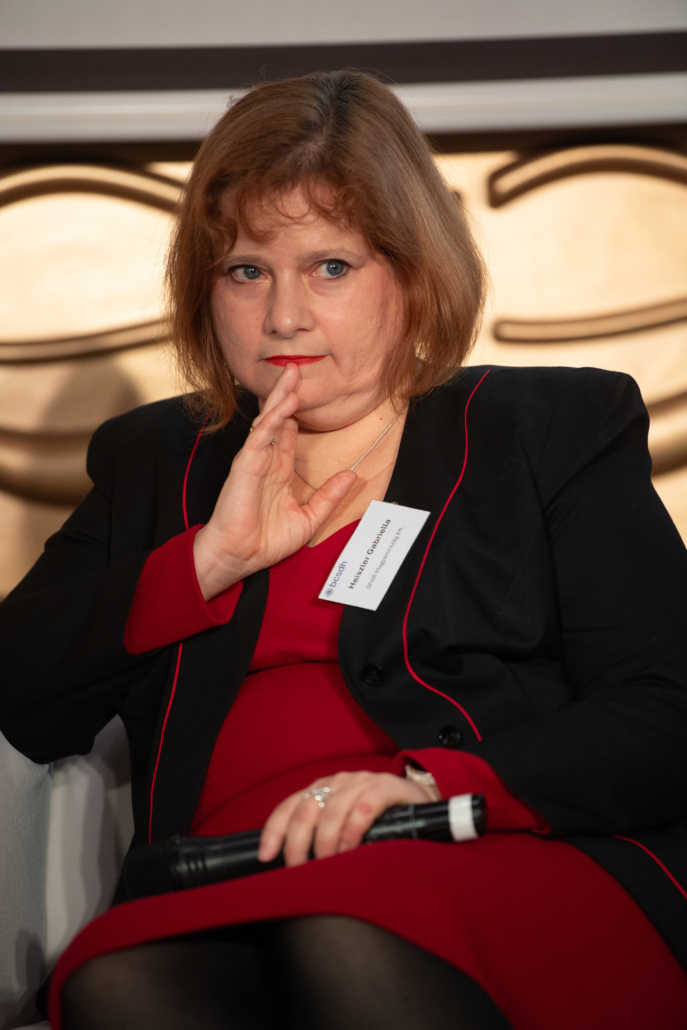
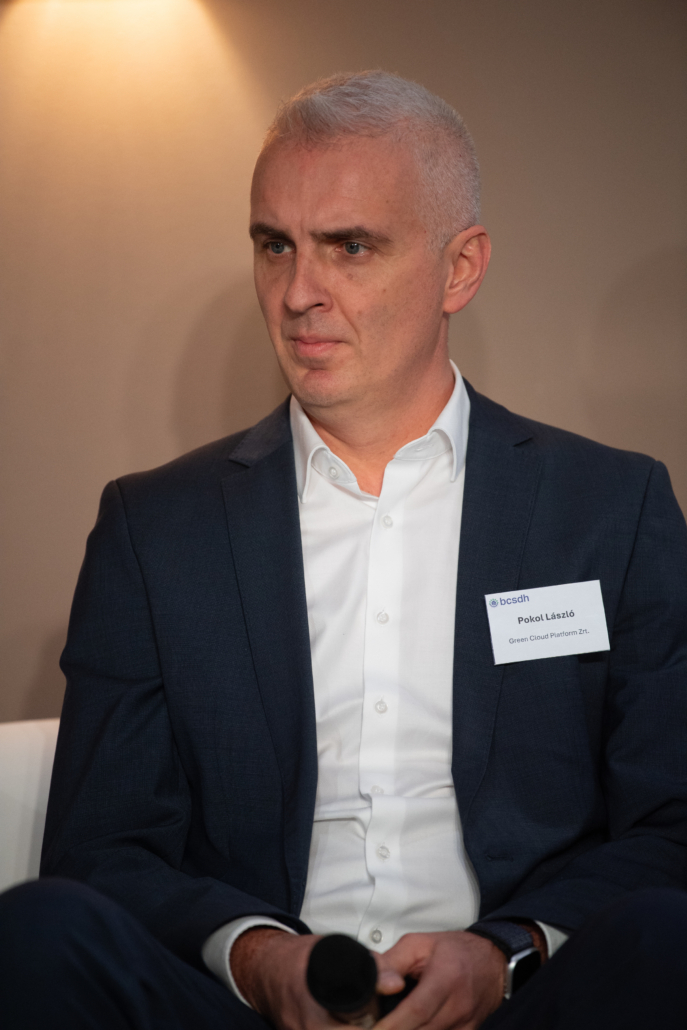
How are climate risks reflected in executive decision-making? How well prepared are Hungarian companies for longer-term impacts? What role do innovation, technology and business partnerships play? How can climate resilience become a business opportunity rather than a cost factor? These were the key questions explored during a panel discussion featuring Zsolt Csavajda, Managing Director of DSM Nutritional Products Hungary Kft.; Gabriella Heiszler, President and Managing Director of SPAR Hungary; and László Pokol, CEO of Green Cloud Platform. The discussion was moderated by Irén Márta, Managing Director of BCSDH.
 |
 |
 |
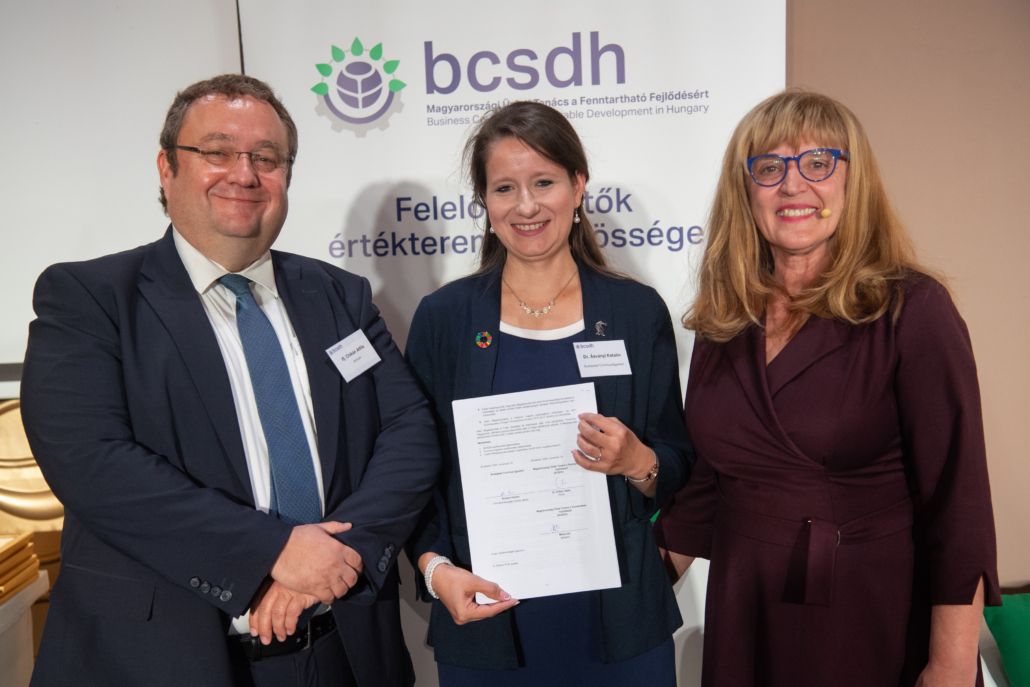 |
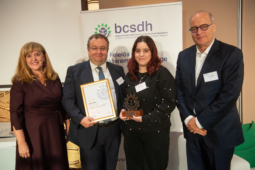
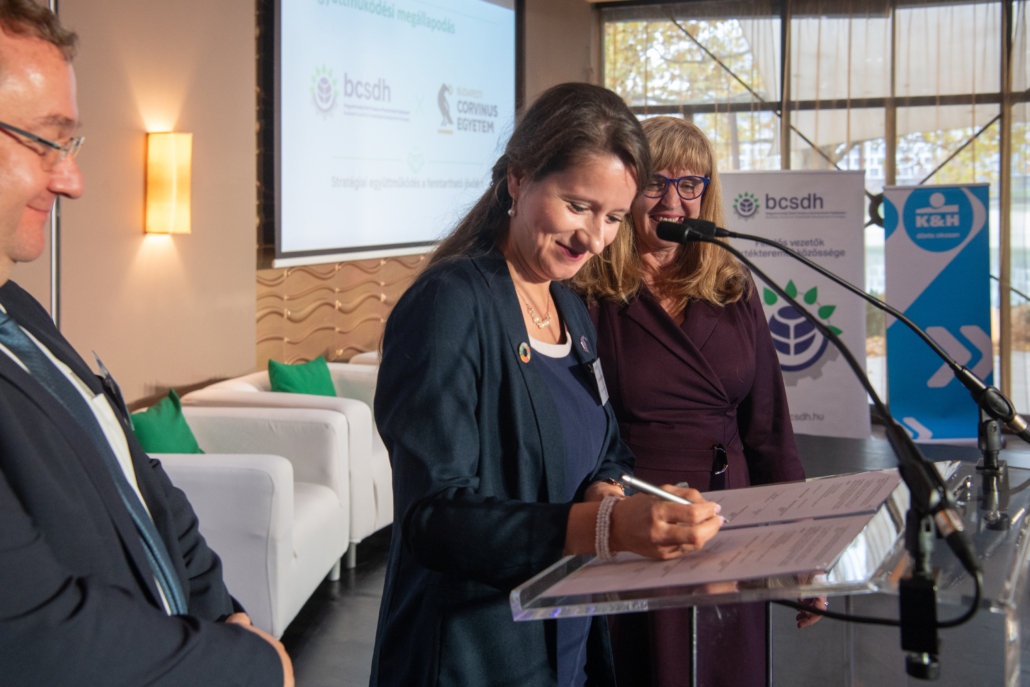
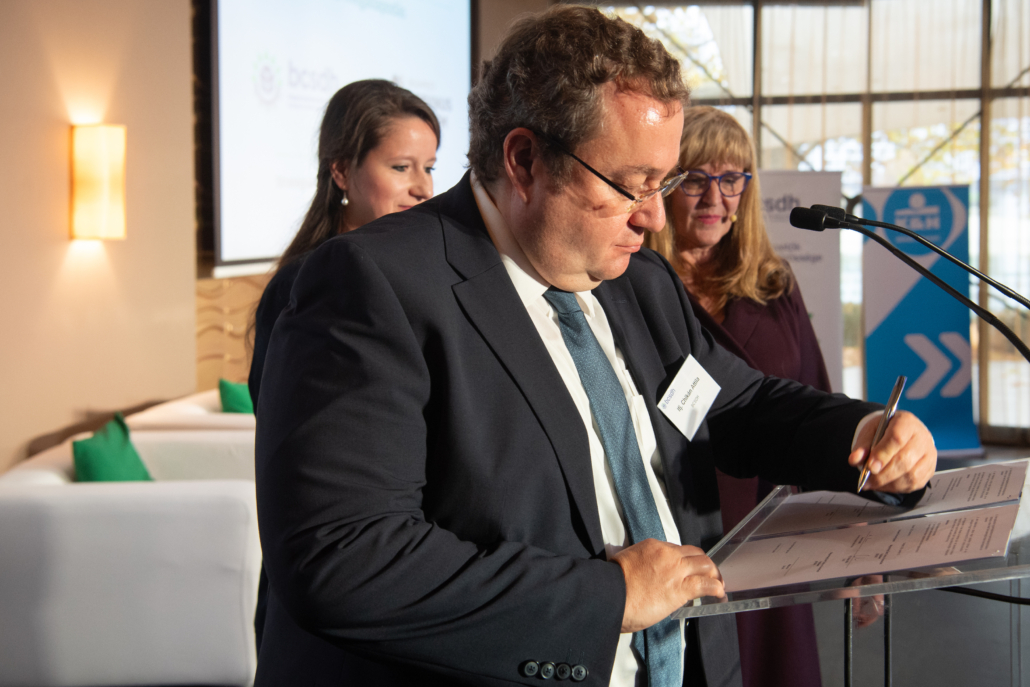
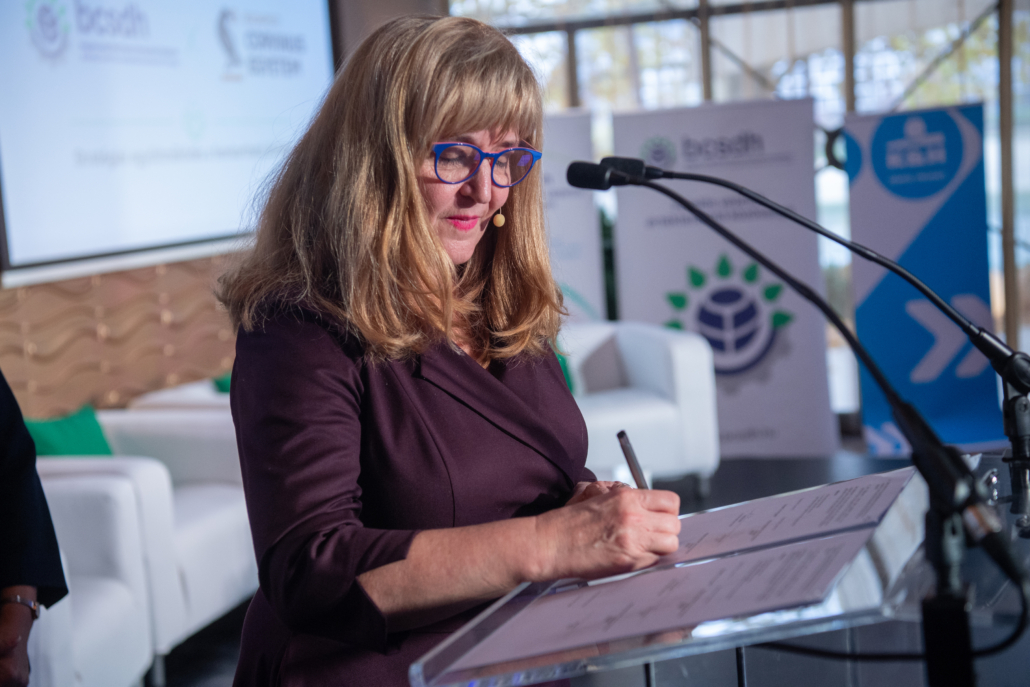
A strategic cooperation agreement between Corvinus University of Budapest and BCSDH was signed at the event. The partnership aims to develop joint executive programmes and create synergies between university education and corporate practice. The agreement was signed by Katalin Ásványi, Dean for Sustainability at Corvinus University of Budapest, and, on behalf of BCSDH, Attila Chikán Jr., President, and Irén Márta, Managing Director.
he main sponsor of this year’s Time to Transform 2030 programme is Nestlé, and its distinguished sponsor is ALTEO.
The main sponsor of the ESG programme is E.ON, its distinguished sponsor is Progress Étteremhálózat Kft. (McDonald’s), and its sponsor is Budapesti Közművek (Budapest Public Utilities).
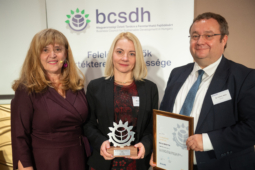
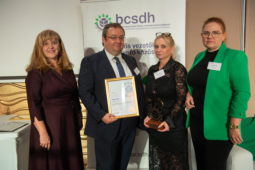
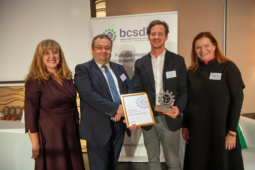
The main sponsors of the For a Sustainable Future Award are Essity, MET and SPAR Hungary. The sponsor of the Female Leader category is Progress Étteremhálózat Kft. (McDonald’s).
The sponsor of BCSDH’s carbon-conscious events is Ayvens.