In the countries of the SPAR Austria group (Hungary, Northern Italy, Slovenia, Croatia), significant achievements have been made under the auspices of the Group’s environmental sustainability strategy: over the last one years greenhouse gas emissions have been decreased by a quarter, considering the aggregate data of the member countries. One of the Group’s key ambitions is to achieve high standards of customer service through sustainable, environmentally-friendly and energy-efficient operations.
The SPAR Austria Group Sustainability Report for the last year has been issued and it shows that the Group has made great strides in cutting emissions of pollutants, in recycling and saving energy in a number of areas, largely thanks to the modernisation of the stores. On average, the new stores use 17% less energy than the units last renovated 10-15 years ago. In terms of greenhouse gas emissions, the food retail division has reduced its over all emissions by 25.8% on year-on-year basis. The main reason for this is the switch of purchased electricity in Hungary and Slovenia to greener sources of electricity or nuclear power and the resulting lower carbon dioxide emissions. Since 2015 the SPAR Austria group has reduced greenhouse gas emissions across its operations, including all its subsidiaries, by 45.5 percent in relation to the raising sales area.
Seventy percent recycling rate
“One of the cornerstones of the business philosophy of the company group, including SPAR Hungary, is to operate in an environmentally-conscious manner. We highlight minimising negative environmental impacts, including focusing on the promotion of environmental awareness and the widespread use of the relevant processes. The separation of marketable secondary raw materials – paper and plastic – generated in stores is also a priority: over the past 30 years we have achieved a fundamental change in this area, as the initial recycling rate of 46 percent has now increased to more than 70 percent,” explained Márk Maczelka, head of communications of SPAR Magyarország Kft.
The company’s energy consumption comes mainly from the use of electricity. As a result of the modernisation of the lighting and cooling/heating systems, it was possible to reduce the consumption of electricity compared to the base year of 2010. SPAR’s primary sources of emissions are electricity related to its operating sites, natural gas and district heating for heating, and fuel use related to its own fleet of vehicles.
From smart solutions to Green Retailer of the Year acclaim
SPAR Hungary is modernising its stores to integrate energy-saving equipment, and the latest cooling equipment and refrigerated counters are being installed in the renovated stores. In larger stores, integrated refrigeration systems are installed, allowing heat from refrigeration units and coolers to be used for heating the building. In smaller stores, cooling engineering systems of a similar principle will be used to manage technological cooling and the comfort heating/cooling system, optimising energy use. Energy-efficiency measures also focus on the modernisation of lighting technology: fluorescent lamps are replaced by energy-efficient LED lamps which use significantly less energy than conventional light bulbs.
In 2020, SPAR as a retail chain was awarded the Green Retailer of the Year acclaim for its environmentally-conscious corporate governance and the sustainability measures it has implemented.
Background
The SPAR Austria group has been publishing sustainability reports on the Group’s sustainability efforts and measures since 2013, with regard to products, employees, the environment and society. Since 2016, this report not only includes the activities of the food retail business in Austria, but also data from SPAR Hungary, among others.
The SPAR Austria group has continued to work consistently on its sustainability strategy in 2021. A sustainable of offerings has been in focus, to ensure that as many of the products offered are sourced from the region as possible, that food products comply with recognised nutritional recommendations and that the negative impact of production and processing on the environment is reduced. In the spheres of energy and technology, work is continuously ongoing to modernise stores, using the latest lighting, heating and cooling technology.
SPAR Austria constantly monitors the impact and success of these climate protection measures, has increased existing climate protection targets and extended them to all countries of the corporate group. This will ensure that the company’s climate protection strategy is in line with the Paris Climate Change Conference targets.
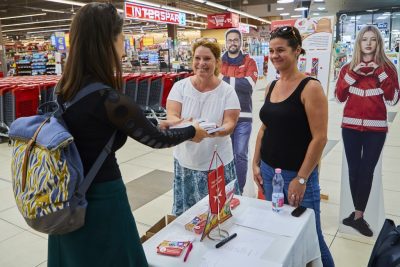
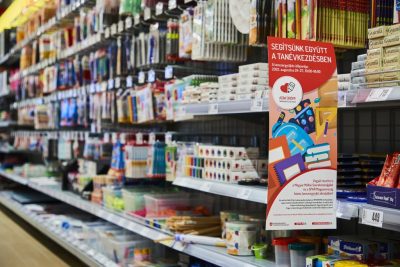
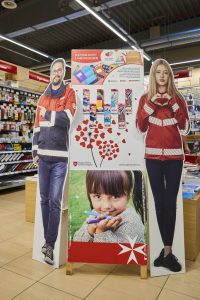 “This year, the Hungarian Charity Service of the Order of Malta again supports the families of 1,500 children with new school supplies, PE accessories, and school bags full of necessary supplies with the help of the customers of the store chain. The heavy costs that come with the beginning of the school year are a burden for a lot of Hungarian families. These donations help those in the most disadvantaged situations and prevent their children from having to start school missing essential or even all their school supplies. We thank our customers who purchased notebooks, stationary items, pencil cases, or other supplies at the end of August in INTERSPAR stores to support the donation campaign, as well as those who bought our donation cards to do their bit to support our campaign. With the help of SPAR Hungary, 300 school supply bags, each worth 10,000 forints, were added to the donations collected during the campaign,” said Tamás Romhányi, head of communications of the Hungarian Charity Service of the Order of Malta.
 The Company is a key player in the cash-saving digitalisation process in Hungary, and its role in the introduction and education of modern financial solutions is undeniable, as it provides services via a nationwide, interoperable payment platform. The Company is continuously exploring areas where there is potential for the introduction of cashless payment services that can serve the convenience and security of the population and all aspects (social, economic and environmental) of domestic sustainability.
 It is also important that both public/user and professional dialogue are a high priority in the life of the Company, and it is important to provide up-to-date information, reporting and insight on a number of innovative issues: the recently established NM Innovation, as the NM Plc. Innovation Workshop, in line with the Hungarian digitalisation and innovation efforts, has launched its website and its professional, yet accessible blog, which is constantly updated and can be accessed via the following link:


 “SPAR has been committed to reducing environmental waste and are constantly working to reduce the amount of plastic used for their food packaging. We are currently testing the new biodegradable and compostable bags which replace the old plastic ones in the fruit and vegetable sections in some of our stores, and now we are replacing the 100% plastic bags used in the bakery sections with paper bags in all SPAR and INTERSPAR stores around the country,” explained Márk Maczelka, head of communications at SPAR Hungary.

 “Our hypermarkets all over the country have participated in the ‘Mancs a bajban!’ (Paw in trouble!) programme for the second year in a row, which we started last year and thanks to its popularity we are turning it into an annual campaign. We are working on bringing in more and more animal rights protection organisations to help pets in need with a programme that also creates a community. SPAR’s customers have yet again proven their selflessness and commitment, as well as showing how much they care about the importance of social responsibility. As a local store chain we have been supporting the work of Hungarian animal shelters, zoos, and wildlife parks for more than ten years by donating our surplus and not for sale animal products to them,” explained Márk Maczelka, head of communications at SPAR Hungary.

